Office chairs are designed to support long working hours, yet most discomfort at work doesn’t come from poor chair quality; it comes from incorrect adjustments. Improper chair setup leads to slouching, back pain, neck strain, and reduced productivity over time.
One of the biggest challenges employees face is confusion. Levers, knobs, recline locks, and tilt controls often go unused simply because people don’t know what they do. As a result, even ergonomic chairs fail to deliver their intended benefits.
This article provides practical, easy-to-follow guidance on how to adjust office chair settings correctly. We’ll cover height, tilt, recline, and the purpose of the knob under your chair—so you can fine-tune your seating for daily comfort and long-term posture support.
What Are the Key Office Chair Adjustments You Should Know?
Modern ergonomic chairs are built with multiple adjustment features to accommodate different body types, desk heights, and work styles. Understanding these office chair adjustments is the first step toward better posture.
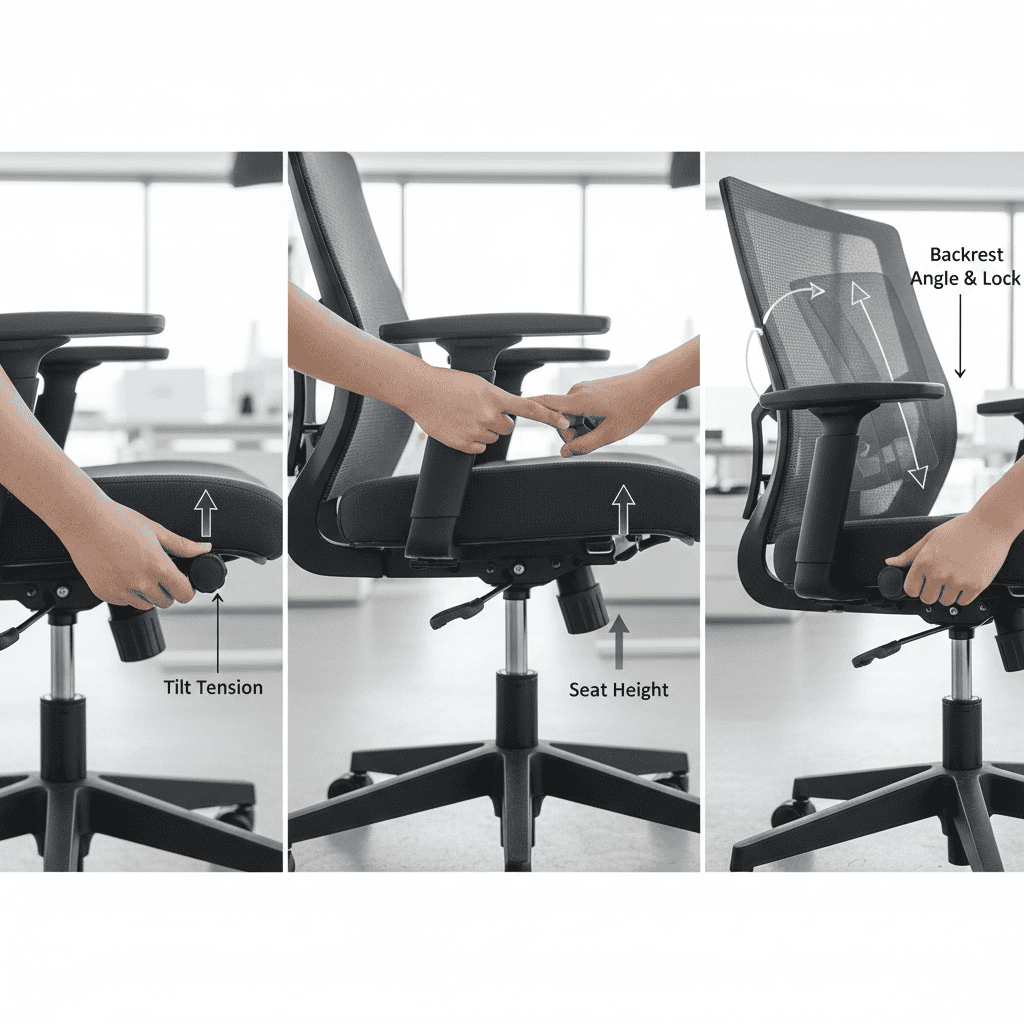
Most office chairs include seat height adjustment, tilt tension control, a recline mechanism, and a tilt lock. Advanced chairs may also offer adjustable armrests and lumbar support.
Chairs have multiple controls because no two users sit the same way. A fixed chair forces your body to adapt unnaturally, while an adjustable chair adapts to you. This flexibility reduces muscle strain, spinal compression, and circulation issues.
Basic chairs typically offer height and recline, while advanced ergonomic models provide precision control over tilt resistance and locking angles. When adjusted correctly, these features support a neutral sitting posture, keeping your feet flat, spine aligned, and shoulders relaxed.
At Vlite Furnitech, a reputed office chair manufacturer, we design ergonomic chairs with clearly labelled levers and knobs, making it easier for users to understand and apply correct adjustments.
How to Adjust Office Chair Height Correctly
Correct office chair height adjustment is the foundation of good sitting posture. Your seat height should allow your feet to rest flat on the floor, with knees at or slightly below hip level.
To adjust height, locate the lever beneath the seat connected to the pneumatic cylinder chair mechanism. While seated, lift the lever to lower the chair. To raise it, stand slightly and pull the lever upward, allowing the chair to rise.
Your desk and screen alignment matter too. When seated correctly, your elbows should form a 90-degree angle with the desk surface, and your monitor should be at eye level. Referring to standard office chair dimensions helps users set seat height and backrest positioning that align with desks and screen levels correctly.
Signs your chair height is incorrect include dangling feet, pressure under the thighs, or shoulders lifting while typing. Always adjust slowly and avoid sudden drops to protect the hydraulic system.
A trusted office furniture manufacturer ensures that height adjustment mechanisms are durable, smooth, and calibrated for daily use in high-traffic offices.
Struggling to find the perfect adjustable office chair?
Get expert advice from Vlite Furnitech today.
What Does the Knob Under an Office Chair Do?
The knob under the office chair is commonly misunderstood, yet it plays a critical role in comfort. This knob is known as the tilt tension knob chair control.
Its purpose is to regulate how easily your chair tilts backwards. Turning the knob clockwise increases resistance, making the chair firmer. Turning it anticlockwise reduces resistance, allowing smoother recline.
This resistance can be pneumatic or mechanical, depending on the chair model. Heavier users typically require tighter tension, while lighter users benefit from looser settings.
The most common mistake is overtightening the knob, which restricts natural movement and strains the lower back. Tilt tension should support your body, not lock it rigidly in place.
Ergonomic seating solutions recommended by Vlite Furnitech ensure tilt mechanisms are intuitive and durable, complementing modern office environments.
How Do Office Chair Recline and Tilt Lock Mechanisms Work?
The office chair recline mechanism allows the backrest to move independently or in sync with the seat. The office chair tilt lock controls how far your chair can lean back. Locking the tilt keeps you upright, while unlocking it allows movement.
For focused work, maintain a recline angle between 90 and 100 degrees to support an upright posture. During breaks or rest periods, unlock the recline and lean back to 120 degrees or more to decompress the spine.
Controlled recline improves blood circulation, reduces spinal pressure, and prevents stiffness. The key is balance and movement without instability.
Many organisations evaluating the best office chairs in India prioritise models that offer intuitive adjustments, reliable hydraulics, and long-term ergonomic support.
How to Set Up Your Office Chair for Daily Work Comfort
Start each day with a quick setup check. Adjust seat height first, then tilt tension, and finally recline settings. This sequence ensures balance across all controls.
Morning posture often feels different from afternoon posture due to fatigue. Slight adjustments later in the day can relieve accumulated strain.
For long sitting hours, allow gentle recline movement rather than locking yourself rigidly upright. Movement keeps muscles engaged and reduces stiffness.
Readjust your chair whenever you change desks, footwear, or work duration. Ergonomics is not a one-time setup; it’s an ongoing habit.
Following best practices outlined in how to clean your office chair also helps maintain smooth adjustment mechanisms and extends chair lifespan.
Conclusion
Correct chair adjustments are essential, not optional, for long-term comfort and posture. Height, tilt, and recline controls are designed to work together, not independently. Understanding the ergonomic chair benefits helps organisations recognise how correct seating reduces fatigue, improves posture, and supports long-term employee health.
Instead of guessing, take a few minutes to fine-tune your settings. Small adjustments make a big difference in reducing fatigue, improving focus, and preventing chronic discomfort.
When office seating is paired with well-planned workstations, employees perform better and feel supported throughout the day. With ergonomic expertise and workspace solutions from Vlite Furnitech, businesses can create environments where comfort and productivity go hand in hand. Contact us now!
Get expert advice from Vlite Furnitech today.
Vlite Furnitech customizes chairs just for you.
FAQs
1. What does the knob under my office chair do?
The knob under the office chair controls tilt resistance, allowing you to adjust how easily the chair reclines.
2. How do chair hydraulics work for height adjustment?
Chair hydraulics use a pneumatic cylinder chair system to raise or lower seat height smoothly.
3. Why are office chairs designed to recline?
Office chairs recline to reduce spinal pressure and support natural movement.
4. What are the main levers and knobs on an ergonomic office chair?
Main controls include the height lever, a recline lever, a tilt lock, and a tilt tension knob.
5. How do I adjust my office chair for proper ergonomics?
To adjust your chair ergonomically, ensure correct height, balanced tilt tension, and controlled recline.

Vishnu Sharma
I am the co-founder and CEO of Vlite Furnitech, creating modular office solutions since 2009. With a background in Chemistry and Marketing, and experience as Regional Head at Featherlite, I help design ergonomic, adaptable, and sustainable workspaces. Alongside a team of 120+, we serve corporates like JCB, Just Dial, KFC, and educational institutions. Let’s connect to reimagine innovative, eco-friendly office environments.