Your team just grew by twelve people in three months, and now half of them are sharing desks or working from the cafeteria. Or maybe you’re staring at a lease renewal and wondering whether it’s worth ripping out the old furniture and starting fresh. Whatever brought you here, you’re facing the same question thousands of facility managers and founders across India face every year: should you invest in modular office furniture or stick with traditional, fixed pieces?
Modular office furniture refers to component-based systems, desks, partitions, storage, and seating, engineered to be reconfigured as your team and workflows evolve. Traditional office furniture, by contrast, is built as standalone, fixed-purpose pieces meant to stay put for years. Both have their place, and both have trade-offs that aren’t always obvious from a showroom floor.
This article isn’t here to sell you on trends. It’s here to help you make a decision based on your actual headcount plans, budget horizon, and workplace culture, so you don’t end up making an expensive mistake six months from now.
What Is Modular Office Furniture?
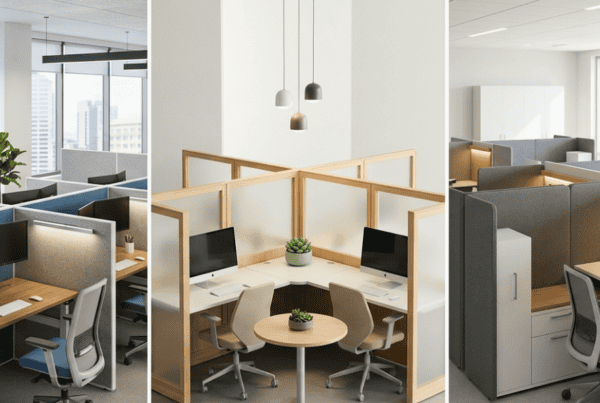
Modular office furniture is built around interchangeable components rather than single-purpose pieces. Think of it as a system: desks, partitions, storage units, and seating that can be added, removed, or rearranged without replacing the whole setup.
Common formats include:
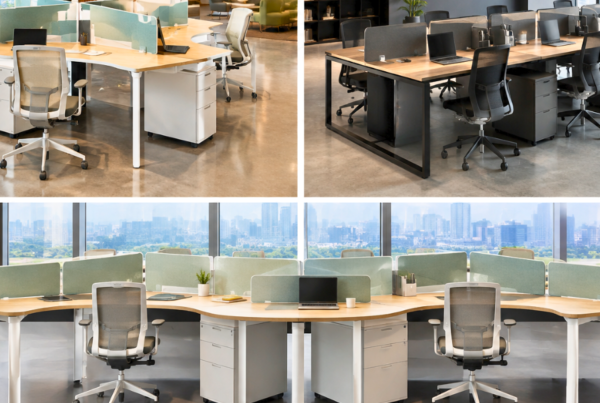
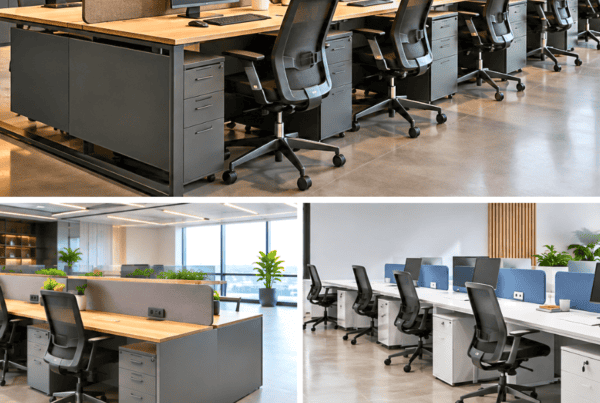
- Linear desking, rows of connected workstations, ideal for high-density teams
- Cluster or benching configurations, pods of 4–8 desks facing each other, popular with collaborative teams
- Modular workstations, individual units with adjustable panels, cable management, and storage that snap into larger layouts
- Ergonomic seating, chairs designed to pair with modular desks, often height-adjustable
Modular systems evolved out of the open-plan office movement of the late 20th century, when businesses needed furniture that could keep pace with faster-changing teams and layouts. Today, it’s the default choice for most fast-growing Indian offices, from IT parks in Pune to startup hubs in Bengaluru.
What Is Traditional Office Furniture?
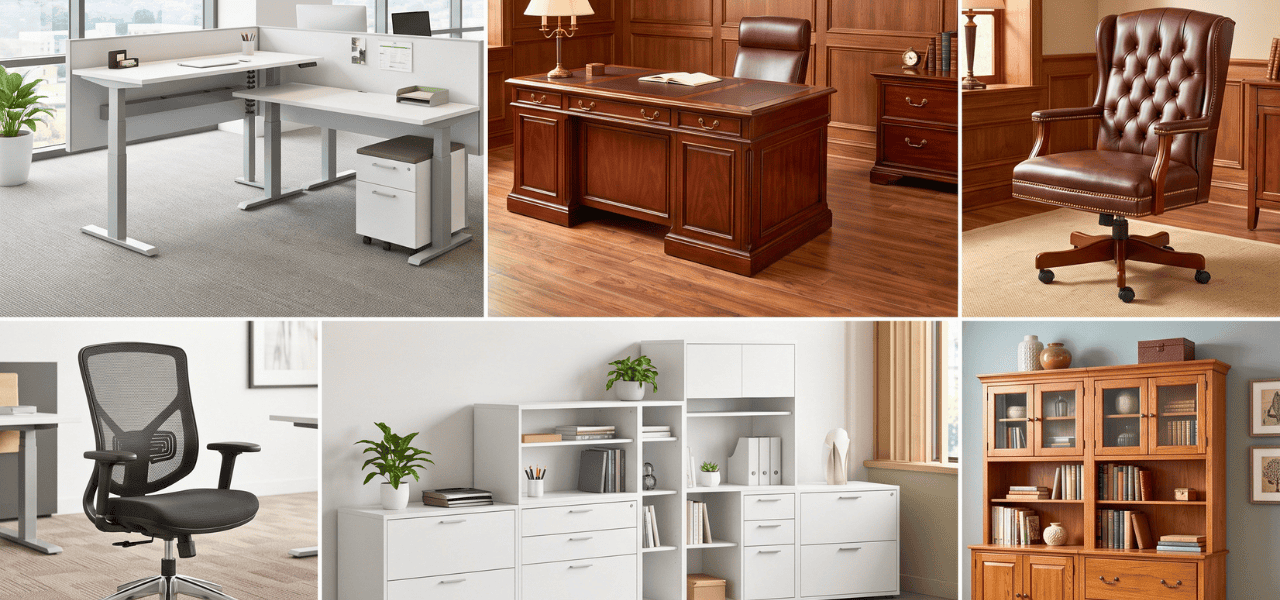
Traditional or fixed furniture consists of standalone pieces, a solid wood desk, a fixed cabin partition, a standalone bookshelf, each built for a single purpose and, often, a single location. It’s not designed to be taken apart and reassembled elsewhere.
Traditional furniture still excels in specific contexts:
- Prestige spaces like boardrooms, MD cabins, and client-facing reception areas, where a solid, permanent look conveys authority
- Long-term, stable teams where headcount and layout aren’t expected to change for years
- Legacy office cultures that value craftsmanship and a more classic aesthetic over flexibility
It’s not that traditional furniture is inferior, it’s that it’s optimized for permanence, not change.
Modular vs Traditional Office Furniture: Key Differences
| Factor | Modular Furniture | Traditional Furniture |
| Flexibility & reconfiguration | Easily reconfigured for new layouts, teams, or floor plans | Fixed; reconfiguration usually means replacement |
| Initial cost vs long-term cost | Slightly higher upfront, lower Total Cost of Ownership over time | Lower upfront cost, but higher long-term cost with growth or moves |
| Scalability | Add or remove workstations without overhauling the office | Scaling up typically requires new purchases and layout redesign |
| Installation & relocation ease | Designed for quick assembly, disassembly, and relocation | Heavy, often custom-built; relocation is slow and costly |
| Aesthetics & branding | Trend-forward, customizable finishes and configurations | Classic, solid, prestige-oriented look |
| Durability & maintenance | BIFMA-tested components built for repeated reconfiguration | Durable but not designed for frequent movement or adjustment |
| Sustainability/eco-friendliness | Components can be reused and reconfigured, reducing waste | Often discarded entirely when no longer fit for purpose |
| Best-fit business type | Growing companies, startups, hybrid workplaces | Stable, established teams; executive and boardroom spaces |
Cost Comparison, Upfront vs Total Cost of Ownership
On paper, traditional furniture often looks cheaper. A basic fixed desk can cost less than a comparable modular workstation. But that comparison only holds if your office never changes, and for most growing businesses, that’s not realistic.
Total Cost of Ownership tells a different story. When a team grows, moves, or reorganizes, traditional furniture usually means buying new pieces and often discarding the old ones, since they weren’t built to be reconfigured. Modular systems, on the other hand, let you reuse existing components, adding a few desks to a cluster instead of buying an entirely new set. Over a 5–7 year furniture lifecycle, this reconfiguration advantage frequently outweighs the higher initial spend, especially for companies expecting even modest headcount changes.
Flexibility & Scalability
Hybrid work, hot-desking, and desk hoteling aren’t passing trends, they’ve become operational necessities for a large share of Indian offices post-2022. Teams no longer sit in the same seats five days a week, and headcount can fluctuate month to month depending on project cycles.
Modular workstations are built for exactly this kind of movement. A cluster designed for eight can be split into two smaller pods, or expanded into a twelve-seat bay, without needing to demolish and rebuild. That means no new capex event every time your team structure shifts, a genuine advantage for office furniture for startups and scale-ups where growth isn’t linear.
Durability, Ergonomics & Employee Wellbeing
Ergonomic office furniture isn’t a nice-to-have anymore, it’s tied directly to employee retention and productivity. Adjustable-height desks, contoured seating, and properly positioned monitor arms reduce musculoskeletal strain, which in turn reduces absenteeism and turnover.
Quality modular systems are typically BIFMA certified, meaning components have passed independent durability and safety testing for repeated use, critical for furniture that gets reconfigured, moved, and adjusted far more often than a traditional desk ever would be. This isn’t just about comfort; it’s a quality assurance layer that protects your investment.
Sustainability & Compliance
Sustainability has moved from a marketing checkbox to a genuine procurement criterion, especially for larger enterprises with ESG commitments. Modular furniture supports this shift structurally: because components can be reused and reconfigured rather than discarded, the furniture lifecycle generates far less waste than replacing entire traditional setups.
When evaluating office furniture manufacturers in India, look for concrete certifications rather than vague sustainability claims, LEED-compliant manufacturing facilities, ISO 9001:2015 quality management systems, and BIFMA compliance for durability standards. These aren’t marketing badges; they reflect audited processes and tested materials.
When Should You Choose Modular Office Furniture?
Modular is generally the stronger choice if you fall into one or more of these categories:
- You’re a growing startup or scale-up with headcount projected to change in the next 12–24 months
- Your organization has adopted hybrid or flexible work models with hot-desking or hoteling
- You’re planning relocations or frequent office redesigns
- Your business prioritizes long-term ROI and sustainability over short-term sticker price
When Might Traditional Furniture Still Make Sense?
Traditional furniture remains a reasonable choice when:
- Your headcount is stable, with no growth or relocation planned in the near term
- You’re furnishing executive cabins or boardrooms where prestige and permanence matter more than flexibility
- You’re working under a short-term budget constraint, though it’s worth weighing this against the long-term TCO disadvantage before committing
How to Choose Modular Office Furniture: An 8-Point Checklist
If you’ve decided modular is the right direction, here’s a practical framework for how to choose modular office furniture without second-guessing yourself later:
- Assess your team’s current and projected headcount. Plan for where you’ll be in 18–24 months, not just today.
- Map your workflow. Determine whether your teams work in focused individual tasks or collaborative sprints, this shapes desking format.
- Choose the right desking format, linear for high-density rows, cluster or benching for collaborative pods.
- Plan power and data points before furniture arrives. Retrofitting cabling after installation is expensive and messy.
- Prioritize ergonomics and BIFMA-tested components. Comfort and compliance protect both your team and your investment.
- Evaluate the manufacturer’s production capacity and lead times. A manufacturer with limited capacity can delay your entire office rollout.
- Check certifications, ISO, LEED, BIFMA, as a baseline for quality and sustainability assurance.
- Confirm after-sales support and project management capability. Reconfigurations, repairs, and expansions are ongoing needs, not one-time events.
Why Businesses Choose Vlite Furnitech for Modular Office Furniture
Vlite Furnitech is one of India’s leading modular office furniture manufacturers, built to support businesses at exactly the scale and pace this checklist demands.
- A 30,000 sq. ft. manufacturing facility in Patalganga, Navi Mumbai, engineered for consistent quality and fast turnaround
- Capacity to produce 14,000 workstations per month, meaning large rollouts and tight timelines aren’t a bottleneck
- LEED-compliant facilities, BIFMA certification, and ISO 9001:2015 quality systems, the same benchmarks outlined in the checklist above
- Branches in Mumbai, Pune, Ahmedabad, Surat, and Hyderabad, with pan-India and global delivery capability
- In-house design and project management teams that handle everything from layout planning to after-sales support, so you’re not coordinating between multiple vendors
For businesses evaluating office furniture suppliers, this combination of manufacturing scale, certified quality, and end-to-end execution is designed to remove the guesswork from a decision that’s easy to get wrong.
Want office furniture that reduces long-term costs without compromising quality?
Trust Vlite Furnitech LLP for cost-effective workspace solutions built to last.
FAQs
Is modular office furniture more expensive than traditional furniture?
Upfront, modular furniture can cost slightly more per unit. But when you factor in reconfiguration, relocation, and scaling costs over several years, modular typically wins on Total Cost of Ownership, especially for growing teams.
Can modular furniture be reconfigured without professional help?
Basic adjustments, like rearranging desks within a cluster, can often be done in-house. Larger reconfigurations, especially involving power and data points, are best handled by the manufacturer’s project management team to avoid downtime or damage.
How long does modular office furniture last?
Quality, BIFMA-tested modular furniture typically lasts 8–10 years or more with proper maintenance, and components can often be refreshed or partially replaced rather than discarded entirely.
Is modular furniture better for small offices or large enterprises?
Both. Small offices benefit from modular’s ability to scale as they grow, while large enterprises benefit from the standardization and bulk reconfiguration efficiency modular systems provide across multiple floors or locations.
What certifications should I look for in an office furniture manufacturer?
Look for ISO 9001:2015 for quality management, BIFMA certification for furniture durability and safety standards, and LEED compliance if sustainability is part of your procurement criteria.
Can I mix modular and traditional furniture in the same office?
Yes, many offices use modular systems for open-plan work areas while keeping traditional furniture in boardrooms or executive cabins where a more permanent, prestige aesthetic is preferred.
Conclusion
There’s no universal “right” answer between modular and traditional office furniture, the right choice depends on your growth plans, your budget horizon (upfront cost vs. Total Cost of Ownership), and the kind of workplace culture you’re building. A stable, established team with a fixed headcount might do just fine with traditional furniture in the right spaces. A growing, hybrid-first organization will almost always find better long-term value in modular systems.
If you’re still weighing the decision, Vlite Furnitech’s design and project management team can walk through your specific headcount plans, workflow, and budget to recommend a setup that actually fits, not just what’s trending. Get in touch for a free quote and a tailored recommendation.

Vishnu Sharma
I am the co-founder and CEO of Vlite Furnitech, creating modular office solutions since 2009. With a background in Chemistry and Marketing, and experience as Regional Head at Featherlite, I help design ergonomic, adaptable, and sustainable workspaces. Alongside a team of 120+, we serve corporates like JCB, Just Dial, KFC, and educational institutions. Let’s connect to reimagine innovative, eco-friendly office environments.