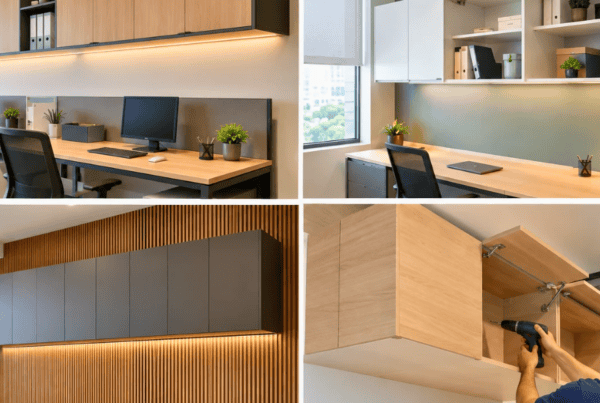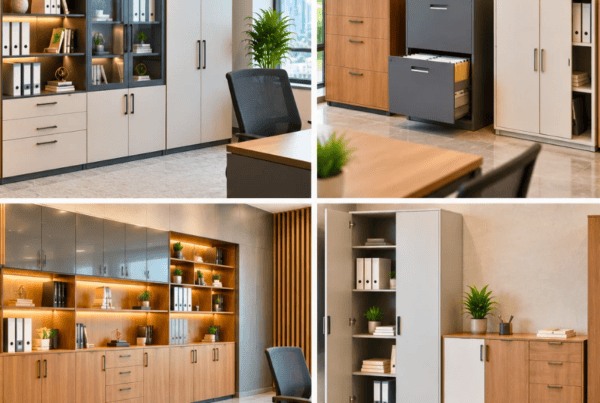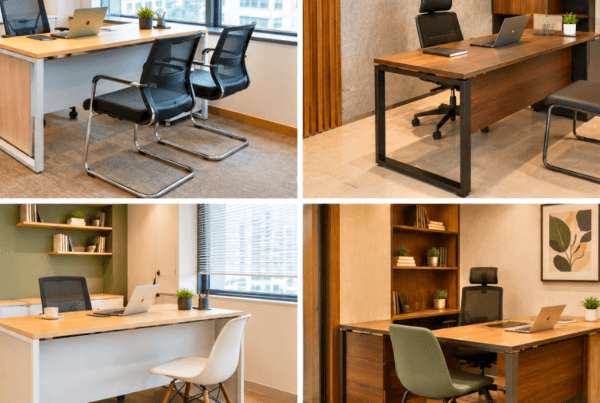
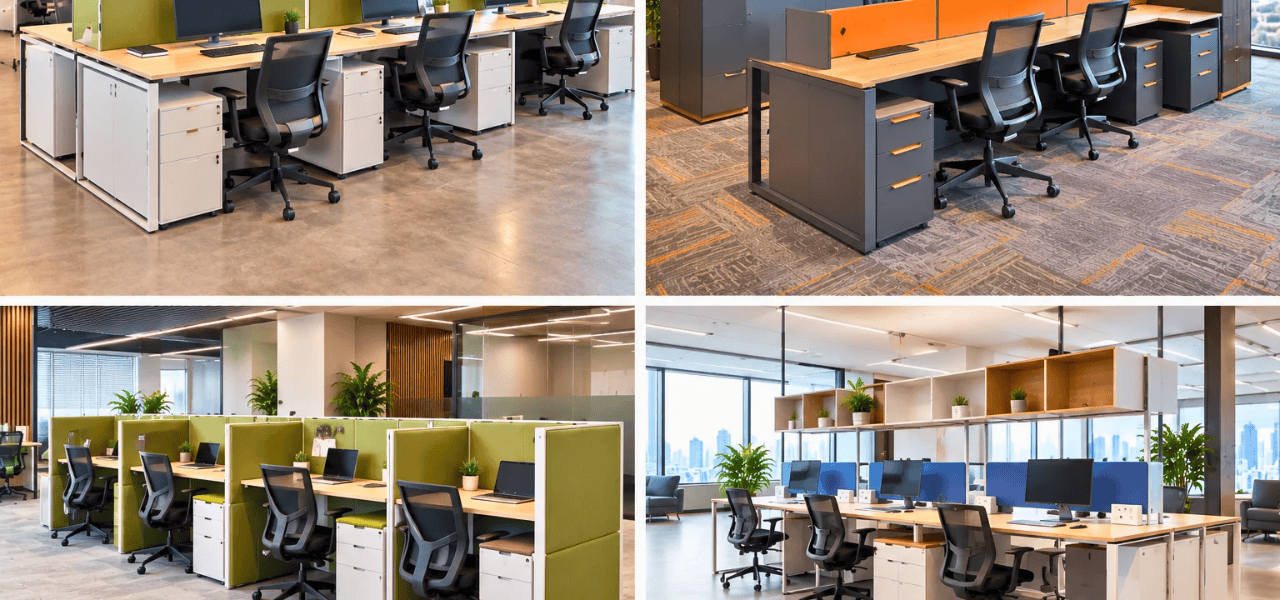
Why Your Office Table Design Matters More Than Ever
Walk into any well-run office today and you will notice something. The furniture is no longer an afterthought. The right modular office table design shapes how teams collaborate, how comfortably people work through a long day, and how quickly a company can adapt when it grows, shrinks or shifts to hybrid work. Research on workplace design consistently links the physical environment to employee focus, comfort and productivity, and the desk is the object people interact with most.
Not long ago, most Indian offices relied on fixed, heavy, one-size-fits-all desks. Changing a layout meant a renovation, a carpenter and a lot of disruption. Today, businesses want flexibility. They want an office table that can be reconfigured over a weekend, expanded when ten new hires arrive, and moved when the lease ends. That is exactly what modular office furniture offers.
In this guide, we cover what modular office tables are, the main types available, their benefits, how to choose the right design for your space, and the trends shaping workplaces in 2025 and 2026. Whether you are an interior designer, a procurement manager, a startup founder or an admin head planning a fit-out, this guide will help you make a confident decision.
What Is Modular Office Table Design?
Definition and Core Concept
A modular office table is built from standardised, interchangeable components such as desktops, legs, side returns, privacy screens, storage pedestals and cable management trays. These components connect in different combinations to create a complete workspace. Think of it as a building-block system for your office.
The core idea is adaptability. Instead of buying a fixed desk that serves one purpose in one position, you invest in a system that can be rearranged, extended or reduced as your needs change. A traditional desk is a finished object. A modular table is a flexible framework.
How Modular Office Tables Differ from Conventional Office Tables
The differences become clear once you look at how each performs over several years:
- Layout flexibility: Modular systems can be arranged in linear, L-shaped, U-shaped or cluster formats. A conventional desk stays as it was installed.
- Ease of reconfiguration: Modular units can be repositioned without renovation, which means little downtime and no major construction work.
- Long-term cost efficiency: You can add or replace individual components rather than the entire desk. Over a five to ten year horizon, this usually works out more economical.
- Space efficiency: A well-planned office workspace table layout makes use of corners and awkward floor plates that fixed desks leave wasted.
- Integrated functionality: Modern workstation desking often includes built-in cable channels, power modules, monitor risers and privacy panels, so the desk works as a complete workstation rather than a plain surface.
Types of Modular Office Table Designs for Modern Workspaces
Not every team needs the same desk. Here are the six most common configurations and where each works best.
1. Modular Executive Desk
The modular executive desk is designed for senior leaders, directors and C-suite professionals. It offers a larger work surface, premium finishes, integrated cable management and often a matching return or credenza. Because it is modular, it can be paired with storage pedestals, a meeting extension or a side table, so the desk grows into a complete leadership workstation rather than a single slab of wood.
Choose this design when you want a professional, polished presence in a manager’s or director’s room without giving up flexibility.
2. Modular Cabin Table
The modular cabin table is built for semi-private and private workspaces such as manager cabins, team-lead rooms and small private offices. It can be customised to specific room dimensions, which matters in Indian commercial buildings where cabin sizes are often compact and irregular. It pairs well with partition systems, storage walls and visitor seating, helping the cabin feel organised and uncluttered.
3. Workstation Desking and Linear Workstations
Open-plan offices run on workstation desking. These systems place multiple employees in a row or cluster configuration, with shared legs, continuous worktops and integrated privacy screens. Features such as monitor arms, power modules and under-desk cable trays keep each station tidy.
This is the most space-efficient option for call centres, IT teams, finance departments and any workplace with large teams. Because the system is modular, adding a new seat at the end of a row is quick and inexpensive.
4. Knock Down (KD) Office Table
A knock down office table is a flat-pack design that can be transported compactly, assembled on site and disassembled again when needed. This makes it a strong choice for companies that expect to relocate, for rapid deployment across multiple branches, and for temporary or project-based offices.
Because KD furniture ships flat, it also reduces logistics costs and installation time. For businesses expanding quickly across cities, it is a practical and economical solution.
5. Height-Adjustable and Sit-Stand Modular Tables
Wellness is now a priority for many employers, and height-adjustable tables are a big part of that. Using electric or manual mechanisms, employees can shift between sitting and standing through the day. These tables also suit hybrid work and hot-desking models, where different people use the same desk at different times and need to adjust it to their own height.
6. Collaborative and Cluster Workstation Tables
Agile teams, creative agencies, tech startups and co-working spaces often prefer pod-style layouts that encourage conversation and quick problem-solving. Collaborative cluster tables place four, six or more people around a shared surface, with just enough partitioning to preserve focus. They are ideal when teamwork matters more than individual privacy.
Key Benefits of Modular Office Table Design
1. Space Optimization
Every square foot of office space has a cost, and modular configurations help you use it wisely. A modular office table system can be fitted around columns, windows and corners, and adjusted to suit anything from a small startup space to a full corporate floor. Smart layouts increase the number of usable seats without making the office feel crowded.
2. Scalability as Your Team Grows
Growth is exciting, but it can be painful when your furniture cannot keep up. With modular systems, you add units as you hire and remove them when teams shrink, without replacing the entire installation. For fast-growing organisations, this makes the furniture a future-proof investment rather than a recurring expense.
3. Improved Workflow and Collaboration
Different work needs different environments. Modular layouts let you create zones: collaborative pods for brainstorming, quiet rows for focused work and flexible hybrid areas for teams that rotate in and out. If a team’s workflow changes, the layout can change with it.
4. Ergonomics and Employee Well-Being
Poorly designed desks contribute to back pain, neck strain and fatigue. Good modular tables address this through correct working heights, adjustable options, sensible cable routing and enough legroom. When paired with quality ergonomic chairs, a modular table forms a complete, health-forward workstation that supports people through long working days.
5. Aesthetic Versatility
Modular does not mean plain. Today’s systems come in a wide range of finishes, including wood laminates, matte surfaces, textured designs and glossy options. They complement minimalist, industrial and contemporary interiors alike, so your office can look distinctive and cohesive at the same time.
6. Sustainability and Responsible Manufacturing
Sustainability is increasingly part of procurement decisions. Modular furniture is inherently more sustainable because components can be reused, reconfigured and replaced individually, which means less waste over time. Manufacturers with strong environmental practices add to this advantage. Vlite Furnitech, for example, operates a LEED-compliant facility and holds BIFMA certification, using responsibly sourced materials and manufacturing processes designed to reduce waste. Its ISO 9001:2015 quality standards also ensure durability, and durable furniture means fewer replacements and less landfill.
How to Choose the Right Modular Office Table Design
Choosing furniture for a whole office can feel overwhelming. Breaking it into five steps makes it far more manageable.
Step 1: Assess Your Office Space and Layout
Begin with measurements. Note the total area in square feet, then mark structural constraints such as columns, windows, fire exits, air-conditioning vents and electrical points. Decide whether your office will be open plan, cabin-based or a mix of the two. A good layout plan at this stage prevents expensive corrections later.
Step 2: Identify Your Team Structure and Work Style
Think about how people actually work:
- Focused, individual work: Individual modular desks with privacy screens.
- Collaborative teams: Cluster or pod-style workstation desking.
- Senior management: A modular executive desk or a modular cabin table, depending on the size of the room.
- Hybrid teams: Height-adjustable or hot-desking-ready tables that suit multiple users.
Many offices need a combination, which is exactly where modular systems shine.
Step 3: Set a Budget and Plan for the Long Term
Compare the upfront price against the lifecycle cost. A conventional desk may look cheaper on the invoice, but if you must replace it every time your layout changes, the costs add up. Factor in the value of being able to reconfigure and expand. A slightly higher initial investment in a quality modular system often pays for itself within a few years.
Step 4: Prioritize Ergonomics and Cable Management
Look for integrated wire channels, grommet holes and cable trays. A tangle of wires under the desk is not just ugly; it is a safety and maintenance problem. Make sure desk heights, depths and legroom are suitable for the people using them, and plan seating that complements the table.
Step 5: Work with a Certified Manufacturer
The quality of the manufacturer determines the quality of the furniture. Look for a partner with proven capacity, recognised certifications and a strong project management and after-sales team. Vlite Furnitech, for instance, operates a 30,000 sq. ft. manufacturing facility with a capacity of 14,000 workstations per month, backed by BIFMA and ISO 9001:2015 certifications. That scale and certification give buyers confidence in timelines, consistency and long-term durability. If you are evaluating an office furniture manufacturer, always ask about certifications, production capacity and installation support.
Modular Office Table Design Trends to Watch in 2025–2026
Workplaces are evolving fast, and furniture is evolving with them. These are the trends worth watching.
Biophilic design integration
Natural textures, wood tones and organic forms are making their way into modular tables, bringing a calming, nature-inspired feel to the office.
Technology-embedded desks
Wireless charging pads, built-in USB hubs and integrated power modules are becoming standard expectations rather than premium extras.
Hybrid-ready configurations
With many companies following hybrid models, hot-desking and hoteling systems are growing in popularity. Tables need to be quick to adjust, easy to sanitise and suitable for different users.
Sustainable materials
Recycled content, low-VOC finishes and responsibly sourced boards are increasingly requested by procurement teams and sustainability-conscious clients.
Minimalist aesthetics with maximum functionality
Clean lines, hidden storage and uncluttered surfaces are replacing bulky, heavily ornamented designs. The goal is a desk that looks simple but does a lot.
Why Vlite Furnitech Is India’s Trusted Modular Office Furniture Manufacturer
Choosing a supplier is as important as choosing the design, so it is worth understanding what separates a reliable manufacturer from a basic catalogue seller.
Vlite Furnitech manufactures from a 30,000 sq. ft. state-of-the-art facility in Patalganga, Navi Mumbai, with the capacity to produce 14,000 workstations every month. That scale means large corporate projects can be delivered on schedule without compromising consistency.
Quality is backed by recognised credentials: BIFMA, ISO 9001:2015 and LEED-compliant manufacturing. Together, these reflect a commitment to durability, safety and responsible production. With branches in Mumbai, Pune, Ahmedabad, Surat and Hyderabad, along with global project delivery, Vlite supports clients across regions with local presence and responsive service.
Every project is approached as a collaboration. Vlite’s design and project management teams work with clients to tailor solutions to their specific needs and the latest workplace trends, and they handle execution end to end, including after-sales service. Sustainability is built into materials, production and delivery rather than treated as an add-on.
If you are planning a fit-out, you can explore the full range of modular office furniture and request a free design consultation to see how these ideas can work in your own space.
Still comparing modular, bespoke, and traditional office furniture?
Let Vlite Furnitech LLP help you choose the smartest investment for better ROI.
Frequently Asked Questions (FAQ)
Q1: What is a modular office table?
A modular office table is a flexible, reconfigurable furniture system made of interchangeable components that can be arranged into different layouts to suit different office needs.
Q2: What is the difference between a modular executive desk and a regular office table?
A modular executive desk is designed for senior-level professionals, with larger surfaces, premium finishes, integrated storage and customisable configurations. A regular office table usually offers a fixed, standard setup.
Q3: What is a knock down office table?
A knock down (KD) office table is a flat-pack design that is easy to transport, assemble and disassemble. It is ideal for offices that need mobility or quick installation.
Q4: How do I choose the right modular office table for my workspace?
Consider your office layout, team size, work style, budget and ergonomic requirements. It is best to work with an experienced modular office furniture manufacturer who can customise solutions to your needs.
Q5: Are modular office tables eco-friendly?
Yes, they can be. Because components can be reused and replaced individually, modular systems generate less waste. Leading manufacturers like Vlite Furnitech also use responsibly sourced materials and LEED-compliant production processes, making modular office tables a sustainable choice.
Q6: How long does it take to install modular office furniture?
Installation time depends on the size and complexity of the project. Manufacturers like Vlite Furnitech deploy dedicated project management teams to ensure timely, efficient delivery and setup.
Design a Workspace That Works as Hard as You Do
Modular office table design is the smart, scalable and stylish choice for modern offices. It gives you the freedom to reshape your workspace as your business evolves, supports healthier and more productive working habits, and delivers better long-term value than fixed furniture. From open-plan workstation desking to a refined modular executive desk, a practical modular cabin table or a portable knock down office table, the right design can change how your team works every day.
The key is to plan carefully, think long-term and partner with a manufacturer who combines design excellence with certified quality. As one of India’s most recommended office furniture manufacturers, Vlite Furnitech brings together all three, delivering workspaces that inspire.
Ready to redesign your office? Contact Vlite Furnitech for a free consultation and a custom modular furniture quote.

Vishnu Sharma
I am the co-founder and CEO of Vlite Furnitech, creating modular office solutions since 2009. With a background in Chemistry and Marketing, and experience as Regional Head at Featherlite, I help design ergonomic, adaptable, and sustainable workspaces. Alongside a team of 120+, we serve corporates like JCB, Just Dial, KFC, and educational institutions. Let’s connect to reimagine innovative, eco-friendly office environments.