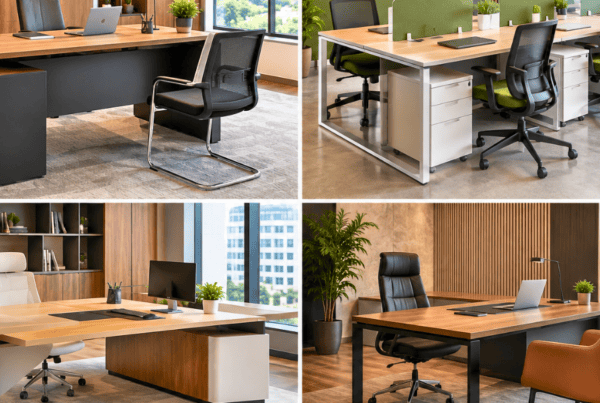
Why Executive Table Size Matters More Than You Think
You have just invested in a beautiful executive table with a rich veneer finish and a leather inlay. It arrives at the office, and the moment it is placed in the cabin, something feels wrong. Either the desk swallows the room, leaving barely enough space to pull out the chair, or it looks far too small for the person who sits behind it. This is one of the most common and most expensive mistakes in office planning, and it happens because executive table size is treated as an afterthought.
Getting the executive table size right affects three things that matter to every business. The first is productivity. A desk that is too small forces a leader to juggle documents, laptops and monitors in a cramped space. A desk that is too large reduces circulation and makes the cabin feel cluttered. The second is perception. In a corporate setting, the scale of a desk quietly signals seniority and authority, and visitors form impressions within seconds of entering a cabin. The third is ergonomic comfort. Poor clearance, awkward reach distances and incorrect depth lead to fatigue and posture problems over long working hours.
Research on workplace design consistently links well-planned office space with better focus and employee satisfaction. Studies published by workplace ergonomics bodies and organisations such as the Human Factors and Ergonomics Society show that physical comfort and spatial layout directly influence how long people can work effectively without strain. A desk is the centre of that environment.
This guide gives you a complete, role-wise and cabin-size-wise breakdown of executive desk dimensions, so you can choose the right office table size for your cabin with confidence. Whether you are an architect planning a new floor, a procurement manager buying in bulk, or a business owner setting up your first C-suite office, you will find clear numbers and practical advice below.
Standard Executive Table Dimensions: A Quick Reference
If you want fast answers, start here. This table summarises the standard executive desk dimensions used across Indian offices, organised by role.
| Role / Usage | Recommended Length | Width | Height |
| MD / CEO Table | 6–8 ft (180–240 cm) | 3–4 ft (90–120 cm) | 29–30 in (73–76 cm) |
| Director / VP Table | 5–6 ft (150–180 cm) | 2.5–3 ft (75–90 cm) | 29–30 in (73–76 cm) |
| Senior Manager Table | 4.5–5 ft (135–150 cm) | 2–2.5 ft (60–75 cm) | 29–30 in (73–76 cm) |
| Manager / Executive | 4–4.5 ft (120–135 cm) | 2 ft (60 cm) | 29–30 in (73–76 cm) |
Note: All dimensions listed are standard. Vlite Furnitech offers fully customisable executive desks to match your exact cabin layout.
Notice that the height stays constant across roles, because human ergonomics do not change with job title. What changes is the footprint: length and width grow with seniority, reflecting greater storage needs, multiple devices and the presence of visitors across the desk.
Executive Table Dimensions by Cabin Size
The most reliable way to choose an executive table is to begin with the room itself. A desk should never be selected on role alone, because a perfectly appropriate director desk can still overwhelm a small cabin. Here is how to match table size to cabin area.
Small Cabin (Up to 100 sq. ft.)
Ideal executive table size: 4–4.5 ft in length by 2 ft in width.
In a compact cabin, every inch counts. Choose a straight-leg desk or a compact L-shaped configuration, and avoid bulky return units that eat into the floor. Maintain a minimum of 36 inches between the desk edge and any wall or cabinet so that the chair can move freely and the user can stand up without difficulty.
Vlite tip: Modular designs with integrated storage save floor space without sacrificing function. A desk with a built-in pedestal removes the need for a separate filing cabinet, which can be the difference between a cabin that feels workable and one that feels crowded.
Medium Cabin (100–150 sq. ft.)
Ideal executive table size: 5–6 ft in length by 2.5–3 ft in width.
This size range gives you room for a return or side unit, and in many cases a credenza behind the chair. It suits senior managers and department heads who need more surface area for documents, a laptop and an external monitor.
Ergonomic consideration: Leave adequate space for the chair to recline and rotate, and position your monitor 24–28 inches from your eyes. A desk that is deep enough to support this distance prevents the eye strain that comes from sitting too close to a screen.
Large Cabin (150–250 sq. ft.)
Ideal executive table size: 6–7 ft in length by 3–3.5 ft in width.
A large cabin can comfortably hold a dedicated visitor seating zone across the desk. This is the typical setting for directors, vice presidents and general managers, who frequently host one-on-one discussions or small review meetings in their own space.
Design tip: Pair the desk with a matching credenza and a compact side discussion table. Matching finishes across these pieces create a cohesive, professional look that feels intentionally designed rather than assembled piece by piece.
Corner or Presidential Cabin (250+ sq. ft.)
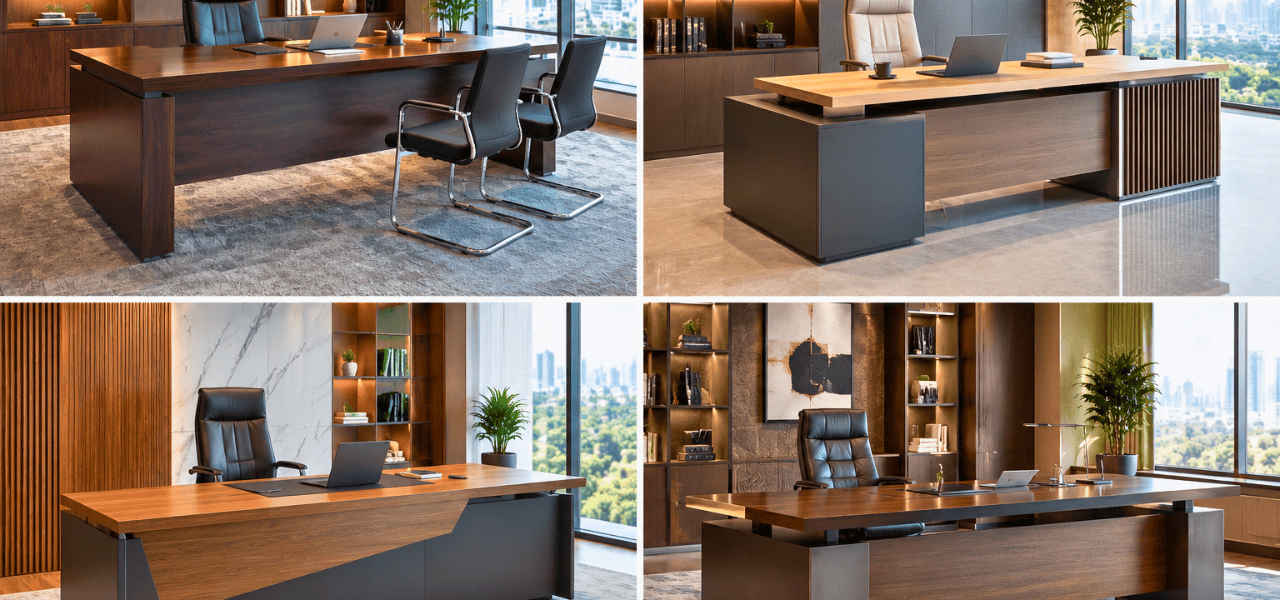
Ideal MD table size: 7–8 ft in length by 3.5–4 ft in width, plus an L-shaped return.
Corner and presidential cabins offer the freedom to include an in-cabin mini-meeting zone, usually a round table for two to four people. These spaces are designed for managing directors, CEOs and chairmen, where the desk is both a workstation and a statement piece.
Vlite tip: A matching veneer or high-gloss finish executive desk reinforces authority and brand prestige in a large cabin. At this scale, finish quality becomes as important as dimensions, because a large surface exposes every flaw in material and craftsmanship.
MD Table Size: What Sets the CEO Desk Apart
The MD table size deserves its own discussion, because the managing director’s desk is not simply a bigger version of a manager’s desk. It is designed around a different set of needs.
Why MD desks are wider and deeper
A leader at this level works with multiple documents at once, often runs dual-monitor setups, and regularly has visitors seated directly across the desk. A depth of 3.5–4 feet creates a comfortable visual and physical buffer between the executive and the guest, while also giving ample room for screens, files and a notebook without crowding.
Common configurations. There are three popular layouts for senior leadership:
- Straight desk with a return unit: The classic arrangement, offering a main work surface plus a secondary surface for a laptop or printer.
- Double-pedestal executive desk: A traditional, substantial design with storage on both sides, giving a strong and formal presence.
- U-shape workstation: Ideal for leaders who manage heavy paperwork or need several work zones within arm’s reach.
Material and finish choices
At this scale, the finish matters. High-gloss laminate offers a modern, easy-to-maintain surface. Natural veneer brings warmth and a premium feel. Leather inlays on the writing surface add a refined touch that suits boardroom-style cabins. The material should be proportionate to the desk: large surfaces demand consistent grain, flawless edge finishing and durable coatings.
Vlite Furnitech’s MD-series executive tables are engineered to command presence, and are available in custom dimensions from our 30,000 sq. ft. facility in Navi Mumbai. If your cabin has unusual proportions, a custom MD table is often the best way to achieve the right balance between scale and circulation space.
Role-Wise Executive Desk Dimensions Guide
While the cabin sets the limits, the role sets the expectations. Here is a closer look at each level of seniority.
Manager-Level Executive Table
Size: 4–4.5 ft by 2 ft.
Manager desks should be clean and minimal. A straight desk with a single pedestal is the most common choice, offering enough surface for daily work without taking over the room. Prioritise tidy cable management, since most managers use a laptop with an external display.
Senior Manager / Team Lead
Size: 4.5–5 ft by 2–2.5 ft.
At this level, a small return unit can be a useful addition, giving a second surface for reference material or a secondary device. Wire management becomes more important here, as the number of connected devices grows. A desk with built-in cable trays or grommets keeps the workspace looking professional.
Director / VP Level
Size: 5–6 ft by 2.5–3 ft.
Directors and vice presidents need a desk with more visual weight. The surface should be large enough to host a few papers, a laptop and a monitor without feeling crowded. Pairing the desk with a credenza is common, creating a dedicated storage and display area behind the chair.
C-Suite / MD / CEO
Size: 6–8 ft by 3–4 ft.
This is the statement piece. Expect matching storage wall units, premium finishes and, in many cases, leather top inserts. Every detail, from edge profiles to hardware, should reflect the standing of the organisation. For those who want to explore options, our range of executive tables is built to scale from manager cabins right up to the chairman’s office.
Ergonomics and Clearance: Getting the Details Right
Size is only part of the story. Even a perfectly dimensioned desk can feel uncomfortable if the surrounding clearances are wrong. These are the figures to keep in mind.
- Standard desk height: 73–76 cm (29–30 inches) suits most adults in a seated position, including the typical range of Indian users.
- Height-adjustable desks: Consider these if multiple people share the space, or if the user prefers alternating between sitting and standing. They are increasingly popular among senior leaders who spend long hours at their desks.
- Knee clearance: Allow a minimum of 24 inches (60 cm) beneath the desk for comfortable legroom.
- Walkway clearance behind the chair: Keep at least 36–48 inches so that the chair can move and people can pass without squeezing.
- Eye-to-monitor distance: 24–28 inches is ideal. This is especially important in large cabins where multi-monitor setups are common.
Pairing the desk with well-designed ergonomic chairs completes the picture, because the best desk dimensions can be undone by a chair that does not support the body properly.
BIFMA-certified furniture from Vlite Furnitech meets international ergonomic and quality standards, giving you confidence that the product will perform well over years of daily use.
Choosing the Right Office Table Size for Your Cabin: 5 Key Factors
When you are ready to decide, work through these five factors in order.
- Cabin square footage. Always start here. Measure the length and width of the room, and note the position of doors, windows and any fixed fittings. Table length should be chosen only after you understand how much usable floor you have.
- Role and seniority level. Desk scale signals authority and aligns with the organisational hierarchy. Choosing a desk that matches the role helps visitors and colleagues read the space correctly.
- Number of monitors and devices. Larger screens and multi-monitor setups need deeper desktops. As a rule of thumb, a minimum depth of 30 inches is advisable when more than one display is in use.
- Visitor seating across the desk. Add 12–18 inches to the planned length for comfortable visitor-side clearance. Guests should be able to sit without feeling squeezed against a wall or cabinet.
- Storage needs. Integrated pedestals reduce the need for additional cabinets, saving floor space. If your cabin is small, built-in storage is one of the smartest ways to reclaim room. You can also explore our storage units for complementary options.
If your project covers a full floor rather than a single cabin, it is worth planning the desks alongside the wider layout, including office workstations for open areas and modular office furniture that can adapt as the team grows.
Related: Conference and Meeting Room Furniture Sizing
Executive cabins rarely exist in isolation. Many leaders need a meeting space nearby, and the same sizing logic applies.
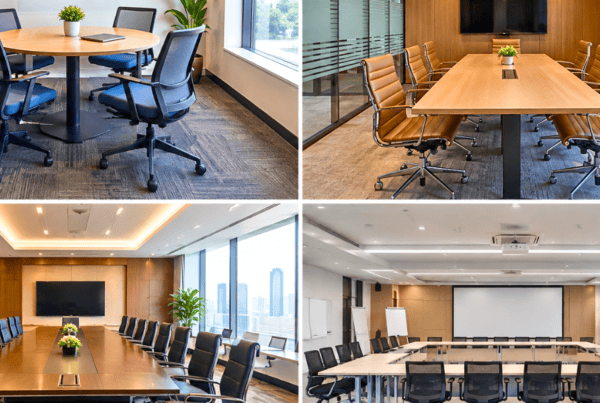
Conference tables generally range from 8 to 20 feet depending on seating capacity. A six-seater table needs roughly 8–10 feet, while a twelve-seater requires about 14–16 feet. It is important to distinguish between an executive boardroom table, which is formal, substantial and designed for decision-making, and a collaborative workspace table, which is lighter, flexible and designed for team discussion.
Whichever you choose, allow at least 36 inches around the table for chairs and movement. To see the full range, explore Vlite’s Conference & Meeting Room Furniture collection.
Why Vlite Furnitech for Executive Office Furniture
Choosing the right size is only half of the job. The other half is working with a manufacturer who can deliver exactly what you specified. Here is why organisations across India trust Vlite Furnitech.
- Certified quality. BIFMA-certified and ISO 9001:2015 quality assurance means every desk is built to last.
- In-house manufacturing. Our Patalganga, Navi Mumbai facility has a capacity of 14,000 units per month, giving us control over quality and timelines.
- Full customisation. Dimensions, finishes, cable management and modular add-ons can all be tailored to your cabin.
- Pan-India availability. We serve Mumbai, Pune, Ahmedabad, Surat and Hyderabad, as well as global projects.
- Sustainable manufacturing. LEED-compliant processes support organisations with environmental goals.
We do not just tell you the size. We manufacture it, customise it and deliver it.
Talk to our design team to find the ideal executive table size for your cabin. Customised solutions, delivered on time.
Still comparing modular, bespoke, and traditional office furniture?
Let Vlite Furnitech LLP help you choose the smartest investment for better ROI.
Frequently Asked Questions (FAQ)
Q1: What is the standard executive table size in India?
Standard executive desk dimensions in India range from 4 ft to 8 ft in length, depending on the role. A manager’s desk typically measures 4–4.5 ft, while an MD table size is commonly 6–8 ft.
Q2: What is the ideal MD table size for a large cabin?
For a cabin of 200+ sq. ft., the recommended MD table size is 7–8 ft in length and 3.5–4 ft in width, often paired with an L-shaped return unit for additional workspace.
Q3: What is the standard office table height for an executive desk?
The standard executive desk height is 73–76 cm (29–30 inches), ergonomically suited for most adults in a seated position.
Q4: How do I choose the right executive table size for my office cabin?
Measure your cabin, identify the role, factor in monitor setup and visitor seating, and maintain a minimum 36-inch walkway clearance. Vlite Furnitech’s design consultants can help you plan the perfect layout.
Q5: Can executive tables be customised to fit non-standard cabin sizes?
Yes. Vlite Furnitech specialises in fully customised executive office furniture, available in custom dimensions and finishes to fit any cabin layout.
Q6: What size conference table fits in a meeting room?
Conference and meeting room furniture sizing depends on the number of seats. A 6-seater table requires approximately 8–10 ft, while a 12-seater needs 14–16 ft.
Size It Right, Lead with Presence
The right executive table size is a blend of three things: the dimensions of your cabin, the seniority of the person using it, and the ergonomic needs that keep them comfortable and productive. Start with the room, match the desk to the role, and finish by checking clearances and monitor distances.
A well-sized desk is not only functional. It is a statement of authority and professionalism, and it shapes how leaders work and how visitors perceive your organisation.
Ready to furnish your executive cabin? Explore Vlite Furnitech’s range of executive desks and office workspace tables, crafted to your exact specifications.

Vishnu Sharma
I am the co-founder and CEO of Vlite Furnitech, creating modular office solutions since 2009. With a background in Chemistry and Marketing, and experience as Regional Head at Featherlite, I help design ergonomic, adaptable, and sustainable workspaces. Alongside a team of 120+, we serve corporates like JCB, Just Dial, KFC, and educational institutions. Let’s connect to reimagine innovative, eco-friendly office environments.