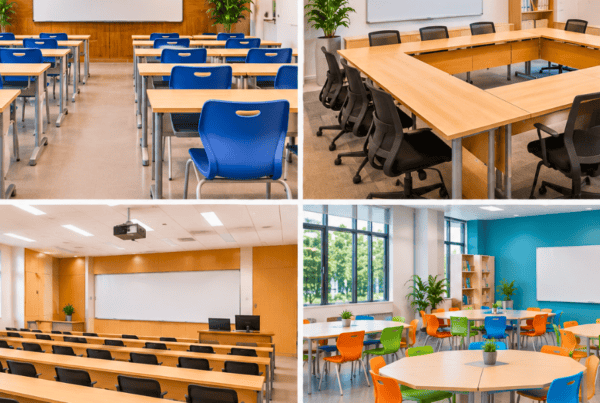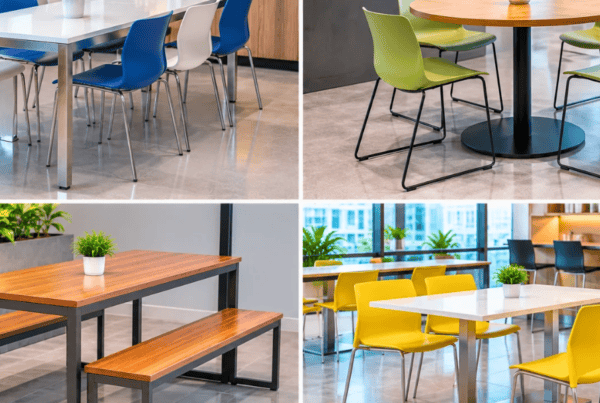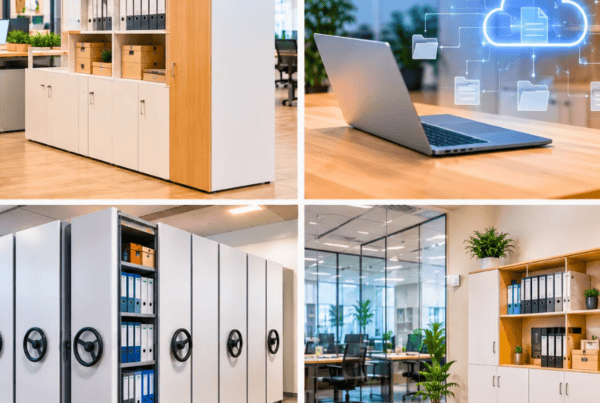
Walk into any classroom and you will notice the furniture last. Yet a student spends several hours a day at a desk, and over a school career that adds up to thousands of hours. Research in classroom ergonomics has repeatedly linked well-fitted furniture to better posture, longer attention spans, and less physical fatigue. When the furniture is wrong, students pay for it in concentration.
Anyone who has seen a Class 2 student with dangling feet or a college student hunched over a table that is too low knows how this goes. Ill-fitting, worn-out school furniture leads to poor posture, discomfort, and constant fidgeting. Teachers see it as distraction, and parents see it as complaints of back and neck pain.
For principals, administrators, and procurement officers, educational table design for schools is therefore a learning-environment decision as well as a purchasing one. This guide covers the types of educational tables, age-appropriate sizing, materials, design features, current trends, and what to look for in a supplier when buying school furniture in India.
What Is an Educational Table? Defining the Category
An educational table is any table designed specifically for learning environments: classrooms, laboratories, libraries, computer rooms, lecture halls, and faculty spaces. The category covers both single-user student desks and tables built for group or specialised work.
Educational Table vs. Regular Office Table: Key Differences
A table that works in an office will usually fail in a school. The differences are significant:
- Age-specific sizing and height. Office tables assume adult users. Educational tables are built for children and young adults whose bodies change quickly, so heights and proportions must match the age group.
- Durability under heavy use. Classroom furniture is dragged, climbed on, leaned on, scratched, and cleaned daily. Load-bearing capacity and structural strength must be much higher than in a typical office setting.
- Surface finishes for learning tasks. Writing, drawing, practical work, and laptop use all demand surfaces that are smooth, scratch-resistant, easy to wipe, and non-glare.
- Safety by design. Rounded corners, stable bases, and non-toxic finishes are essential when younger students are using the furniture.
Types of Educational Tables Used in Schools and Colleges
Most institutions need a mix of the following:
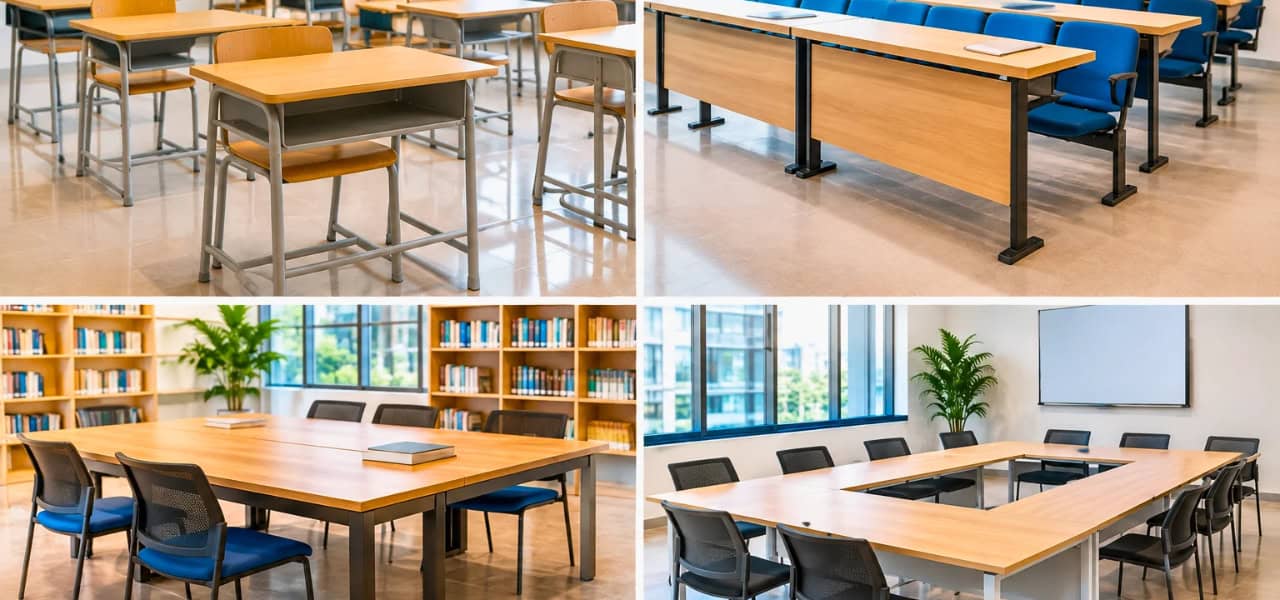
- Individual student desks. The standard in most classrooms, available in fixed and stackable formats. A well-chosen student desk for school use balances comfort, storage, and cost.
- Group and collaborative tables. Cluster or modular tables that allow teamwork, discussion, and project-based learning.
- Laboratory and science tables. Chemical-resistant surfaces, sturdy frames, and sometimes integrated services for physics, chemistry, and biology labs.
- Computer and IT lab tables. Designed with cable management, keyboard trays, and proper monitor height.
- Library reading tables. Larger, quieter tables for individual study and small group reading.
- Teacher and faculty tables. Larger work surfaces with storage, built for marking, planning, and administration.
Each type has different requirements, which is why school table design is not a one-size-fits-all exercise.
Standard Classroom Table Size: What the Guidelines Say
Getting the classroom table size right is the single most important factor in student comfort. A table that is too high forces the shoulders up and strains the neck. One that is too low causes slouching and rounded shoulders.
Age-Based Sizing Standards for Student Desks
The following reference table gives commonly recommended heights by age group:
| Age Group | Recommended Table Height | Seat Height |
| Primary (6–10 years) | 52–58 cm | 32–38 cm |
| Middle School (11–14 years) | 60–68 cm | 38–42 cm |
| High School / College (15+ years) | 72–76 cm | 42–46 cm |
These figures follow the ergonomic principles reflected in Indian Standard (BIS) guidance for educational furniture. Institutions should confirm the current applicable standards when finalising specifications, since requirements can be updated.
A few principles apply to every age group:
- The seat-to-table height ratio matters most. When the student sits with feet flat on the floor and thighs roughly parallel to it, the table surface should sit near elbow height, allowing relaxed shoulders and forearms.
- Growth spurts are real. In a Class 6–8 classroom, students of the same age can differ noticeably in height. Where budgets allow, height-adjustable options or two size bands per classroom are worth considering.
- Correct sizing protects posture. Over years, well-matched furniture supports healthier spinal habits.
Recommended Table Dimensions for Colleges and Universities
College and university spaces are more varied, so the right dimensions depend on how the room is used:
- Lecture halls. Flip-top or tablet-arm desks make the best use of fixed seating. They are compact, space-efficient, and suited to note-taking, though they need to accommodate both right- and left-handed students.
- Seminar rooms. Larger rectangular or modular tables that can be arranged in a U-shape, boardroom style, or clusters encourage discussion.
- Laboratory benches. Typically built at a standing or stool-height level with work surfaces deep enough for equipment and experiments.
- Drawing and design tables. Architecture and design departments need large, tilt-top tables, often with adjustable angles, to support technical drawing.
- Accessibility. Inclusive campuses should plan for wheelchair-accessible tables with adequate knee clearance and height, and for aisle widths that allow easy movement. Accessibility should be part of the original design brief.
Key Design Features to Look for in School Furniture
Once sizing is settled, the quality of the design determines how well the furniture performs day after day.
Ergonomics: The Foundation of Good School Table Design
Good ergonomics is about comfort, health, and the ability to focus.
- Proper height-to-seat ratio, as discussed above.
- Rounded edges and corners to reduce injury risk, which matters most in primary classrooms.
- Adequate legroom and knee clearance, so students can sit with their legs positioned comfortably and shift position.
- Tilt-top options for drawing, reading, and design work. A slightly angled surface reduces neck strain and improves visibility.
Durability and Material Quality
Schools are tough environments, and institutional buyers should look closely at materials.
Table-top surfaces:
- Pre-laminated particleboard is a cost-effective, smooth, and easy-to-clean option for everyday classroom use.
- MDF offers a fine, uniform surface that takes finishes well.
- Compact HPL (high-pressure laminate) is extremely strong, moisture-resistant, and ideal for labs and high-wear areas.
Frame materials:
- Powder-coated mild steel (MS) gives excellent strength and a protective finish against rust and chipping.
- Solid wood offers a classic look and long life, often used in libraries or faculty areas.
- Polypropylene components work well for lightweight, easy-to-clean seating and small desk elements.
Whatever the material, look for resistance to scratches, moisture, stains, and the wear of heavy daily use. A slightly higher upfront cost in better materials often reduces replacement costs significantly over the life of the furniture. This is the practical heart of good school table design.
Storage Integration
Storage keeps classrooms tidy and students organised.
- Under-seat shelves and book bag holders keep bags off the floor and out of aisles, which is a safety benefit as well as a convenience.
- Drawer pedestals suit older students and faculty who need to keep personal materials and stationery secure.
- Stackable and space-saving configurations help schools with small classrooms or multi-purpose halls.
Modularity and Flexibility
Modern teaching is not static, and furniture shouldn’t be either.
- Cluster arrangements let small groups collaborate, then return to a traditional layout.
- Foldable and stackable designs help multi-purpose halls shift between exams, assemblies, and events.
- Mobile tables on castors let teachers rearrange the room in minutes.
Modular school furniture gives institutions a long-term advantage, since one set of tables can serve several teaching styles.
Aesthetics and Colour Psychology in Educational Spaces
Colour and finish influence how a room feels. Calm, light tones tend to support focus, while carefully chosen accent colours can add energy to younger students’ spaces and collaborative zones. Many institutions also want furniture that reflects their identity, with school colours, branded accents, or coordinated finishes across campuses. Customisation in finishes and colours lets an institution create a space that feels distinctive and cohesive instead of generic.
Educational Table Design Trends in Schools and Colleges
Indian education is changing, and furniture is changing with it. Here are the trends shaping how institutions think about educational tables and school furniture:
- Activity-based learning (ABL) layouts. Aligned with the broader shift toward experiential learning promoted under NEP 2020, ABL classrooms use movable tables and flexible groupings in place of rows facing the board.
- Collaborative and breakout zones. Schools and colleges are adding informal learning corners and breakout areas with modular tables and soft seating, supporting peer learning and project work.
- Standing desk options. Health-conscious institutions are exploring sit-stand and standing-height tables, especially for older students and library or lab use.
- Sustainable and eco-friendly furniture. Institutions increasingly ask about environmental credentials such as responsible manufacturing, low-emission materials, and long product life. Manufacturers with LEED-compliant production and BIFMA-certified products can speak to this with confidence.
- Smart classroom integration. With laptops, tablets, and digital boards now common, tables with cable management, power access, and device-friendly surfaces are becoming standard in newer builds.
The common thread is flexibility. The best educational furniture today adapts to the teaching method.
How Vlite Furnitech Designs Educational Furniture for Indian Institutions
At Vlite Furnitech, we approach educational furniture the way an institution does: durability, comfort, and long-term value come first, and appearance follows.
Our products come out of a 30,000 sq. ft. manufacturing facility in Patalganga, Navi Mumbai, with a capacity of 14,000 workstations per month. That scale means we can handle both a single classroom refresh and a large multi-campus rollout while keeping quality consistent from the first unit to the last.
What this looks like in practice:
- Collaborative design. Our design team works directly with schools and colleges to adapt sizes, finishes, colours, and configurations to the specific needs of each institution.
- Certified quality. Our manufacturing follows BIFMA-certified product standards and ISO 9001:2015 quality management, with LEED-compliant production practices.
- Wide reach. We serve Mumbai, Pune, Ahmedabad, Surat, and Hyderabad, with pan-India delivery.
- Support beyond delivery. Dedicated project management and after-sales service teams help institutions with planning, installation, and ongoing needs.
If you are exploring modular school furniture solutions for a new building or a classroom upgrade, a conversation with an experienced manufacturer early on can save considerable time and cost.
Looking to furnish your institution? Talk to our design team today.
How to Buy the Right Educational Table for Your School or College
Buying furniture for an institution is a long-term commitment. A little structure up front prevents costly mistakes.
Questions to Ask Before Purchasing School Furniture
- What age group will use it? This determines sizing, which is the foundation of the whole decision.
- What is the classroom size? Room dimensions and student numbers decide table configuration and layout.
- Is the usage fixed or multi-purpose? Rooms used for several activities need lightweight, stackable, or mobile options.
- What is the budget per unit and for the total project? Compare total cost of ownership, not just the sticker price. Durable furniture often costs less over ten years.
- Do you need customisation? Think about colours, institutional branding, and special dimensions early, since they affect lead times.
Checklist: What to Look for in a School Furniture Supplier
- Manufacturing capability and certifications. Look for a genuine manufacturer with recognised quality credentials, not just a reseller.
- Customisation options. Can they adapt designs to your institution’s requirements?
- Warranty and after-sales support. A strong warranty and responsive service show confidence in the product.
- Timely bulk delivery. Check capacity and track record, especially for academic-year deadlines.
- Sustainability credentials. Ask about materials, manufacturing practices, and product life.
- References and past projects. Visit or speak to other institutions that have used their furniture.
A supplier who answers these questions clearly and transparently is more likely to be a dependable long-term partner.
Still comparing modular, bespoke, and traditional office furniture?
Let Vlite Furnitech LLP help you choose the smartest investment for better ROI.
Frequently Asked Questions (FAQ)
1. What is the standard classroom table size for school students in India?
Standard table height ranges from about 52 cm for primary students to around 76 cm for college-goers. The seat-to-table height ratio is the key to ergonomic comfort.
2. What materials are best for school furniture tables?
Pre-laminated particleboard or MDF surfaces paired with powder-coated steel frames offer the best balance of durability, aesthetics, and cost-effectiveness for Indian schools.
3. What is the difference between a student desk and an educational table?
A student desk is a single-user workstation, while educational tables can be configured for groups, labs, or collaborative learning. The umbrella term covers both.
4. How do I choose school furniture for a college lecture hall vs. a classroom?
Lecture halls typically use compact flip-top or tablet-arm desks, while classrooms benefit from modular tables that can be rearranged for group work.
5. Can school furniture be customised for specific institutional requirements?
Yes. Leading manufacturers like Vlite Furnitech offer customisation in size, finish, colour, and configuration to match the institution’s requirements.
6. What certifications should I look for when buying school furniture?
Look for BIFMA certification (structural durability), ISO 9001:2015 (quality management), and BIS-compliant materials for safe, long-lasting furniture.
Invest in the Right Educational Table for Better Learning Outcomes
The right furniture will not teach a lesson, but it makes learning easier. Thoughtful educational table design for schools supports healthy posture, encourages collaboration, and helps students stay focused through the school day. The essentials are correct sizing for each age group, strong materials, flexible layouts, and a supplier who can deliver quality at scale.
As Indian institutions embrace activity-based learning, smart classrooms, and sustainable practices, school furniture will keep moving from fixed and uniform to flexible and thoughtfully designed. The institutions that plan for this now will serve their students better for years to come.
At Vlite Furnitech, we bring certified quality, sustainable manufacturing, and full customisation, proudly made in India, to every project, from a single classroom to a full campus.
Get in touch with Vlite Furnitech to design the perfect educational furniture solution for your school or college.

Vishnu Sharma
I am the co-founder and CEO of Vlite Furnitech, creating modular office solutions since 2009. With a background in Chemistry and Marketing, and experience as Regional Head at Featherlite, I help design ergonomic, adaptable, and sustainable workspaces. Alongside a team of 120+, we serve corporates like JCB, Just Dial, KFC, and educational institutions. Let’s connect to reimagine innovative, eco-friendly office environments.