Modular office furniture is a system of standardized, interchangeable components, desks, workstations, storage units, and partitions, that can be assembled, reconfigured, or expanded without replacing the entire setup. Unlike fixed or built-in furniture, modular pieces share common dimensions and connector systems, so individual elements can be added, removed, or rearranged as a team’s needs change.
For Indian offices navigating hybrid work, fast headcount growth, and frequent relocations, this adaptability has moved from a “nice-to-have” to a core planning requirement. A modular system that fits a 20-person startup team today can expand into a 100-person floor plan later, using many of the same core components.
How Modular Office Furniture Works
Component-Based Assembly
Modular furniture is built from standardized parts, desk frames, worksurfaces, panels, connectors, and storage modules, manufactured to shared dimensions and finishes. Because every component is designed to work with every other component in the same product line, a facility team can mix and match pieces to create workstations, cabins, or breakout zones without custom fabrication for each configuration. Connector hardware (brackets, cable channels, panel joiners) is what allows these pieces to click together into a stable, cohesive unit rather than a collection of separate furniture items.
Interchangeability & Scalability
The defining advantage of modular systems is that individual components can be swapped, added, or removed independently. If a department grows from six to ten people, additional workstation modules can be connected to the existing run rather than replacing the whole setup. If a company downsizes or shifts to a hybrid seating model, unused modules can be reconfigured into meeting pods or storage walls instead of being discarded. This component-level flexibility is what separates modular office furniture from traditional, fixed-format furniture, where a single change often means redesigning or replacing an entire section of the office.
Types of Modular Office Furniture
Modular Workstations & Benching Systems
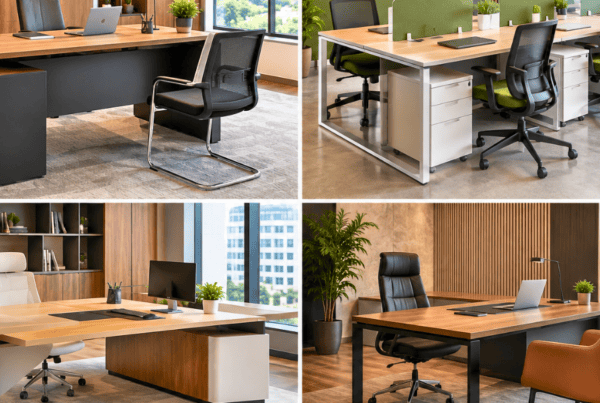
Modular workstations are the backbone of most contemporary Indian offices, especially in IT/ITES, enterprise, and coworking environments. Benching systems arrange multiple workstations along a shared frame, reducing the footprint per employee while maintaining privacy through low panels, cable management, and shared storage. These systems are typically the first thing facility teams standardize on when planning a new office fit-out.
Modular Desks
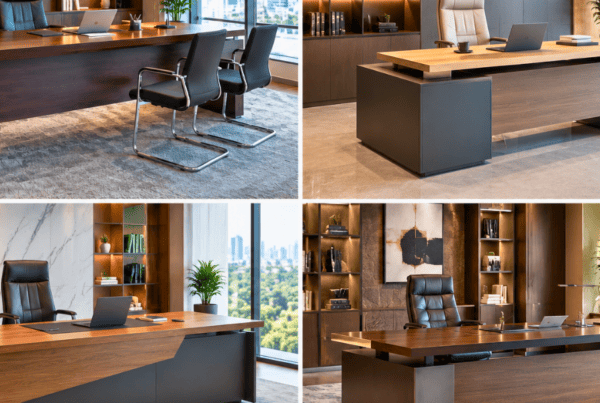
Individual modular desks, including height-adjustable and L-shaped configurations, allow for more personalized setups in cabins, leadership areas, or smaller offices where full benching isn’t practical. Because they use the same underlying component logic, they can still be reconfigured or paired with matching storage and partition modules later.
Ergonomic Chairs
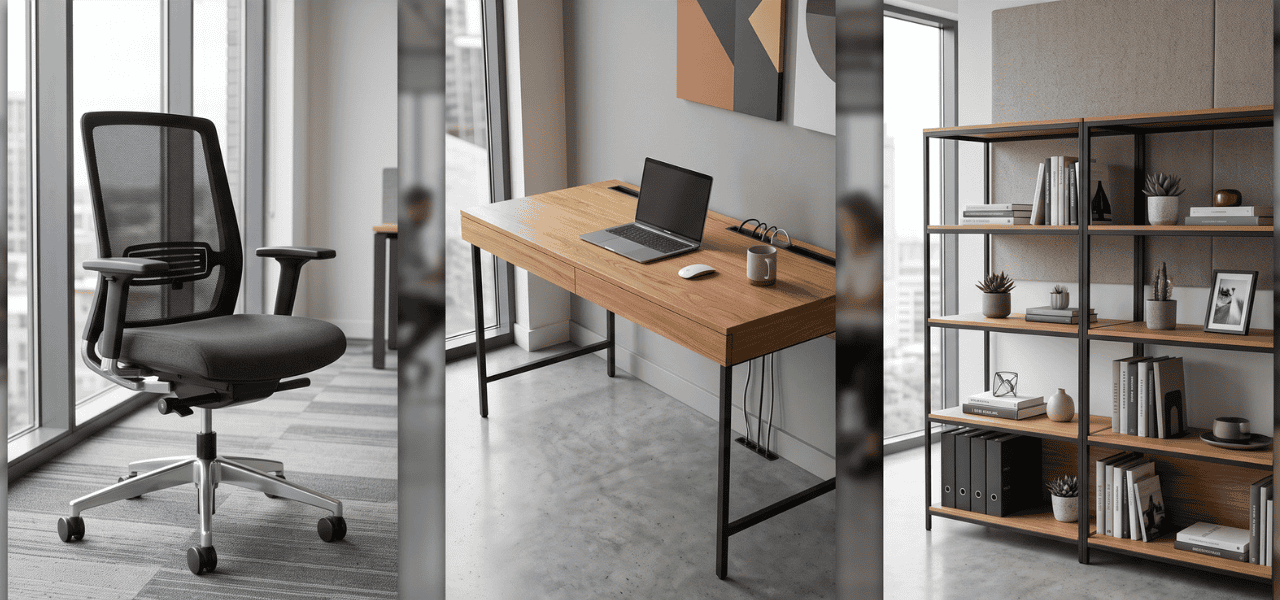
While not “modular” in the same structural sense, ergonomic seating is a standard companion to modular workstation systems. Adjustable lumbar support, seat height, and armrests help address prolonged-sitting concerns that are increasingly a workplace wellbeing priority for Indian employers.
Storage Units
Modular storage, pedestals, lockers, and storage walls, attaches directly to workstation runs or stands independently. These units are designed around the same dimensional grid as desks and partitions, so storage capacity can be added or relocated as filing and personal-storage needs shift.
Cubicles & Partition Systems
Partition panels define workstation boundaries and can be reconfigured to change cabin sizes, create semi-private pods, or open up collaborative floor plans, all without construction work. This is one of the most cost-effective ways modular systems reduce the disruption of office redesigns.
Lounge, Breakout & Collaborative Seating
Soft seating, modular sofas, and breakout furniture support informal collaboration zones, an increasingly important category as Indian offices redesign floor plans around hybrid work and fewer daily fixed-seat employees. These pieces are often modular in their own right, with sectional units that can be rearranged into different lounge configurations.
Reception & Welcome Area Furniture
Reception desks, waiting seating, and collaborative front-of-house furniture round out a modular system, ensuring visual consistency in finishes and materials from the entrance through to the workstation floor.
Key Benefits of Modular Office Furniture
Flexibility for growth, downsizing, and reorganization. Teams change size and structure constantly. Modular components can be reconfigured to match current headcount and team structure without a full furniture replacement cycle.
Faster, less disruptive office relocations and fit-outs. Because modular furniture is designed to be disassembled and reassembled, moving offices, or reorganizing floors within the same building, can happen with far less downtime than dismantling and rebuilding fixed installations.
Long-term cost efficiency. While the upfront cost of a quality modular system is comparable to traditional furniture, the ability to reuse, expand, and reconfigure components over multiple office cycles generally reduces the need for full replacement purchases down the line.
Space optimization. Modular systems are particularly useful in compact or irregularly shaped offices, common in many Indian commercial buildings, where standardized fixed furniture often wastes usable floor area.
Employee wellbeing and productivity. Ergonomic chairs, adjustable desks, and well-planned acoustic partitioning contribute to a more comfortable, less fatiguing work environment, which is increasingly a factor in employee retention conversations.
Sustainability and reduced waste. Because individual components can be repaired, repurposed, or reconfigured rather than discarded, modular systems generally have a longer usable lifecycle than fixed furniture, which is often scrapped entirely during a redesign.
Modular vs. Traditional Office Furniture
| Factor | Modular Furniture | Traditional/Fixed Furniture |
| Reconfiguration | Easy, minimal disruption | Difficult, often requires renovation |
| Upfront cost | Moderate, scalable | High, fixed |
| Long-term cost | Lower (reuse/expand) | Higher (replace/discard) |
| Relocation | Fast, furniture moves with you | Slow, costly |
| Customization | High, component-driven | Limited to original design |
| Sustainability | Lower waste, longer lifecycle | Higher waste on redesign |
How to Choose the Right Modular Office Furniture
Assess headcount today and growth projections. Plan not just for your current team size but for realistic growth over the next two to three years, so the system you choose can expand without a redesign.
Map activity zones. Modern offices need a mix of focused individual workstations, collaborative team areas, formal meeting rooms, and informal breakout spaces. Map these zones before selecting furniture so component quantities and configurations match actual usage patterns.
Set a realistic budget and phase purchases if needed. Modular systems allow for phased rollouts, a genuine advantage for growing companies that don’t want to commit to a full office’s worth of furniture in one purchase.
Prioritize ergonomics. Chairs and desks are used for most of the working day; adjustability and proper support should be non-negotiable, not an afterthought.
Check material quality, finishes, and warranty. Laminate quality, edge-banding, and hardware durability affect how well modular furniture holds up to repeated reconfiguration over its lifecycle.
Verify vendor certifications. Look for BIFMA (Business and Institutional Furniture Manufacturers Association) compliance for safety and durability testing, ISO 9001:2015 certification for quality management, and LEED-related credentials if sustainability is part of your office design brief.
Confirm manufacturing capacity and after-sales support. For companies with offices in multiple Indian cities, it’s worth confirming a vendor’s production capacity, delivery timelines, and whether they offer dedicated project management for multi-location rollouts, this matters far more than it seems during initial furniture selection.
Why Choose a Certified Indian Manufacturer Like Vlite Furnitech
The certifications and capacity points above aren’t just checklist items, they’re a reasonable way to evaluate whether a vendor can actually deliver at scale. Vlite Furnitech is a useful example of what this looks like in practice: a BIFMA-certified, ISO 9001:2015-certified, and LEED-compliant Indian manufacturer operating a 30,000 sq. ft. facility in Patalganga, Navi Mumbai, with a production capacity of roughly 14,000 workstations per month. With branches in Mumbai, Pune, Ahmedabad, Surat, and Hyderabad, manufacturers with this kind of footprint can support multi-city fit-outs with consistent finishes, dedicated project management, and after-sales service, all things worth confirming with any modular office furniture supplier you’re evaluating, regardless of who you ultimately choose.
Want office furniture that reduces long-term costs without compromising quality?
Trust Vlite Furnitech LLP for cost-effective workspace solutions built to last.
FAQs
What is modular office furniture?
Modular office furniture is a system of standardized, interchangeable components, desks, storage, partitions, and workstations, that can be assembled and reconfigured without replacing the entire setup.
Is modular office furniture cost-effective in the long run?
Generally, yes. While upfront costs are comparable to traditional furniture, the ability to reuse and reconfigure components across multiple office cycles tends to reduce long-term replacement costs.
What is the difference between modular and traditional office furniture?
Modular furniture is built from interchangeable, standardized components that can be reconfigured easily, while traditional or fixed furniture is typically custom-built for a specific layout and difficult to change without renovation.
What types of modular furniture are available for offices?
Common categories include modular workstations and benching systems, modular desks, ergonomic chairs, storage units, cubicles and partitions, lounge and breakout seating, and reception furniture.
Is modular office furniture suitable for small offices?
Yes, modular systems are particularly effective in compact or irregularly shaped spaces because components can be configured to maximize usable floor area rather than following a rigid, fixed layout.
How long does modular office furniture last?
Lifespan varies by material and usage, but well-built modular systems are designed for repeated reconfiguration and repair, generally giving them a longer effective lifecycle than fixed furniture that must be replaced during a redesign.
What certifications should I check before choosing an office furniture manufacturer?
Look for BIFMA certification (safety and durability testing), ISO 9001:2015 (quality management systems), and LEED compliance if sustainability is a priority for your office design.
Conclusion
Modular office furniture solves a problem that traditional, fixed furniture simply isn’t built for: the reality that offices change. Teams grow and shrink, floor plans get redesigned, and companies relocate, often more than once. A component-based system of workstations, desks, storage, and partitions lets facility teams adapt to these changes without the cost and disruption of a full furniture overhaul each time.
If you’re planning a new office or an office relocation, it’s worth evaluating vendors on more than price alone, certifications, manufacturing capacity, and after-sales support all affect how well a modular system performs over its actual working life. Vlite Furnitech’s design and project management team can walk you through a custom modular office furniture plan suited to your headcount, budget, and timeline, reach out to start the conversation.

Vishnu Sharma
I am the co-founder and CEO of Vlite Furnitech, creating modular office solutions since 2009. With a background in Chemistry and Marketing, and experience as Regional Head at Featherlite, I help design ergonomic, adaptable, and sustainable workspaces. Alongside a team of 120+, we serve corporates like JCB, Just Dial, KFC, and educational institutions. Let’s connect to reimagine innovative, eco-friendly office environments.