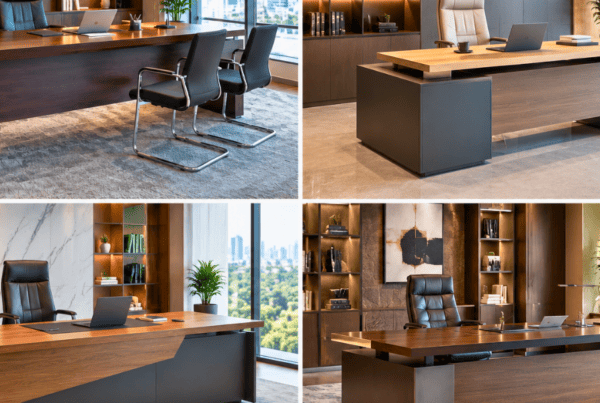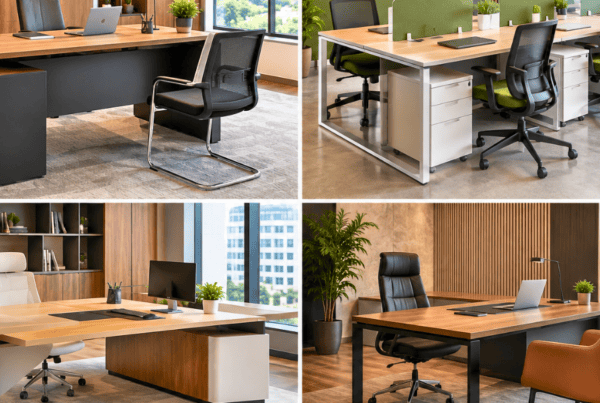
Office environments are evolving to become more flexible, efficient, and employee-focused. As workstyles change, the need for functional furniture has become more important than ever. Among all elements, the size of an office table plays a crucial role in how comfortably and efficiently people work.
Different roles require different workspace setups. A designer may need more surface area, while an administrator may prioritise organisation and accessibility. Choosing the right desk size is not just about fitting into a space; it directly impacts productivity and well-being. This blog will help businesses and individuals select the right office table size based on role and usage.
Why Does Office Table Size Matter for Efficiency and Ergonomics?
The size of an office table directly affects how work gets done. A desk that is too small can feel restrictive, while one that is too large may lead to inefficient use of space. The right size supports a smooth workflow by giving enough room for devices, documents, and movement. Thoughtful office table design further enhances usability by ensuring that the workspace is both practical and comfortable for daily tasks.
Ergonomics also plays an important role. Desk height, legroom, and monitor placement must align with the user’s posture. When these elements are properly balanced, employees can work comfortably for longer periods without strain. Over time, this reduces fatigue and supports better physical health.
Incorrect sizing often leads to everyday challenges. Some common issues include:
- Cluttered workspace: Limited surface area leads to disorganisation.
- Restricted movement: Tight spaces make it harder to work comfortably.
- Reduced efficiency: Constant adjustments interrupt workflow.
These problems affect both home offices and corporate setups. A well-sized desk, on the other hand, improves accessibility, keeps essentials within reach, and creates a more organised work environment.
What Are Standard Office Table Dimensions?
Office tables are available in a range of standard sizes designed to suit different needs and spaces. While exact dimensions may vary by design, there are common benchmarks used across workplaces.
Typical desk sizes include the following:
- Compact desks: Around 100–120 cm in length, ideal for small spaces or home offices.
- Standard desks: Around 120–160 cm, suitable for everyday office tasks.
- Executive desks: 160–200 cm or more, designed for leadership roles and larger setups.
In terms of height, most office desks are around 72–75 cm, which supports standard ergonomic seating. Width and depth can vary depending on storage and usage requirements.
It’s important to note that these dimensions are flexible. The right size depends on how the desk will be used, the available space, and the type of work being performed. For a more detailed breakdown, you can explore our guide on office desk depths and dimensions.
What Is the Ideal Desk Size for Different Work Roles?
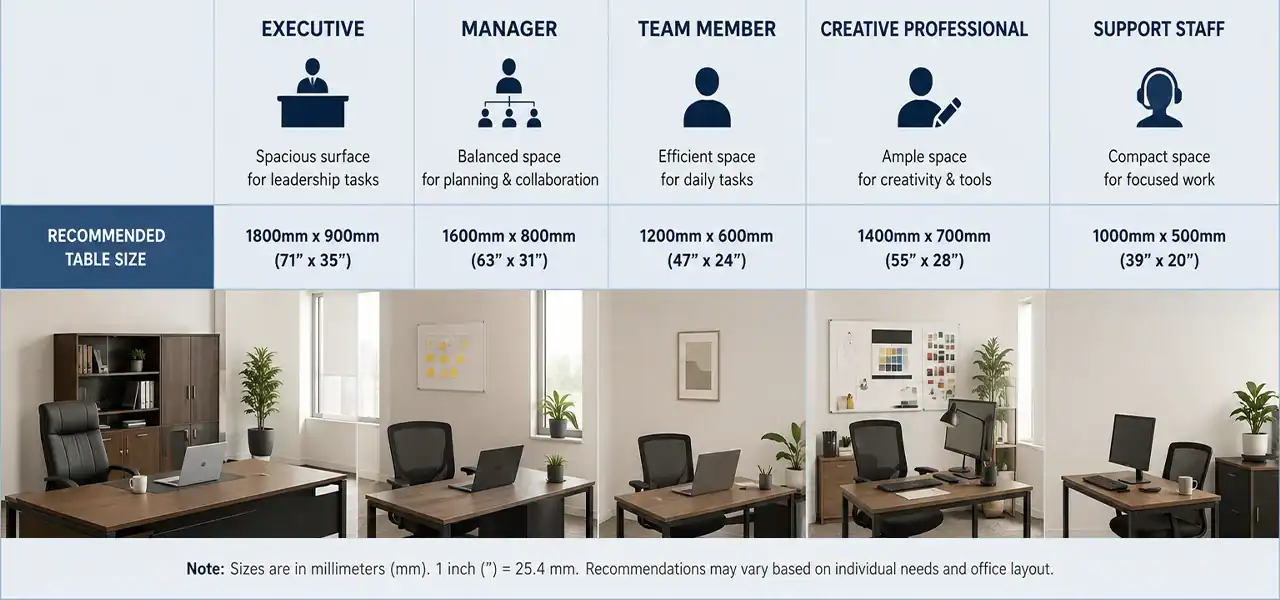
Here’s how desk requirements vary by role:
- Executives & Managers: Larger desks (160 cm and above) are ideal. They provide space for multiple devices, documents, and occasional meetings, while also creating a professional presence.
- Workstation Employees (IT, Admin, Operations): Medium-sized desks (120–150 cm) work well. These offer enough space for systems, files, and daily tasks without occupying too much floor area.
- Designers & Creatives: Larger surfaces are essential. Desks above 150 cm allow room for design tools, sketches, and flexible working styles.
- Remote Workers / Home Offices: Compact desks (100–120 cm) are suitable. These save space while still supporting laptops and basic accessories.
- Collaborative Roles / Teams: Shared or modular desks are ideal. These setups encourage teamwork and can be reconfigured as team sizes change.
The key is to match the desk size with the nature of work. A well-aligned setup ensures better organisation, smoother workflows, and improved productivity.
Not sure which office table size suits different work roles?
Vlite Furnitech LLP helps you choose functional and space-efficient solutions.
How to Choose the Right Office Table Size for Your Space
Selecting the right office table size requires a balance between space, functionality, and future needs. A well-planned approach ensures that the workspace remains efficient and comfortable. Key factors to consider include:
- Available space: Measure the area to ensure proper placement and movement.
- Number of users: Plan layouts that avoid overcrowding.
- Storage needs: Consider drawers, cabinets, and accessories.
- Layout compatibility: Align desk sizes with open-office or cabin setups.
- Future expansion: Choose designs that can adapt to growth.
Beyond these factors, practical decisions make a big difference. Expert tips:
- Prioritise functionality: Focus on usability over visual appeal.
- Choose modular furniture: Flexible designs support changing needs.
- Test layouts: Visualise or mock layouts before finalising.
- Consider comfort: Employee feedback helps improve workspace design.
- Seek expert advice: Professional guidance ensures better planning.
What Are Common Mistakes When Selecting Office Table Sizes?
Choosing the wrong office table size can lead to inefficiencies and discomfort. Many decisions are based on appearance rather than functionality, which affects daily work. Some common mistakes include:
- Ignoring work needs: Desk size should match the nature of tasks.
- Overcrowding spaces: Too many desks reduce movement and comfort.
- Lack of future planning: Growth is often overlooked.
- Poor ergonomics: Incorrect height and spacing affect posture.
- Weak cable management: Leads to clutter and disorganisation.
Conclusion
Office table size plays a direct role in shaping productivity, comfort, and overall work experience. The right desk supports better organisation, smoother workflows, and improved posture. However, there is no single solution that works for everyone. The ideal size depends on job roles, available space, and how the workspace is used.
Balancing ergonomics with functionality is essential for long-term efficiency. A well-planned setup not only improves performance but also enhances employee satisfaction.
If you’re planning to optimise your workspace with the right office furniture, consider working with Vlite Furnitech, a modular furniture supplier. Get in touch with us to create a setup tailored to your needs.
Need office tables tailored to employee roles and workspace needs?
Vlite Furnitech LLP offers smart furniture solutions for every office setup.
FAQs
1. What is the standard office table size for employees?
Most standard desks for employees range between 120–160 cm in length and 60–80 cm in depth, with a height of about 72–75 cm.
2. How do I choose the right desk size for different work roles?
Match desk size with job tasks—larger desks for multitasking roles and compact ones for basic setups.
3. What desk size is best for dual-monitor or multi-screen setups?
Desks of at least 140–160 cm provide enough space for multiple screens and accessories.
4. Are executive desks larger than standard office desks?
Yes, executive desks are typically larger to accommodate meetings and additional workspace needs.
5. Why does desk size matter for productivity and ergonomics?
The right size improves comfort, reduces strain, and supports efficient workflow.

Vishnu Sharma
I am the co-founder and CEO of Vlite Furnitech, creating modular office solutions since 2009. With a background in Chemistry and Marketing, and experience as Regional Head at Featherlite, I help design ergonomic, adaptable, and sustainable workspaces. Alongside a team of 120+, we serve corporates like JCB, Just Dial, KFC, and educational institutions. Let’s connect to reimagine innovative, eco-friendly office environments.