Nepal’s commercial landscape is changing fast. Kathmandu Valley alone has seen a significant surge in Grade-A office space over the past five years, driven by the expansion of IT parks, fintech companies, multinational branch offices, and government modernisation initiatives. Pokhara is emerging as a secondary business hub on the back of tourism infrastructure and SEZ development. Butwal is quietly becoming one of Nepal’s most active industrial corridors. All of this commercial growth has one thing in common: a growing, urgent demand for quality office furniture.
The problem? Local supply hasn’t kept pace.
Nepal’s domestic furniture manufacturing sector is still largely artisan-driven, with limited capacity for the kind of modular, certified, scalable office furniture that modern corporate environments require. Customisation options are narrow, lead times can be unpredictable, and quality assurance is inconsistent at scale. When a company needs to furnish 200 workstations for a new Kathmandu headquarters, or outfit a logistics firm’s operations office in Butwal, local vendors often simply cannot deliver.
This is why a growing number of Nepal’s smartest procurement teams, interior designers, and business owners are turning to India-based office furniture suppliers. The proximity is unmatched, the trade routes are well-established, the pricing is competitive, and, crucially, Indian manufacturers at the upper end of the market carry international certifications that local vendors cannot match.
This guide covers everything you need to know: the state of the local market, how modular office furniture works and why it matters, a full step-by-step import and procurement process, city-specific sourcing considerations, and how to evaluate a supplier before you commit.
The State of Office Furniture Supply in Nepal
What’s Available Locally vs. What Gets Imported
Nepal has a respectable base of local furniture makers, particularly in the Kathmandu Valley and the Terai belt. These manufacturers do a reasonable job with residential furniture and basic office pieces, standard desks, wooden chairs, basic storage cabinets. For low-budget requirements or simple fitouts, local sourcing makes practical sense.
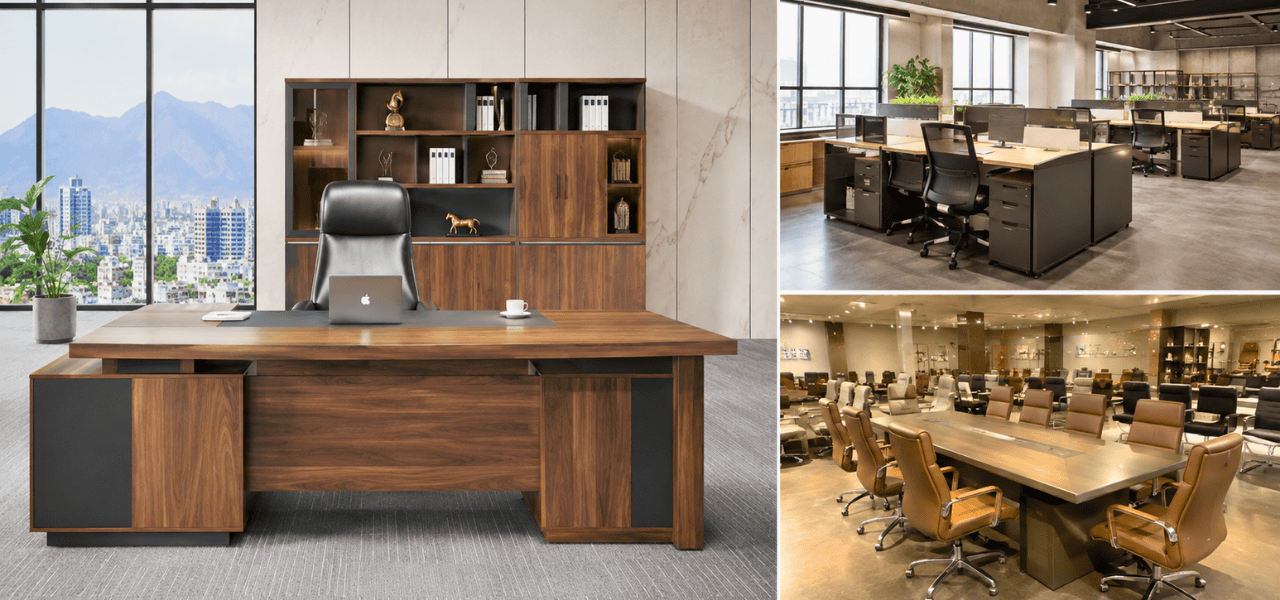
The gap opens up sharply once your requirements move into mid-to-high specification territory. Ergonomic task chairs with lumbar adjustment and certified weight ratings. Modular workstation systems that can be reconfigured as teams grow. Executive cabins with integrated cable management. Reception counters with custom laminate finishes. Collaborative lounge furniture for modern open-plan offices. These are the product categories where Nepal’s local market is genuinely thin.
India accounts for the vast majority of imported office furniture entering Nepal, and for good reason. Shared border infrastructure, a well-developed road freight network, competitive manufacturing costs, and a mature furniture industry with international-standard producers all make India the natural sourcing destination. China is a distant second option, but longer transit times, higher minimum order quantities, and more complex customs processes make it less practical for most Nepali buyers.
Key Buying Cities, Where Demand Is Highest
Office furniture supplier in Kathmandu: The capital is by far the highest-demand market. Corporate headquarters, commercial banks, international NGOs, IT companies, and government ministries all concentrate here. Projects range from small professional offices of 20 workstations to large enterprise fitouts running into the hundreds. Buyers in Kathmandu tend to be more specification-conscious and are increasingly requesting certified, ergonomic, sustainable furniture that meets the standards their parent organisations require globally. For businesses looking for a reliable office furniture supplier in Kathmandu, choosing a provider with experience handling large-scale corporate requirements can help ensure consistent quality and compliance.
Office furniture supplier in Pokhara: Pokhara’s office furniture demand is driven by a different mix, tourism and hospitality-linked administrative offices, growing SMEs, educational institutions, and the emerging tech and startup community. The city is also seeing new hotel and resort back-office infrastructure, which generates demand for functional, aesthetically considered office furniture. Sourcing from an office furniture supplier in Pokhara who can manage last-mile delivery to the city is a key consideration for buyers in this region.
Office furniture supplier in Butwal: Butwal and the surrounding Lumbini province have seen significant industrial and logistics sector investment. Manufacturing companies, trading firms, and logistics operators setting up regional offices here need practical, durable, cost-effective office furniture at reasonable scale. Being close to the Bhairahawa border checkpoint also makes Butwal one of the most accessible points for direct import from India. Businesses seeking an office furniture supplier in Butwal can therefore benefit from suppliers capable of providing durable furniture and managing regional project requirements efficiently.
What Is Modular Office Furniture & Why Does It Matter?
Modular office furniture refers to furniture systems built from standardised, interchangeable components that can be configured, reconfigured, and scaled up or down depending on the space and the team’s needs. Unlike traditional bespoke or fixed furniture, modular systems are designed to adapt.
A typical modular workstation system, for example, might include desk surfaces, privacy screens, overhead storage units, pedestals, and cable management channels, all designed to connect and reconfigure in multiple layouts. As your team grows from 20 to 50 people, you don’t replace your furniture. You add to it.
For Nepali businesses, this matters for several specific reasons. Office space in Kathmandu is expensive, which means space efficiency is a genuine financial concern. Many companies are growing rapidly, which means their furniture needs to grow with them without triggering a full replacement cycle. And the diversity of Nepal’s business environments, from tight urban offices in New Baneshwor to open-plan spaces in IT parks, means flexibility in layout is practically valuable, not just theoretically attractive.
Modular office furniture also tends to offer faster installation timelines compared to custom-built pieces, since components arrive pre-engineered. For companies working against a hard office launch date, that matters enormously.
Product categories that fall under the modular umbrella include: height-adjustable and fixed workstations, ergonomic task chairs, collaborative tables, modular storage and filing units, executive cabin systems, and reception counters. When you’re evaluating an office furniture supplier in Nepal, understanding their modular product range, and the depth of customisation within that range, is one of the most important questions to ask.
How to Import Office Furniture into Nepal, Step-by-Step Procurement Guide
Step 1, Define Your Office Furniture Requirements
Before you speak to a single supplier, spend time getting your requirements down in writing. This means accurate space measurements and a rough layout plan, even a sketch will do at this stage. Know how many workstations you need, how many chairs, how much storage, and what special-use furniture you require (meeting tables, reception counters, executive cabins, etc.).
Think about your style requirements and whether your organisation has brand standards that govern colour, finish, or material choices. And set a realistic budget. A useful approach is to think in terms of cost per workstation or cost per square foot, rather than a single total figure, this gives you a benchmark to compare supplier quotes meaningfully.
Step 2, Identify and Shortlist Suppliers
Finding the right office furniture supplier for your Nepal project means looking beyond just price. The key criteria to evaluate include manufacturing scale (can they produce at your volume without compromising quality or timeline?), certifications (ISO 9001:2015 for quality management, BIFMA for furniture safety and durability, LEED compliance for sustainable production), customisation capability, and, critically, a track record of cross-border delivery into Nepal specifically.
India is the preferred sourcing market for most Nepali procurement teams because of established trade routes, competitive pricing, and the availability of high-quality certified manufacturers. When evaluating Indian suppliers, ask directly: Have you supplied to Nepal before? Which border checkpoints do you use? Do you manage the freight and customs documentation, or does that fall to us?
Questions worth asking every shortlisted supplier before proceeding:
- What is your current production lead time for our order size?
- Do you offer customisation on finishes, dimensions, and branding?
- Do you have references from similar-scale projects?
- What is included in your after-sales service?
Step 3, Request Samples, Quotes & Customisation Options
Once you have a shortlist of two or three suppliers, request physical samples of key pieces, particularly chairs and workstation surfaces, since these are the items your staff will interact with daily. If physical samples aren’t feasible, ask for detailed product specifications including material grades, finish options, weight ratings, and warranty terms.
Customisation discussions should happen at this stage. Do you need a specific laminate colour to match your brand palette? Do you need dimensions adjusted to fit a non-standard floor plan? Does executive furniture need your company logo incorporated? A capable supplier will have a design team that can handle these requirements, and should be able to show you precedents.
Get itemised quotations, not lump-sum totals. A proper quote should break down cost per product, finishing costs if custom, freight, and any installation charges separately. This makes comparison between suppliers accurate and also gives you a clear basis for understanding where your budget is going.
Step 4, Understand Import Regulations & Duties for Nepal
This is the step that trips up many first-time importers, and it’s worth treating seriously.
Office furniture imported into Nepal is classified under specific HS codes, the exact code matters because duty rates differ by product category. Chairs, desks, storage units, and upholstered furniture all fall under different headings. Before placing a large order, it is strongly advisable to consult a licensed customs agent in Nepal who can confirm current applicable rates for your specific product mix.
On the Indian supplier side, GST applies to domestic sales in India, but exports from India to Nepal are typically zero-rated for GST purposes, which benefits the pricing. Your supplier should be clear about whether their quoted price is inclusive or exclusive of Indian GST, and if it’s included, ensure the correct export documentation is in place.
The primary border crossing points for road freight from India to Nepal are Birgunj (for cargo coming from the east and central India, including Mumbai via Raxaul) and Bhairahawa (for western Nepal-bound cargo). Butwal-based buyers often receive goods via Bhairahawa, which is particularly convenient. Kathmandu and Pokhara shipments typically route through Birgunj.
Documentation you will need for customs clearance includes: a commercial invoice, a detailed packing list, Bill of Lading or Lorry Receipt, Certificate of Origin (Form E under SAFTA for reduced duty rates where applicable), and any product certification documents your customs agent recommends.
If your supplier is experienced with Nepal exports specifically, they should be able to guide you through or handle the documentation on the export side. This is a genuine differentiator worth asking about explicitly.
Step 5, Logistics, Delivery & Installation
Road freight from manufacturing locations in and around Mumbai and Navi Mumbai to Kathmandu typically takes 7 to 14 days, depending on the route, the freight operator, and customs clearance speed at the border. Delays at border crossings are the most common source of variability, which is why working with a supplier who has established freight relationships at Birgunj or Bhairahawa tends to reduce uncertainty significantly.
Last-mile delivery in Nepal deserves separate attention. Getting a 40-foot container to the Kathmandu Valley involves navigating mountain roads, and getting furniture into an upper-floor office in a city building requires a logistics plan that accounts for stairwell dimensions, elevator capacity, and assembly on site. Not every supplier has thought through this, ask specifically how last-mile delivery and on-site assembly are managed for Nepal projects.
Installation is a separate competency from manufacturing and freight. Ideally, your supplier should have a project management team that oversees end-to-end delivery, including site supervision during installation. This is particularly important for larger fitouts where sequencing and on-site adjustment are required. After-sales support, what happens if a component arrives damaged, or a part needs replacement six months later, is the final thing to clarify before you sign off on a supplier.
Why Choose Vlite Furnitech as Your Office Furniture Supplier for Nepal?
Vlite Furnitech is an India-based modular office furniture manufacturer with a 30,000 sq. ft. production facility in Patalganga, Navi Mumbai, producing up to 14,000 workstations per month. That scale matters for Nepali buyers because it means your order, whether 50 units or 500, is handled within a production system built for volume without cutting corners on specification.
The certifications Vlite holds are worth understanding, not just collecting as brand signals. ISO 9001:2015 certification means the quality management system is independently audited and verifiable, your order is produced under documented quality controls, not just verbal assurances. BIFMA certification means the furniture has been tested against internationally recognised standards for safety, durability, and structural integrity. LEED compliance in production means the manufacturing process meets sustainability criteria, increasingly important for ESG-conscious Nepali corporates and international organisations with environmental procurement policies.
The product range covers ergonomic task chairs, modular workstations, executive tables, collaborative furniture, storage and filing systems, lounge seating, and reception counters, the full scope of what a modern Nepali office requires. A dedicated design team handles customisation requirements, from finish and colour matching to dimensional adjustments and corporate branding integration.
Vlite’s branch presence in Mumbai, Pune, Ahmedabad, Surat, and Hyderabad means the company is well-positioned within established India-Nepal trade corridors, particularly those that route through western and central India toward Birgunj and Bhairahawa border crossings.
For Nepali buyers, the end-to-end project management capability is particularly relevant, from initial consultation and design through production, export documentation, freight, delivery, and installation support. This is not a drop-ship transaction. It is a managed project supply relationship, which is what a significant cross-border fitout actually requires.
Office Furniture Buying Tips for Businesses in Nepal
Verify Certifications Before you Commit
Ask for copies of ISO, BIFMA, and any other certifications your supplier claims. Legitimate manufacturers will provide these without hesitation. If a supplier is evasive about documentation, treat that as a red flag.
Budget 15–30% Above your Furniture Cost for the Full Landed Cost
Import duty, freight charges, customs clearance fees, and installation costs are real and significant. First-time importers who budget only for the FOB price regularly find themselves short. Build the full cost model before you commit to a supplier.
Choose Modular Designs for Future-proofing
Nepal’s fastest-growing companies are adding headcount at a pace that outstrips their initial office planning. Modular systems that can be extended, reconfigured, and supplemented without replacement make economic and operational sense.
Take Ergonomics Seriously
The research on ergonomics and workplace productivity is well-established. Employees who work in ergonomically sound environments, proper chair adjustment, screen height, keyboard positioning, are measurably more productive and take fewer sick days. For procurement managers, framing ergonomic furniture as a productivity investment rather than a cost is both accurate and persuasive internally.
Request a Virtual Consultation with Your Supplier’s Design Team Before Finalising.
A good supplier will offer this, a session where their team reviews your floor plan, proposes a layout, and flags any logistical or design considerations before production begins. This step catches problems early, when they are cheap to fix, rather than late, when they are expensive.
Still comparing modular, bespoke, and traditional office furniture?
Let Vlite Furnitech LLP help you choose the smartest investment for better ROI.
Frequently Asked Questions
Can I directly import office furniture from India to Nepal?
Yes. India-Nepal trade is governed by well-established bilateral agreements, and road freight through the Birgunj and Bhairahawa border checkpoints is a routine, well-documented process used by importers across all sectors.
What is the import duty on office furniture in Nepal?
Duty rates vary by product category and the applicable HS code. Before placing a large order, consult a licensed customs agent in Nepal who can confirm current rates for your specific product types.
How long does delivery take from India to Kathmandu?
Typically 7 to 14 days by road freight from Mumbai and Navi Mumbai, factoring in customs clearance time at the border. Actual timelines can vary based on the freight operator and border conditions.
Is modular office furniture better than traditional furniture for Nepali offices?
For most commercial applications, yes. Modular furniture offers superior space efficiency, faster installation, and the ability to scale and reconfigure as your organisation changes, all of which are practically valuable in Nepal’s current commercial environment.
Does Vlite Furnitech supply to Pokhara and Butwal, not just Kathmandu?
Yes. Vlite’s distribution and project management network supports delivery and installation across Nepal, including Pokhara and Butwal, with freight routing optimised for each destination.
What certifications should I look for in an office furniture supplier?
The three most important are ISO 9001:2015 (quality management system), BIFMA (furniture safety and durability testing), and LEED compliance (sustainable manufacturing). These certifications signal that the supplier operates to audited, internationally recognised standards rather than self-declared quality claims.
Finding the Right Office Furniture Supplier in Nepal
Nepal’s office market is growing, and the demand for quality, certified, customisable office furniture is growing with it. The local supply gap is real, but it is entirely bridgeable through a well-managed import relationship with the right India-based supplier, one who understands the Nepal procurement context, manages the cross-border logistics competently, and brings certified manufacturing quality that local vendors cannot match.
Getting this right requires more than finding a supplier with a good catalogue. It requires understanding the full procurement process: defining your requirements clearly, evaluating suppliers on certifications and capability rather than just price, understanding your customs and duty obligations, and planning for the full landed cost and last-mile logistics.
Vlite Furnitech brings the manufacturing scale, the certification credentials, the customisation capability, and the cross-border project management experience to be a credible, reliable office furniture supplier for Nepal, whether your project is in Kathmandu, Pokhara, Butwal, or anywhere else in the country.
Get in touch with Vlite Furnitech for a free consultation and quote tailored to your Nepal office project.
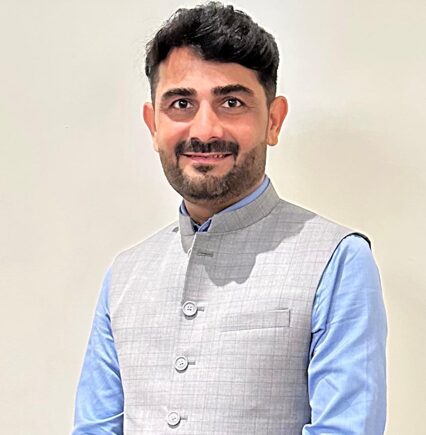
Vishnu Sharma
I am the co-founder and CEO of Vlite Furnitech, creating modular office solutions since 2009. With a background in Chemistry and Marketing, and experience as Regional Head at Featherlite, I help design ergonomic, adaptable, and sustainable workspaces. Alongside a team of 120+, we serve corporates like JCB, Just Dial, KFC, and educational institutions. Let’s connect to reimagine innovative, eco-friendly office environments.