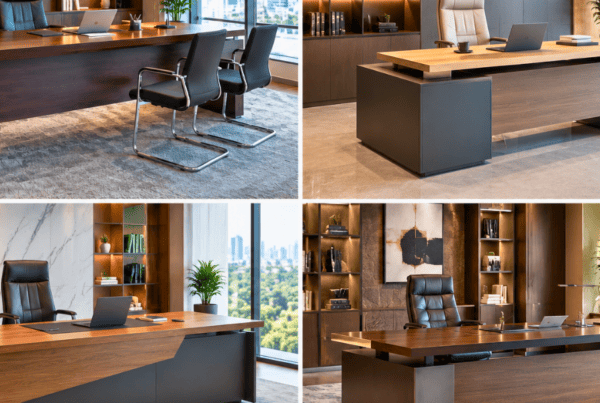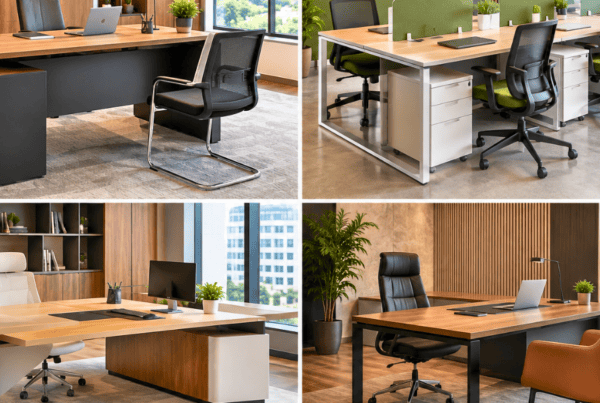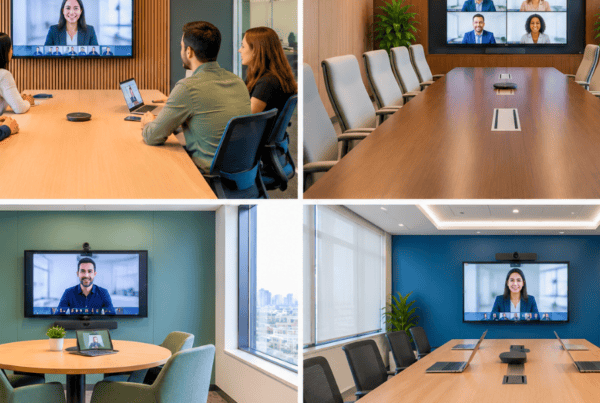
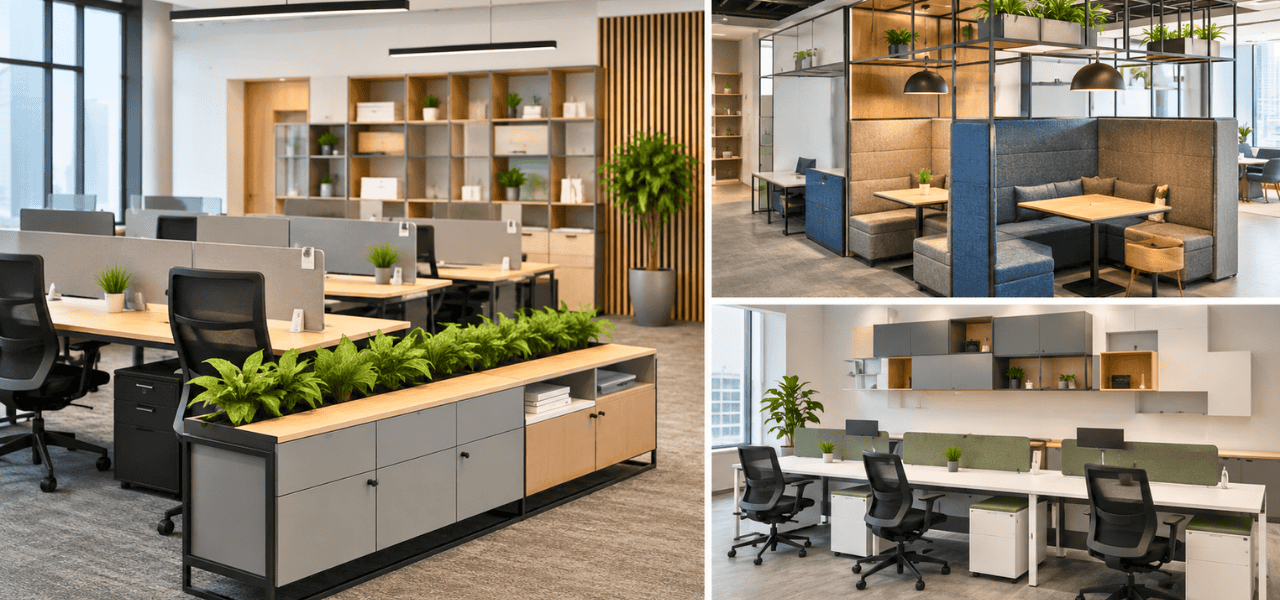
India’s coworking sector has undergone a seismic shift. With flexible office demand at an all-time high and the country’s coworking market projected to cross 125 million square feet by 2030, operators are under more pressure than ever to build spaces that work for everyone, freelancers, startups, remote teams, and enterprise clients, often simultaneously, often in the same room.
The challenge is real. A coworking space isn’t a fixed office. It’s a dynamic environment where the morning brings a solo developer, the afternoon brings a ten-person sprint team, and the evening brings a networking event. Traditional, fixed-layout furniture fails this model almost immediately. You end up either wasting space, frustrating users, or spending on reconfigurations that eat into your margins.
This is precisely where modular office furniture changes the game. Designed to adapt rather than constrain, modular coworking space furniture gives operators the flexibility to respond to their members’ needs without starting from scratch every time the brief changes.
In this guide, we break down exactly what to look for in coworking space furniture, from flexibility and ergonomics to durability and sustainability, so you can make a purchase decision that scales with your business rather than holding it back.
What Is Modular Office Furniture? (And Why It’s Ideal for Coworking)
Defining Modularity in a Coworking Context
Modular office furniture refers to a system of independent components, workstations, storage units, lounge seating, partition panels, and tables, that can be configured, reconfigured, added to, or removed without disrupting the rest of the setup. Think of it as furniture with a plug-and-play logic: each piece is designed to work both in isolation and as part of a larger system.
Unlike traditional furniture, which is typically bought as a fixed arrangement and stays that way until it’s replaced, modular systems are built around change. A cluster of four workstations can become a row of eight. A collaborative table can be repositioned to create a private pod. A lounge zone can be expanded when demand grows. This inherent flexibility is what makes modular workstations, storage, and seating so well-suited to the coworking environment, where no two days, and no two clients, look the same.
Why Coworking Operators Are Switching to Modular
The shift is pragmatic, not just aesthetic. Hot-desking models require furniture that can support individual focus work in the morning and team collaboration in the afternoon. Private pods need to be created without permanent construction. Event setups need to happen and be reversed within hours.
Beyond operational flexibility, there’s a straightforward financial argument. Refurnishing a coworking space every time a lease changes or a major tenant moves out is expensive. Modular systems reduce that cost significantly because the furniture adapts, you’re not replacing it, you’re reorganizing it. Long-term, this is one of the strongest economic arguments for choosing modular over conventional.
Vlite Furnitech’s modular range, spanning workstations, ergonomic chairs, tables, lounge furniture, and storage, is specifically designed to serve this kind of variety, allowing coworking operators to build flexible, multi-use environments without compromising on quality or coherence.
7 Key Things to Look for in Coworking Space Furniture
1. Reconfigurability and Space Flexibility
The first question to ask of any piece of coworking space furniture is simple: does it adapt to your space, or do you adapt to it?
Reconfigurability means desks can be arranged in clusters, rows, L-shapes, or standalone pods, without requiring tools, professional installation, or significant downtime. It means that when a corporate team books your private zone for a week, you can reconfigure the layout within an hour rather than a day.
Look specifically for modular workstations that integrate built-in power and data management, cable troughs, integrated USB ports, and power sockets that move with the furniture rather than being hardwired to the floor. This one feature alone eliminates one of the biggest friction points when reconfiguring commercial spaces.
The best modular systems also account for vertical flexibility, modular walls, acoustic panels, and partitions that can define zones without permanent construction. If a furniture system forces you into a single layout, it’s not truly modular.
2. Ergonomics for All-Day Productivity
Coworking users aren’t passing through, many of them are working six to ten hours a day, five days a week. Ergonomic support in coworking space furniture is therefore not a luxury feature; it’s a baseline requirement.
The key ergonomic features to evaluate are adjustable seat height, lumbar support, adjustable armrests, seat depth options, and monitor-compatible desk heights. A chair that cannot be adjusted to the individual is, in a multi-user coworking environment, a chair that fits almost no one properly.
Height-adjustable and sit-stand desks represent the premium tier of ergonomic coworking furniture, and for good reason. Alternating between sitting and standing has documented benefits for posture, circulation, and sustained concentration, and in a competitive coworking market, this kind of feature differentiates a space from a commodity desk rental.
Vlite Furnitech’s ergonomic chairs and workstations are engineered with posture and long-hour use as design priorities, not afterthoughts. For coworking operators, this means member satisfaction and fewer complaints about back pain, fatigue, and discomfort, metrics that directly affect retention.
3. Durability and Build Quality
Fixed offices have perhaps thirty or forty users interacting with their furniture. A coworking space can put the same chair or desk through that volume in a single week, with different users, different use patterns, and different levels of care. Durability in coworking space furniture is therefore a categorically different requirement than it is in a conventional office.
What to look for: high-grade engineered wood for surfaces (resistant to scratching and moisture), powder-coated steel for frames (corrosion-resistant and structurally robust), and commercial-grade upholstery that can withstand repeated use without rapid degradation. The materials spec sheet matters, ask for it before you buy.
More importantly, look for BIFMA certification. The Business and Institutional Furniture Manufacturers Association certification is the globally recognized benchmark for commercial furniture safety, durability, and performance. It means the furniture has been tested under conditions that simulate real commercial use, not residential assumptions. Buying BIFMA certified furniture is arguably the single most reliable shortcut to eliminating durability risk.
Vlite Furnitech holds BIFMA certification and manufactures at a scale, 14,000 workstations per month from their Patalganga facility, that speaks to consistent quality control at volume.
4. Aesthetic Versatility
A coworking space needs to appeal simultaneously to the bootstrapped startup running on coffee and ambition, the enterprise team on a satellite office model, the solo creative professional, and the part-time remote worker. These groups have genuinely different aesthetic expectations, and the furniture in the room has to work for all of them.
This means coworking space furniture should lead with neutral, contemporary design, clean lines, adaptable finishes, and a colour palette that doesn’t clash with varying brand identities. You’re essentially creating a backdrop, not a statement.
The practical implication: look for modular systems that offer customizable finish options, laminate colours, upholstery choices, frame finishes, so that the space can have a coherent visual identity without locking you into something that alienates segments of your membership. Furniture that is too quirky or too branded reads as inflexible; furniture that is clean and versatile signals that the space works for everyone.
5. Smart Storage Solutions
One of the persistent friction points in coworking environments is personal storage. Members need somewhere to put their belongings, laptops, documents, personal items, but permanent allocation of dedicated storage per person undermines the flexibility that makes coworking work.
The answer is modular storage: under-desk pedestals that move with the workstation, lockable mobile cabinets that can be assigned and reassigned, overhead shelving integrated into the workstation system, and shared locker banks positioned at zone boundaries.
The key word is integration. Storage that’s clearly designed to work with the workstation system, matching dimensions, finishes, and connective logic, creates a cohesive environment rather than a patchwork of mismatched pieces. Vlite Furnitech’s modular storage range is built to integrate seamlessly with their workstation systems, which means operators aren’t hunting for compatible pieces from multiple suppliers.
6. Collaboration and Lounge Zones
The best coworking spaces aren’t just heads-down work environments. They’re ecosystems, and the lounge and collaboration zones are as important to that ecosystem as the workstations. Members who feel they can move fluidly between focused work and informal collaboration are more productive, more satisfied, and more likely to renew their memberships.
Furniture for collaboration zones is a different brief than workstation furniture. You’re looking for modular sofas with reconfigurable sectional options, collaborative tables at various heights, booth-style seating that creates acoustic privacy without construction, and soft-seating clusters that encourage informal conversation.
The challenge for coworking operators is that lounge furniture is often treated as an aesthetic afterthought, chosen for how it looks in a marketing photo rather than how it functions at 3pm when six people are trying to have two separate conversations. Purpose-built lounge furniture for commercial coworking environments is designed around acoustic performance, durability under high use, and the ability to be rearranged as quickly as a chair rather than as slowly as a sofa.
Vlite’s lounge furniture range is purpose-built for informal collaboration in commercial settings, not adapted from residential lines.
7. Sustainability and Green Certifications
Sustainability has moved from a nice-to-have to a genuine procurement criterion for a growing segment of coworking operators, particularly those targeting enterprise clients or pursuing LEED certification for their spaces. The furniture supply chain is a significant part of that picture.
When evaluating suppliers, look for evidence of responsible material sourcing, low-emission manufacturing processes, and certifications that verify the claims. LEED compliance at the manufacturing level means the supplier’s facility meets internationally recognized standards for energy efficiency, water use, and environmental impact, which directly supports your own green building goals.
ISO 9001:2015 certification is the quality management benchmark, it verifies that the manufacturer has consistent, documented processes that deliver predictable quality rather than relying on individual craftsmanship that varies with production volume.
Vlite Furnitech’s manufacturing facility is LEED Compliant and ISO 9001:2015 certified. For coworking operators with sustainability commitments, or enterprise tenants who require it, this is documentation you can put in front of your clients.
The Role of the Furniture Manufacturer, Why It Matters Who You Buy From
There’s a version of furniture procurement that treats the manufacturer as interchangeable, a price-per-unit decision made on a spreadsheet. For a small residential renovation, that logic is defensible. For a coworking space serving hundreds of members across thousands of square feet, it’s a risk that tends to surface at the worst possible time.
The manufacturer relationship matters because coworking fit-outs are not simple transactions. They involve spatial planning, phased delivery, installation coordination, and the kind of project management that keeps a space opening on time and on brief. A supplier who can produce the furniture but can’t coordinate a phased delivery schedule, or who doesn’t have a presence in your city when something goes wrong six months after installation, is a liability, not a partner.
What to ask a potential furniture manufacturer before committing: What is your production capacity, and can you demonstrate it? What customization capabilities do you offer, can your team work from our layout drawings? Do you have dedicated project management support, or are we coordinating the fit-out ourselves? What does after-sales service look like, and where are your nearest branches?
Vlite Furnitech operates from a 30,000 square-foot facility in Patalganga, Navi Mumbai, producing 14,000 workstations per month, a production scale that matters when a coworking operator is fitting out a 20,000 square-foot space with a phased delivery schedule. With branches in Mumbai, Pune, Ahmedabad, Surat, and Hyderabad, and dedicated Project Management teams for end-to-end execution, the operational infrastructure exists to support large, complex coworking fit-outs across India’s major commercial cities.
For operators expanding to multiple locations or planning phased rollouts, this kind of manufacturing and logistics depth is the difference between a smooth launch and a delayed one.
Common Mistakes Coworking Operators Make When Buying Furniture
The most expensive mistake is buying residential-grade furniture for a commercial coworking environment. It looks fine in the showroom. It fails within twelve months under the volume of use a coworking space generates. The cost of replacement, including the disruption to members and the operational downtime, almost always exceeds whatever was saved on the initial purchase.
The second most common mistake is buying fixed furniture without a scalability plan. A space that looks perfect at 60% occupancy becomes a constraint at 90%. Modular office furniture solves this by design, it grows with the space rather than capping it.
Prioritizing aesthetics over ergonomics is understandable, photos of a beautiful coworking space are a marketing asset. But members who develop back pain or eye strain from poorly designed workstations don’t renew. The ergonomic brief needs to come before the styling brief.
Finally, choosing suppliers based on price alone without verifying delivery capability, project management support, and after-sales service is a recurring source of fit-out failures. A low unit cost that comes with unpredictable delivery, no installation support, and no recourse when something goes wrong is not a bargain, it’s a deferred cost.
Still comparing modular, bespoke, and traditional office furniture?
Let Vlite Furnitech LLP help you choose the smartest investment for better ROI.
Frequently Asked Questions
Q: What is modular office furniture?
Modular office furniture is a system of independently functional components, workstations, storage units, seating, and partitions, that can be configured and reconfigured to suit different layouts and needs. Unlike fixed furniture, modular office furniture adapts to the space and the users rather than imposing a single, permanent arrangement.
Q: Is modular furniture good for coworking spaces?
Yes, and it’s increasingly the standard choice for serious coworking operators. The reconfigurability supports hot-desking, team zones, and event setups without refurnishing. The commercial-grade durability handles high-turnover, multi-user environments. And the long-term cost efficiency, not having to replace furniture every time the space brief changes, is a significant operational advantage.
Q: How much does coworking space furniture cost in India?
Pricing varies significantly based on the quality tier, the product category, customization requirements, and the scale of the project. Entry-level commercial workstation systems start at a different price point than BIFMA-certified ergonomic configurations with integrated storage. The most reliable approach is to define your layout and user requirements clearly, then request a project-specific quotation from a manufacturer like Vlite Furnitech who can provide a detailed breakdown.
Q: What certifications should I look for in office furniture?
Three certifications matter most. BIFMA certification verifies that the furniture meets commercial safety and durability standards through independent testing. ISO 9001:2015 verifies that the manufacturer operates a consistent, documented quality management system. LEED compliance at the manufacturing level supports your own sustainability and green building goals. Together, these three certifications give you a defensible basis for supplier selection beyond price.
Q: Can modular furniture be customized for my coworking layout?
Yes. Manufacturers with genuine customization capability, including dedicated design teams who work from your layout drawings, can adapt modular systems to fit irregular floor plans, specific zoning requirements, and brand aesthetic guidelines. Vlite Furnitech’s project management teams work with clients from initial layout planning through to final installation, which means the customization process is supported end-to-end rather than left to the buyer to coordinate.
Build a Coworking Space That Works as Hard as Your Members
The right modular office furniture doesn’t just fill a space, it defines how that space functions, how members feel while they’re in it, and how efficiently you can adapt it as your business grows. The decision touches flexibility, ergonomics, durability, aesthetic coherence, storage logic, collaboration design, and sustainability credentials. Getting it right requires treating it as a strategic brief, not a procurement checklist.
Equally, the manufacturer you choose is as important as the product itself. Production capacity, customization capability, project management support, regional presence, and after-sales service are all part of the value you’re buying, or failing to buy, when you select a furniture partner.
With BIFMA certification, ISO 9001:2015 quality standards, and LEED-compliant manufacturing, Vlite Furnitech is the partner coworking operators across India trust for modular office furniture that performs at commercial scale. Explore Vlite Furnitech’s full range of modular office furniture and request a consultation for your coworking project, because the space you build today should be able to grow with everything your members bring to it tomorrow.

Vishnu Sharma
I am the co-founder and CEO of Vlite Furnitech, creating modular office solutions since 2009. With a background in Chemistry and Marketing, and experience as Regional Head at Featherlite, I help design ergonomic, adaptable, and sustainable workspaces. Alongside a team of 120+, we serve corporates like JCB, Just Dial, KFC, and educational institutions. Let’s connect to reimagine innovative, eco-friendly office environments.