For most educational institutions, cafeterias are not just dining spaces; they are high-pressure environments that must efficiently serve large volumes of students within short breaks. Poorly planned layouts, worn-out furniture, and inefficient seating arrangements can quickly lead to congestion, hygiene issues, and operational delays.
This is why summer and year-end periods are critical. They offer a rare, interruption-free window to assess what’s not working, from outdated cafeteria tables and chairs to space inefficiencies, and fix it strategically. Institutions that use this time effectively don’t just replace furniture; they redesign for better flow, durability, and scalability. The result is a cafeteria that performs reliably every day, not just looks functional on paper.
Why Is Summer and Year-End the Best Time to Upgrade Cafeteria Furniture?
Summer and year-end breaks offer an ideal window for institutions to upgrade their school canteen furniture solutions efficiently. With reduced campus activity, installation can be carried out smoothly without interfering with academic schedules. This downtime also aligns well with annual budgeting and procurement cycles, making approvals and financial planning more streamlined.
Additionally, institutions can proactively replace worn-out furniture before it leads to operational issues. However, not every furniture concern requires immediate replacement. reviewing tips for extending the lifespan of modular furniture can help institutions identify maintenance opportunities that improve furniture performance and delay unnecessary replacement costs. Preventive maintenance during this period helps avoid unexpected disruptions during peak academic sessions. Vendors are also more readily available, allowing faster customisation and execution timelines. Planning upgrades during these off-peak periods ensures better project management and long-term cost savings
What Common Cafeteria Furniture Problems Should Institutions Look For?
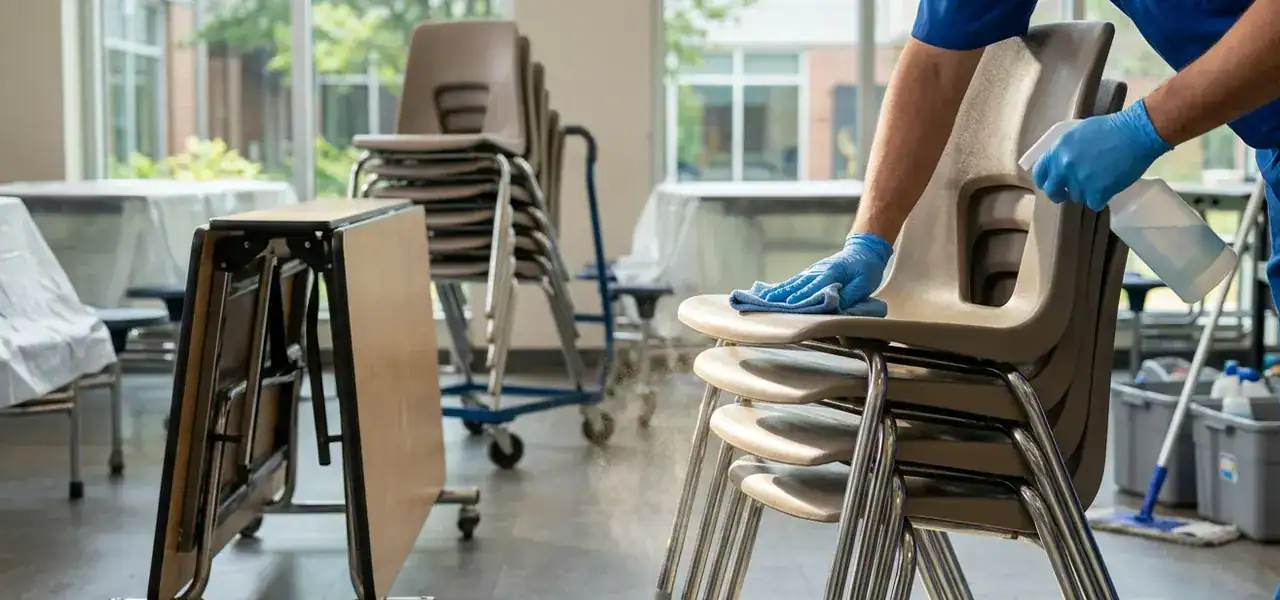
Over time, cafeteria furniture is subject to heavy wear and tear, making regular assessments essential. Common issues include structural damage such as loose joints, surface chipping, and unstable seating, all of which can compromise safety. Inefficient layouts can also lead to congested dining areas, affecting student movement and overall experience.
Maintenance challenges are another concern, especially when surfaces are difficult to clean or materials begin to deteriorate. Additionally, many institutions find that their existing cafeteria tables and chairs lack adaptability, making it difficult to accommodate varying group sizes. Identifying these issues early helps institutions plan timely upgrades and maintain a safe, efficient dining environment.
How to Choose Cafeteria Furniture for Schools During Seasonal Upgrades?
1. Prioritise Durable, Easy-Maintenance Materials
Opt for materials like laminate tops and powder-coated frames that are resistant to scratches, moisture, and daily wear. This ensures long-lasting, durable cafeteria furniture for schools.
2. Choose Modular Layouts for Flexibility
Furniture that supports easy reconfiguration allows institutions to adapt layouts for events or fluctuating student numbers. Solutions inspired by modular office workstation concepts can enhance flexibility in cafeteria spaces as well.
3. Focus on Ergonomic Student Comfort
Age-appropriate dimensions, smooth edges, and sturdy construction are essential for ensuring student safety and comfort during meals.
4. Optimise for Space Efficiency
Compact and smart designs help maximise seating capacity without overcrowding. Exploring innovative school cafeteria furniture ideas ensures a balance between functionality and aesthetics.
What Cafeteria Furniture Layouts Improve Space Efficiency and Student Experience?
Choosing the right layout can significantly improve both efficiency and student experience. Popular options include 6-seater collaborative tables, bench seating, and foldable or movable units that allow quick reconfiguration. Zoned seating arrangements help manage different student groups effectively.
These layouts improve cleaning efficiency, enable smoother movement during peak hours, and reduce congestion. Better organisation also enhances safety and ensures optimal use of available space. Additionally, well-designed cafeteria spaces create a positive impression during admissions and inspections, contributing to the institution’s overall image. Over time, such thoughtful planning delivers strong returns on investment.
Is your cafeteria ready for the new academic year?
Upgrade with durable, student-friendly furniture from Vlite Furnitech LLP.
What Should Be Included in a Year-End Cafeteria Furniture Audit Checklist?
A comprehensive audit helps institutions make informed upgrade decisions. Begin by inspecting the current condition of furniture, including stability, surface damage, and hygiene concerns. Assess whether seating capacity aligns with student footfall and identify areas where repairs or replacements are needed.
It is also important to review compliance with safety and quality standards. Planning procurement timelines in advance ensures smoother execution. Institutions should evaluate whether existing cafeteria tables and chairs meet current needs in terms of durability, comfort, and functionality. Working with experienced school furniture manufacturers can further streamline the upgrade process.
Conclusion
Seasonal planning for cafeteria furniture upgrades helps institutions avoid last-minute expenses and operational disruptions. By focusing on durability, flexibility, and efficient design, schools and colleges can significantly enhance student experience and overall functionality.
Partnering with experienced providers, such as Vlite Furnitech, a leading office furniture manufacturer, gives institutions access to high-quality solutions tailored to their needs. As one of the trusted office furniture manufacturers in Mumbai and Pune, Vlite Furnitech helps educational institutions plan durable and functional cafeteria spaces that support operational efficiency. Thoughtfully designed cafeteria spaces not only improve daily operations but also contribute to long-term performance and value. Contact us now!
Need a smarter cafeteria setup this summer?
Vlite Furnitech LLP offers practical furniture solutions for educational institutions.
FAQs
1. What factors should schools consider when selecting durable cafeteria furniture?
Schools should prioritise material quality, structural strength, ease of maintenance, and resistance to daily wear. Furniture with scratch-resistant surfaces, sturdy frames, and moisture-resistant finishes ensures long-term durability and cost efficiency.
2. Which seating layouts are most effective for school cafeterias?
Efficient layouts include 6-seater tables, bench seating, and zoned arrangements that improve movement flow, maximise seating capacity, and reduce congestion during peak hours.
3. Why is modular cafeteria furniture beneficial for educational institutions?
Modular furniture allows easy reconfiguration to accommodate varying student numbers, events, and layout changes, making it a flexible and future-ready solution.
4. How frequently should schools assess or upgrade cafeteria furniture?
Institutions should conduct annual audits, ideally during summer or year-end breaks, to identify repair needs, replace damaged units, and ensure safety and efficiency standards are met.
5. What are the benefits of upgrading to modern cafeteria furniture?
Modern cafeteria furniture improves space utilisation, enhances student comfort, supports hygiene standards, and reduces long-term maintenance costs, contributing to overall operational efficiency.

Vishnu Sharma
I am the co-founder and CEO of Vlite Furnitech, creating modular office solutions since 2009. With a background in Chemistry and Marketing, and experience as Regional Head at Featherlite, I help design ergonomic, adaptable, and sustainable workspaces. Alongside a team of 120+, we serve corporates like JCB, Just Dial, KFC, and educational institutions. Let’s connect to reimagine innovative, eco-friendly office environments.