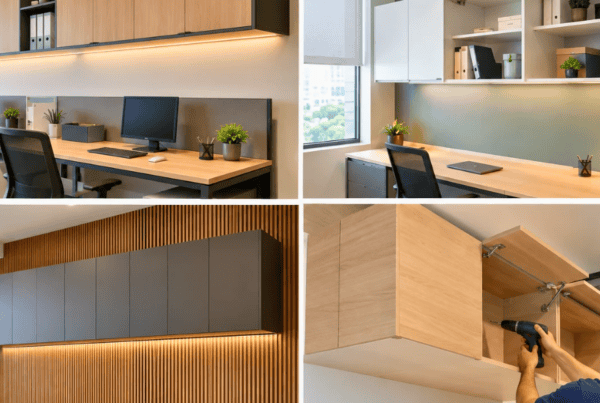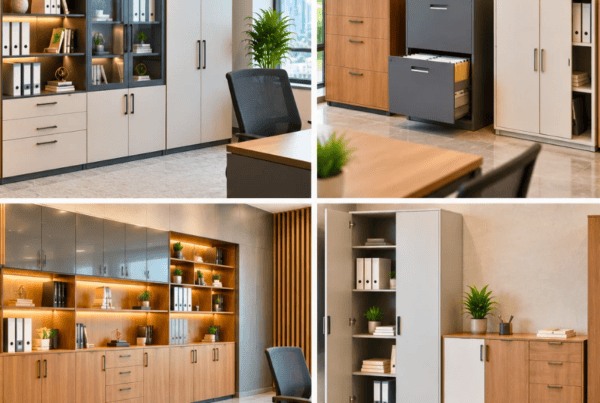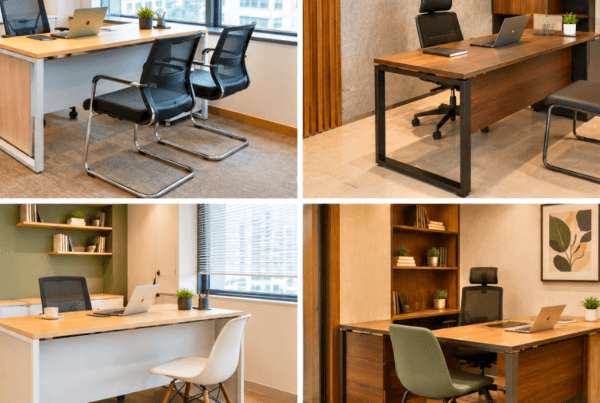
Every office manager knows the scene. Files pile up on desks, stationery wanders into the wrong drawers, and an important document goes missing minutes before a client meeting. A cluttered desk is more than an eyesore. It slows people down, breaks their concentration, and makes the whole workspace look less professional.
Storage is often treated as an afterthought in office planning, but it shapes both productivity and aesthetics. Well-chosen office furniture, storage included, keeps essentials within reach, protects confidential papers, and gives each employee a tidy, organised base to work from.
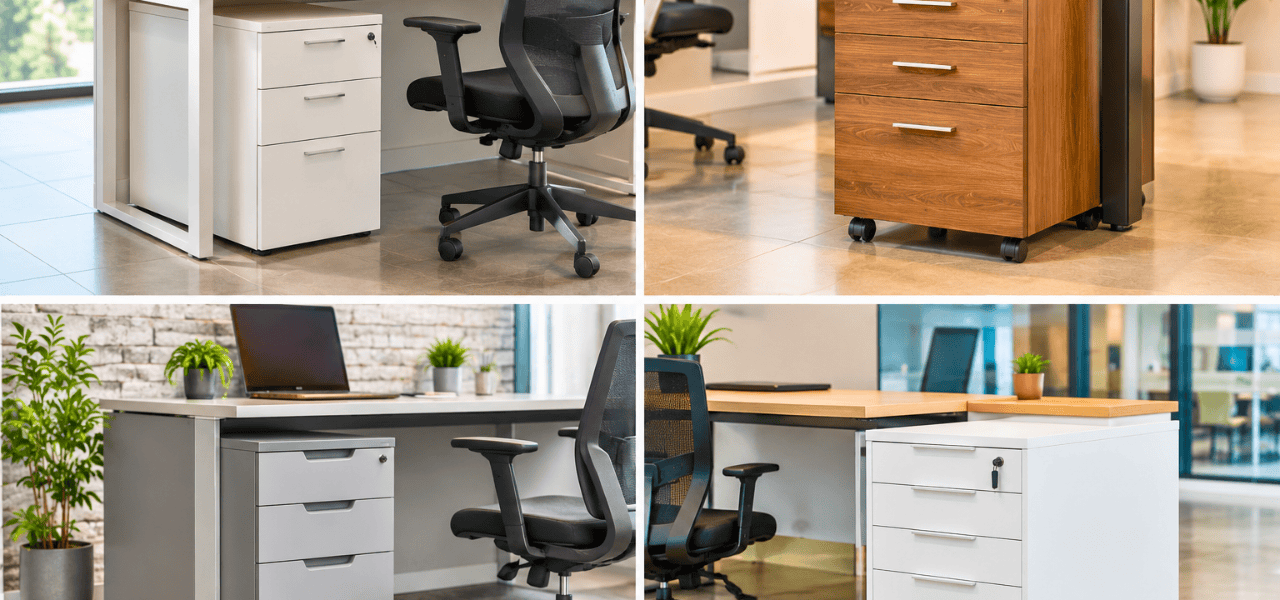
That is where the office pedestal unit comes in. It is a compact drawer cabinet that sits under or beside a desk, and it is a staple of modern workstation desking setups. Pedestals come in two primary types: the fixed pedestal desk unit and the mobile pedestal drawer unit. Each suits a different kind of office, and choosing wrongly can mean cramped legroom, wasted space, or storage that doesn’t match how your team works.
This office pedestal unit guide walks you through the differences, strengths, and limitations of both types, explains the popular 3-drawer configuration, and gives you a practical framework for choosing the right unit for your workspace.
What Is an Office Pedestal Unit?
Definition and Basic Structure
An office pedestal unit is a compact drawer or cabinet storage solution designed to fit neatly under or alongside a workstation desk. It combines personal storage, document filing, and sometimes a small seating or surface function into a single footprint that doesn’t eat into valuable floor space.
Pedestals are available in several configurations:
- 2-drawer units: typically one box drawer and one filing drawer, suited to lighter storage needs
- 3-drawer units: the most common setup, balancing stationery, personal items, and files
- Combination units: a mix of box drawers and a deep filing cabinet drawer for document-heavy roles
On materials, most quality units are built from powder-coated steel, engineered wood, or high-pressure laminates. Steel offers durability and load-bearing strength. Laminate-finished engineered wood lets the pedestal match the desk surface. Many modern units combine both for strength and a refined look.
You may also see the term spelled “office pedastal unit” in searches and supplier catalogues. It is the same product, and the same buying principles apply however you search for it.
Common Use Cases in Office Environments
Pedestal units are among the most versatile pieces of office furniture. Typical uses include:
- Personal storage at the workstation: bags, chargers, notebooks, and everyday belongings
- Filing and documentation: contracts, invoices, HR records, and other sensitive paperwork that needs a lockable home
- Stationery and supplies: pens, staplers, sticky notes, and small tools kept close at hand
You will find them across open-plan offices, private cabins, and executive desks. In open-plan layouts, they give each employee a defined personal storage zone within workstation desking arrays. In cabins and executive suites, they complete the desk setup with a more substantial, integrated storage solution.
Types of Office Pedestal Units: Fixed vs Mobile
The most important decision when choosing an office pedestal unit is whether to go fixed or mobile. Here is what you need to know about each.
Fixed Pedestal Desk Units: What You Need to Know
A fixed pedestal desk unit is permanently attached or bolted to the desk frame, or positioned in a set location that is not meant to move. It becomes part of the desk system itself.
Advantages
- Greater structural stability and load-bearing capacity. Because the unit is anchored, it handles heavier contents without shifting or tipping.
- Ideal for executive or permanent workstations. If a desk is going to stay where it is for years, a fixed unit makes sense.
- A cleaner, more integrated look. The pedestal and desk read as a single, cohesive piece.
- Better for heavy filing. Deep filing drawers filled with documents benefit from a stable base.
- Added security. A bolted unit is harder to tamper with or carry away, which matters for sensitive documents.
Disadvantages
- No flexibility to reconfigure. Once installed, the unit stays put, so changing your layout takes more effort.
- It can’t follow the employee. If someone moves to a different desk, the storage doesn’t move with them.
- Less suited to hot-desking or agile offices. Where seating changes frequently, a fixed unit becomes a constraint.
For formal, long-term setups where permanence and security come first, a fixed pedestal desk is hard to beat.
Mobile Pedestal Drawer Units: Flexibility Redefined
A mobile pedestal drawer unit has castors or wheels at the base, so it can be moved freely around the office. It is the answer for workplaces that value adaptability.
Advantages
- Maximum flexibility. Mobile units suit agile, hot-desking, and collaborative setups where people and teams move often.
- Easy to reposition. Office redesigns and expansions are far simpler when storage can simply be rolled to its new spot.
- Portable personal storage. Employees can lock their unit and take it with them when they change desks.
- Ideal for open-plan and coworking environments. Shared, shifting spaces benefit from storage that moves with the people using it.
- Security options available. Many mobile pedestals come with central locking systems, so mobility doesn’t mean compromising on safety.
Disadvantages
- Slightly less stable under heavy loads. Compared with a fixed unit, a mobile pedestal can feel less planted when heavily loaded.
- It can shift unintentionally. In high-traffic areas, an unlocked unit may roll if bumped.
- It may not suit formal executive aesthetics. For a traditional executive cabin, wheels can look out of place.
Overall, a mobile pedestal drawer is the natural choice wherever the layout is expected to change.
Fixed vs Mobile Pedestal: Head-to-Head Comparison
The table below summarises the main differences so you can compare at a glance.
| Feature | Fixed Pedestal Desk | Mobile Pedestal Drawer |
| Mobility | Stationary | Fully mobile on castors |
| Stability | High | Moderate |
| Best For | Executive/permanent desks | Open-plan/agile offices |
| Security | High (bolted) | Lock & key available |
| Space Efficiency | Neat under-desk fit | Flexible positioning |
| Customization | Limited post-install | Easy to reconfigure |
| Ideal Office Type | Cabin, executive, corporate | Co-working, hot-desk, open plan |
As this office pedestal unit guide shows, neither type is better in every situation. The fixed pedestal desk wins on stability, security, and integration. The mobile pedestal drawer wins on flexibility and adaptability. The right answer depends on how your people work.
Understanding the 3-Drawer Pedestal Office Configuration
Among all configurations, the 3 drawer pedestal office setup is the most widely used, and it is easy to see why.
What a 3-Drawer Setup Typically Includes
A standard 3-drawer pedestal usually has:
- A top pencil or box drawer for pens, clips, small stationery, and everyday items
- A middle box drawer for notebooks, chargers, and personal belongings
- A deep filing drawer with hanging file support for documents, folders, and records
Why It Is So Popular in Indian Corporate Offices
The 3-drawer layout is popular in Indian corporate offices because it covers the full range of storage needs in a single compact form. Employees get a quick-access drawer for daily items, a mid-level drawer for personal belongings, and a proper filing space for paperwork. Because the footprint is slim, it fits under standard desks without crowding legroom, which is valuable in space-conscious offices.
It also scales well. Whether you are furnishing a ten-person team or a large corporate floor, a consistent 3-drawer standard simplifies planning, procurement, and maintenance.
Locking Mechanisms
Security is a key consideration with any 3 drawer pedestal office unit. There are two common approaches:
- Individual locks: each drawer has its own lock and key, giving fine-grained control
- Central locking: a single lock secures all drawers at once, which is faster and more convenient for everyday use
For most workplaces, central locking is the more practical option. It keeps sensitive documents secure without making employees juggle multiple keys.
How to Choose the Right Office Pedestal Unit for Your Workspace
With the basics covered, here is a practical framework for selecting the right office pedestal unit.
Consider Your Office Layout
Start with how your space is organised:
- Open-plan or agile offices: a mobile pedestal drawer gives the flexibility these layouts need.
- Private cabins and executive rooms: a fixed pedestal desk delivers the stability and polished look these spaces call for.
- Hot-desking environments: choose mobile units with individual locking so employees can secure their belongings and move freely.
Evaluate Your Storage Needs
Next, think about what will actually go inside:
- Heavy filing requirements? Choose a fixed pedestal with a deep filing drawer for stability under load.
- Mostly stationery and personal items? A 3-drawer mobile unit is usually more than enough.
- Sensitive or confidential documents? Prioritise central locking, whichever type you choose.
Match Your Workstation Desking System
A pedestal should complement the desk it serves. Check that the unit’s height, material, and finish align with your workstation desking. Matching laminates and edge profiles create a cohesive, professional look across the floor.
Modular compatibility matters too. If you are planning a large workstation desking installation, choosing pedestals designed to work with the desk system saves headaches during installation and makes future reconfiguration easier.
Think About Ergonomics and Space
Finally, consider how the pedestal affects the person using the desk:
- Protect legroom. The unit should never restrict comfortable seating or leg movement.
- Under-desk vs side placement. Under-desk placement saves floor space, while side placement can make drawers easier to reach in some layouts.
- Accessibility. Good ergonomic office furniture planning should account for drawer height, handle reach, and ease of use for all employees, in line with accessibility best practice.
Working through these four factors will narrow your options quickly and help you avoid costly mistakes.
Vlite Furnitech’s Office Pedestal Unit Range
Vlite Furnitech is a leading office furniture manufacturer and supplier in India, headquartered in Navi Mumbai. The company designs and produces modular office furniture for corporates, SMEs, architects, and interior design firms across the country.
Vlite’s manufacturing capability is a core strength. Its 30,000 sq. ft. facility in Patalganga, Navi Mumbai, has a capacity of 14,000 workstations per month, which means it can handle everything from small fit-outs to large-scale corporate projects. The company holds ISO 9001:2015 certification, is BIFMA-certified, and follows LEED-compliant practices, reflecting its commitment to quality, performance, and sustainability.
What sets Vlite’s pedestal units apart:
- Premium construction: powder-coated steel and engineered wood options built for durability
- Fixed and mobile configurations: so you can match the unit to your office type
- 3-drawer pedestal options with central locking: convenient, secure storage for everyday use
- Customisable finishes: designed to match any workstation desking system
- Dedicated support: project management and after-sales teams who stay involved from planning to installation and beyond
With branches in Mumbai, Pune, Ahmedabad, Surat, and Hyderabad, Vlite Furnitech offers pan-India reach for projects of every size.
Explore Vlite Furnitech’s office pedestal unit collection or speak with our design team for customised storage solutions.
Still comparing modular, bespoke, and traditional office furniture?
Let Vlite Furnitech LLP help you choose the smartest investment for better ROI.
Frequently Asked Questions (FAQ)
Q1: What is the difference between a fixed pedestal and a mobile pedestal drawer?
A fixed pedestal desk unit is bolted to the desk frame or placed in a permanent position, giving it high stability and security. A mobile pedestal drawer has castors, so it can be rolled around the office and even taken to a new desk. Fixed units suit executive and permanent workstations, while mobile units suit open-plan, hot-desking, and agile offices that change layout often.
Q2: Which office pedestal unit is best for an open-plan office?
For open-plan layouts, a mobile office pedestal unit is usually the best fit. It lets employees reposition storage as teams and seating change, and many models offer central locking for security. When planning your workstation desking, choose a mobile pedestal that matches the desk’s height, finish, and edge profile, so the whole floor looks consistent while staying flexible.
Q3: What does a 3 drawer pedestal office setup typically include?
A typical 3 drawer pedestal office unit has a top pencil or box drawer for small stationery, a middle box drawer for personal items and notebooks, and a deep bottom drawer designed for hanging files and documents. Most come with a central locking mechanism, so all three drawers can be secured with one key, which makes daily use simple and secure.
Q4: Are office pedestal units lockable?
Yes. Almost every office pedastal unit offered by professional manufacturers includes a locking system. Options generally include individual drawer locks or central locking, where one key secures every drawer. Both fixed and mobile office furniture pedestals can be locked, so you can protect confidential documents and personal belongings regardless of which type you choose.
Q5: How do I match a pedestal unit to my existing workstation desking?
Start by checking the desk’s height, depth, and under-desk clearance so the pedestal fits without limiting legroom. Then match laminate colour, texture, and edge profile for a cohesive look. If you are buying new, choose pedestals designed to be modular with your workstation desking. This office pedestal unit guide recommends confirming dimensions with your supplier before ordering.
Q6: Can Vlite Furnitech customise pedestal units for large corporate projects?
Yes. Vlite Furnitech is ISO 9001:2015 and BIFMA-certified, with a 30,000 sq. ft. manufacturing facility capable of producing 14,000 workstations per month. Pedestal units can be customised in finish and configuration to suit your project. A dedicated project management team handles planning and execution, and pan-India delivery covers Mumbai, Pune, Ahmedabad, Surat, Hyderabad, and beyond.
Invest in the Right Office Storage from Day One
Choosing between a fixed and a mobile pedestal comes down to one question: how does your team work? Fixed pedestals offer permanence, stability, and security, which makes them ideal for executive cabins and long-term workstations. Mobile pedestal drawers offer flexibility and agility, which makes them ideal for open-plan, coworking, and hot-desking environments.
Whichever you choose, make sure the unit aligns with your workstation desking system, your storage needs, and your office culture. A well-matched office pedestal unit does more than store things. It keeps desks clear, protects important documents, and contributes to a workspace that people enjoy using.
Getting this right from day one saves money, avoids disruption, and gives your team a better working environment for years to come. As a trusted partner for end-to-end office furniture solutions, Vlite Furnitech brings the manufacturing strength, certifications, and project expertise to make that happen.
Ready to upgrade your office storage? Contact Vlite Furnitech today and let our design experts help you select the perfect office pedestal unit for your workspace.

Vishnu Sharma
I am the co-founder and CEO of Vlite Furnitech, creating modular office solutions since 2009. With a background in Chemistry and Marketing, and experience as Regional Head at Featherlite, I help design ergonomic, adaptable, and sustainable workspaces. Alongside a team of 120+, we serve corporates like JCB, Just Dial, KFC, and educational institutions. Let’s connect to reimagine innovative, eco-friendly office environments.