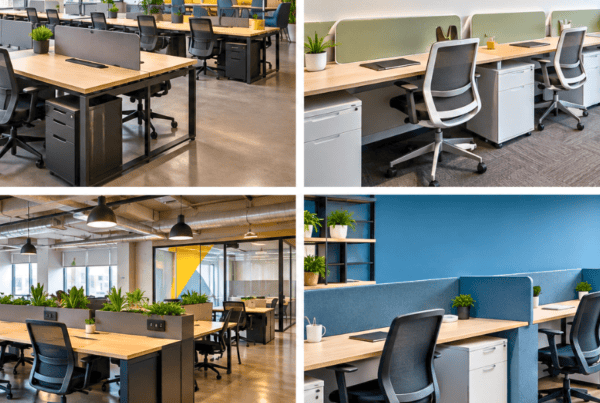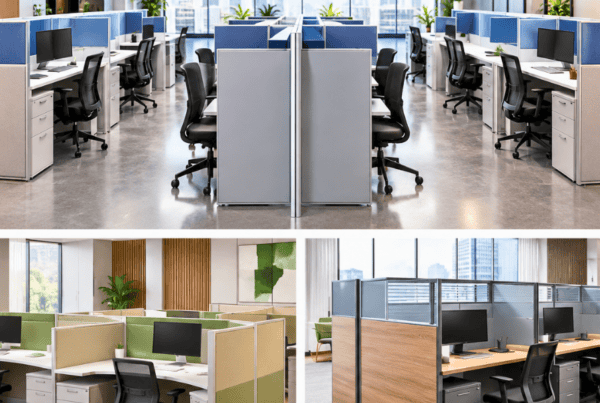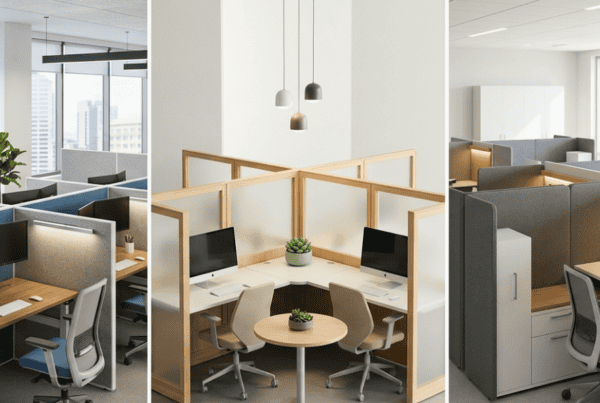
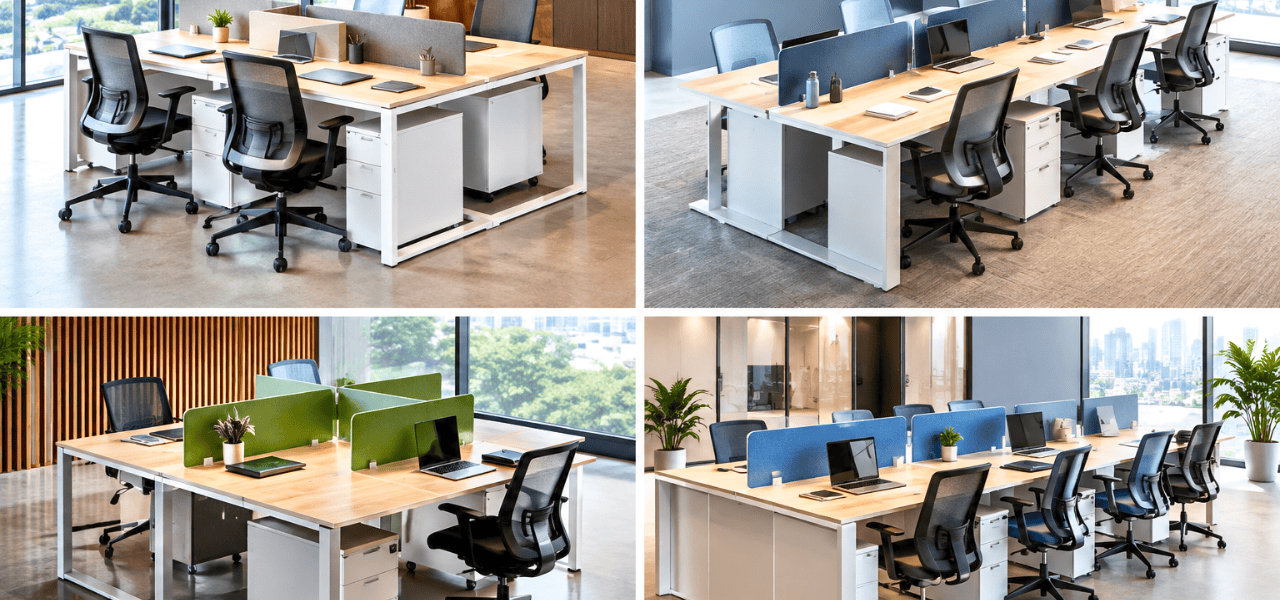
Office real estate in Indian metros has never been more expensive. According to recent commercial property reports, Grade A office space in cities like Mumbai, Pune, and Hyderabad now costs anywhere between ₹80 to ₹200 per sq. ft. per month, and that number keeps climbing. For facility managers and procurement heads, every square foot has to justify itself. One of the most consequential decisions in any office fit-out is choosing the right workstation desking configuration, and the choice between a 4 seater workstation and a 6 seater workstation sits at the heart of that decision.
This isn’t just a matter of aesthetics or team preference. The configuration you choose directly shapes your space utilization ratio, influences how teams communicate and collaborate, and has a significant bearing on your total office furniture budget. Get it right, and you create an environment where people do their best work. Get it wrong, and you’re either wasting floor space or cramping your team into conditions that quietly drain productivity.
This guide breaks down the 4 Seater vs 6 Seater Workstation formats across every dimension that matters to Indian offices, size, layout, pricing, scalability, and use cases, so you can walk away with clarity on which configuration your office actually needs.
Understanding Workstation Cluster Configurations
Before diving into the specifics of each format, it helps to understand what a workstation cluster configuration actually means and why it has become the default approach in modern office planning.
A workstation cluster is a grouped arrangement of individual desks that share a common structural frame, partition panels, and often a cable management system. Rather than placing standalone desks independently across a floor, clusters allow multiple seats to be joined into a single, self-contained unit. This approach dramatically reduces the amount of circulation space wasted between individual desks and allows offices to accommodate more people per square foot without feeling overcrowded.
Workstation desking in cluster format also simplifies infrastructure. Power outlets, data ports, and cable trays can be shared across the cluster rather than duplicated for every individual seat, which reduces both installation cost and floor clutter. For growing companies that need to fit a larger workforce into a fixed footprint, cluster-based workstation desking has become the practical and cost-efficient standard.
The two most widely deployed cluster formats in Indian offices today are the 4-seat configuration and the 6-seat configuration. Each serves a different type of team and office environment, and understanding those differences is what this guide is built around.
4 Seater Workstation, Size, Layout & Best Use Cases
Standard 4 Seater Workstation Size
The standard 4 seater workstation size in the Indian market typically spans approximately 2400mm x 1200mm in a face-to-face linear layout, though configurations can vary based on desk depth and panel arrangement. Each individual seat generally occupies a work surface of around 1200mm x 600mm, which gives each user adequate desk depth for a monitor, keyboard, and working documents without encroaching on the adjacent station.
Panel heights in a 4 seater workstation commonly range from 900mm to 1200mm. Lower panels around 900mm encourage visibility and team communication, while higher panels at 1050mm or 1200mm offer greater acoustic separation and visual privacy, a useful feature in environments where concentration is critical. Cable trays are typically integrated beneath the work surface, running the full length of the cluster to keep power and data lines off the floor and out of sight.
The overall footprint of a 4 seater cluster, when you account for the standard circulation clearance of 900mm to 1200mm on open sides, translates to a usable floor area of roughly 12 to 16 sq. metres depending on layout orientation. This makes it a viable fit for smaller office bays, team pods in open-plan offices, and subdivided floor plates where the layout calls for multiple smaller clusters rather than one large bank of workstations.
Who Should Choose a 4 Seater Workstation?
The 4 seater workstation is the natural choice for offices and teams where compact efficiency is the priority. Startups working out of co-working spaces or small commercial units typically favour this configuration because it allows them to establish structured work areas without committing to the larger footprint of a 6-seat cluster. Similarly, BPO and back-office setups with defined team pods of four agents find this configuration easy to manage and supervise.
This format also works well in offices where headcount-per-square-foot targets are high but teams are structured into small, self-sufficient units. Sales teams broken into sub-teams of four, HR pods, or small creative groups all tend to function well in a 4 seater cluster. The configuration is also easier to reconfigure or relocate if an office layout needs to change, since the smaller cluster can be moved and reinstalled with less disruption than a larger unit.
6 Seater Workstation, Size, Layout & Best Use Cases
Standard 6 Seater Workstation Dimensions
The standard 6 seater workstation typically measures around 3600mm x 1200mm in a face-to-face linear arrangement, effectively extending the 4-seat format by adding two additional stations on the same spine. Some layouts use an L-shaped or double-spine arrangement that alters the footprint while maintaining six seats; this is common in offices where column spacing or partition walls make a purely linear run impractical.
Each seat in a 6-seat cluster retains the same individual desk depth and width standards as the 4-seat format, so per-person workspace doesn’t decrease. What changes is the collective footprint and the sense of team scale. With six people sharing a single cluster structure, the visual effect is of a more cohesive team bay, one that reads clearly as a department or functional group within a larger open-plan layout.
Cable management becomes even more relevant in a 6-seat configuration. With six workpoints drawing power and data, a well-designed cable tray and raceway system is essential to keep the cluster tidy and compliant. Integrated power spine units, which allow power and data to be distributed centrally and tapped at each seat, are a common upgrade in 6-seat clusters used by IT, operations, and customer support teams.
Who Should Choose a 6 Seater Workstation?
The 6 seater workstation is purpose-built for mid-to-large teams that work in close coordination. Sales floors, customer support centres, IT helpdesks, and operations teams that need to communicate frequently across the team often find that a 6-seat cluster encourages the kind of lateral communication that a dispersed desk layout discourages.
From a 6 seater workstation price perspective, the per-unit cost is higher than a 4-seat cluster, but the cost-per-seat often works out more efficiently, more on that in the pricing section. For companies procuring furniture for 50 or more people, the 6-seat configuration can meaningfully reduce total expenditure while keeping the workspace functional and well-organized. Workstation desking in the 6-seat format is also easier to wire and service since there are fewer cluster units for the same headcount, which reduces both installation time and ongoing maintenance complexity.
Space Comparison, 4 Seater vs 6 Seater Workstation
The table below provides a direct comparison of both the 4 seater and 6 seater workstation formats across the metrics that matter most during office planning:
| Feature | 4 Seater Workstation | 6 Seater Workstation |
| Floor Area Required | ~12–16 sq. metres (with circulation) | ~16–22 sq. metres (with circulation) |
| Per-Person Desk Space | ~1200mm x 600mm per seat | ~1200mm x 600mm per seat |
| Layout Flexibility | High, easier to fit in irregular spaces | Moderate, needs longer uninterrupted runs |
| Best For | Small teams, startups, BPOs, co-working | Sales, IT, customer support, larger departments |
| Scalability | Easily added in multiples | More cost-efficient at scale |
| Acoustic Privacy | Better containment within smaller cluster | Shared space feel; lower panel options available |
The core takeaway from this comparison is that neither the 4 seater and 6 seater workstation format is universally superior, they serve different planning conditions. If your office floor plate has multiple columns, irregular dimensions, or is subdivided into smaller bays, the 4-seat cluster gives you far more layout flexibility and can be oriented and positioned in more ways. If you have long, open floor plates and a headcount of 30 or more, the 6-seat cluster allows you to create structured team bays that read clearly, wire efficiently, and cost less per head to procure and install.
Cost Comparison, 6 Seater Workstation Price vs 4 Seater
Pricing for modular office furniture in India is influenced by a range of variables, and understanding those variables helps you assess quotes more accurately when you go to market.
At a broad level, a 4 seater workstation will have a lower unit price than a 6 seater workstation. However, if you think about it on a per-seat basis, which is the more useful metric when you’re furnishing a team of 30 or 50 people, the 6 seater workstation price often works out 10 to 15 percent lower per seat. This is because the structural components, panel materials, and infrastructure like cable trays and power units are shared across more seats without a proportional increase in material cost.
Several factors determine where a specific configuration sits within its price range. Panel material is the biggest driver: plain laminate panels are the most economical, while fabric-wrapped panels, glass inserts, or frosted acrylic privacy screens add to the cost. Surface finish on the work surface, plain laminate, high-pressure laminate, or veneer, also affects pricing significantly. Modular add-ons such as overhead storage shutters, mobile pedestals for under-desk storage, and task lighting are optional extras that can be added per seat based on the user’s role and storage needs.
Bulk procurement is another important pricing lever. As a manufacturer with a monthly production capacity of 14,000 workstations, Vlite Furnitech is in a position to offer competitive pricing on large-volume orders without the lead time uncertainty that comes with smaller manufacturing setups. Whether you’re furnishing a 40-seat startup office or a 400-seat corporate floor, the manufacturing capacity is there to deliver on time and within budget.
Vlite Furnitech’s BIFMA certification and ISO 9001:2015 quality management system also mean that the office furniture you receive meets internationally benchmarked standards for structural integrity, load bearing, and durability, factors that directly affect total cost of ownership over the furniture’s lifespan. Cheaper, uncertified alternatives may appear to save money upfront but often require replacement or repairs within three to five years, eroding any initial savings.
Key Factors to Consider Before Choosing
Before finalising whether a 4 seater or 6 seater workstation configuration is right for your office, work through the following checklist:
- Total floor area and layout geometry, Measure your usable floor plate and identify column positions, emergency exit paths, and fixed partition walls. Irregular layouts favour the 4-seat format; long open bays suit the 6-seat format.
- Current headcount and 12-to-24-month growth projections, If you’re planning to scale from 20 to 50 people within a year, choose a workstation cluster configuration that allows you to add clusters without a full redesign.
- Nature of work, Teams that require deep focus and minimal interruption benefit from the tighter containment of a 4-seat cluster with higher panels. Collaborative, communication-heavy teams are better served by the open, connected feel of a 6-seat bay.
- Per-seat and total project budget, Calculate your per-seat budget before going to market. Then model the total cost for each configuration type across your full headcount to see which delivers better value.
- Reconfiguration requirements, If your office layout changes seasonally or with project cycles, a workstation cluster configuration that is modular and easy to disassemble is worth the slightly higher upfront investment.
- Acoustic and privacy needs, Consider whether roles in your office require phone privacy, video calls, or sensitive conversations. Panel height and optional privacy screens can address this within both the 4 seater and 6 seater workstation formats.
Why Choose Vlite Furnitech for Your Workstation Needs?
When investing in workstation desking at scale, the manufacturer behind the product matters as much as the product itself. Delivery reliability, build consistency, after-sales support, and the ability to handle large and complex projects are capabilities that only come with a serious manufacturing operation.
Vlite Furnitech operates a state-of-the-art 30,000 sq. ft. manufacturing facility in Patalganga, Navi Mumbai, with a monthly production output of 14,000 workstations. This scale means that when you place a large order, there is actual production capacity to back it up, not a vendor farming out your order to multiple small suppliers with inconsistent quality standards.
All workstations manufactured at the facility carry BIFMA certification and are produced under an ISO 9001:2015 certified quality management system. The facility also operates with LEED-compliant sustainable manufacturing practices, which is increasingly important for corporate clients with ESG reporting requirements or sustainability commitments in their office specifications.
For buyers outside Mumbai, Vlite Furnitech’s pan-India presence across Mumbai, Pune, Ahmedabad, Surat, and Hyderabad means that project management, site visits, and after-sales support are available locally, not just over the phone. A dedicated project team works through space planning, configuration selection, delivery scheduling, and installation to ensure that the office furniture delivered matches what was specified and arrives when it was promised.
Whether you are procuring a 4 seater workstation cluster for a 20-person startup or outfitting a 300-seat corporate campus with a combination of 4-seat and 6-seat configurations, Vlite Furnitech brings the manufacturing depth, certification credentials, and project experience to deliver.
Still comparing modular, bespoke, and traditional office furniture?
Let Vlite Furnitech LLP help you choose the smartest investment for better ROI.
Frequently Asked Questions
Q1: What is the standard size of a 4 seater workstation?
A standard 4 seater workstation size in the Indian market typically measures 2400mm in length and 1200mm in depth, arranged in a face-to-face linear layout. Each of the four seats generally gets a working surface of approximately 1200mm wide by 600mm deep. Panel heights typically range from 900mm to 1200mm depending on the privacy and acoustic requirements of the workspace. The actual footprint, once standard circulation clearances are added around the cluster, comes to roughly 12 to 16 sq. metres of floor area.
Q2: How does the 6 seater workstation price compare to 4 seater options?
On a per-unit basis, the 6 seater workstation price is higher than a 4-seat unit because it involves more materials, a longer structural frame, and extended cable management infrastructure. However, on a cost-per-seat basis, the 6-seat configuration is typically 10 to 15 percent more economical because structural and infrastructure costs are distributed across more seats. For offices purchasing furniture for 30 or more people, the 6-seat format usually delivers better value per head.
Q3: Which workstation cluster configuration is better for open offices?
Both configurations work well in open offices, but the right choice depends on your team structure and floor plate shape. The 4-seat workstation cluster configuration is better suited to offices with irregular layouts, multiple columns, or subdivided bays, as it fits into more varied spaces. The 6-seat configuration works best in open offices with long, uninterrupted floor runs where large teams need to be seated together as a visible unit. Many open offices use a combination of both formats to accommodate different departments and team sizes.
Q4: Can I customize a 4 seater and 6 seater workstation layout?
Yes, both the 4 seater and 6 seater workstation formats are fully customisable in terms of panel height, surface finish, panel material, colour, storage add-ons, and privacy screen options. At Vlite Furnitech, custom configurations are a standard part of the project process, not an exception. Clients can choose from a range of laminate finishes, fabric-wrapped panel options, overhead storage units, mobile pedestals, and task lighting to build a workstation cluster that suits their specific operational and aesthetic requirements.
Q5: How do I calculate how many workstations I need for my office?
Start with your current confirmed headcount and add 10 to 20 percent for near-term growth. Divide this total headcount by the number of seats per cluster, 4 or 6, to get your total cluster count. Next, calculate the floor area required by multiplying the number of clusters by the per-cluster footprint including circulation clearances. Compare this against your available floor plate to confirm it is achievable. For more complex offices with multiple departments or mixed configurations, a space planning consultation with a specialist like Vlite Furnitech’s project team can help you optimise the layout before committing to a configuration.
Conclusion
Both the 4 seater workstation and the 6 seater workstation are effective solutions, but they are effective in different contexts, for different teams, and at different budget points. The 4-seat format excels in compact, agile office environments where layout flexibility, team privacy, and smaller team pod structures are the priority. The 6-seat format delivers better per-seat value, supports larger collaborative team bays, and is better suited to open floor plates with higher headcounts.
Choosing the right workstation cluster configuration is not a minor procurement decision. It shapes how your people work, how efficiently your floor space is used, and how much you spend on office furniture today and over the next several years. Approaching it with the same rigour you’d apply to any strategic capital investment, with real space measurements, growth projections, and a per-seat cost model, will give you a result you won’t need to revisit in 18 months.
Explore Vlite Furnitech’s complete range of modular workstations and cluster configurations, or contact the team for a free space consultation and customised quote tailored to your office requirements.

Vishnu Sharma
I am the co-founder and CEO of Vlite Furnitech, creating modular office solutions since 2009. With a background in Chemistry and Marketing, and experience as Regional Head at Featherlite, I help design ergonomic, adaptable, and sustainable workspaces. Alongside a team of 120+, we serve corporates like JCB, Just Dial, KFC, and educational institutions. Let’s connect to reimagine innovative, eco-friendly office environments.