The average office employee in India now spends upwards of nine hours a day seated, often on furniture that was never designed with long-term posture, spinal health, or productivity in mind. Studies on occupational health consistently link prolonged, poorly supported sitting to lower back pain, reduced concentration, and higher absenteeism. For decision-makers furnishing a corporate office, this isn’t a minor comfort issue; it’s a measurable business cost.
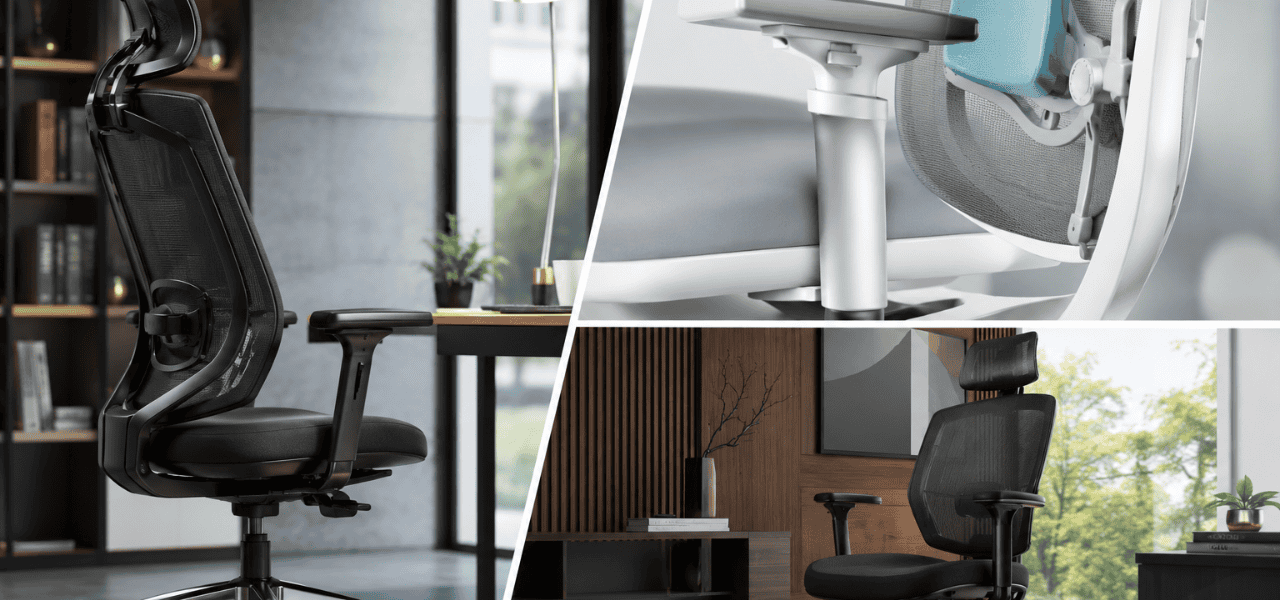
This is where ergonomic executive chairs come in. An ergonomic executive chair is built around the physical requirements of the human body during extended sitting, adjustable lumbar support, correct seat height and depth, properly positioned armrests, and a recline mechanism that keeps the spine supported through movement, rather than a fixed, one-size-fits-all shell. Unlike a standard task chair, an executive chair typically combines this ergonomic engineering with a higher-grade finish, larger seating profile, and a design language suited to leadership and client-facing spaces.
Choosing the right one, however, isn’t as simple as picking the most expensive-looking option in a catalogue. It requires evaluating specific mechanical and material features against how your team actually works. This guide breaks that process into a practical, checklist-driven approach, covering ergonomic criteria, common buying mistakes, and the manufacturing standards that separate a chair built to last from one that won’t survive its first year of daily use.
The Complete Buyer’s Checklist for Ergonomic Executive Chairs
Before comparing brands or price points, it helps to have a fixed set of criteria in hand. Below is the checklist we recommend to procurement teams and office managers evaluating executive chairs for a new setup or refit.
1. Adjustable Lumbar Support
The lumbar spine’s natural inward curve needs active support during sitting, or the lower back muscles compensate, leading to fatigue and pain over a full workday. Look for adjustable lumbar support that moves both in height and depth, so it can be positioned to match different user heights and seating postures, not a fixed pad that only suits one body type.
2. Seat Height & Depth Adjustability
A chair that doesn’t adjust to the individual user forces awkward postures regardless of how well-engineered the rest of it is. Seat height should typically adjust across a range of roughly 40–52 cm to suit users from about 5’0″ to 6’2″, while seat depth adjustability (or a waterfall front edge) prevents pressure behind the knees for shorter users.
3. Armrest Design (3D/4D Adjustable)
Armrests that only move up and down offer limited value. 3D or 4D adjustable armrests, moving in height, width, depth, and pivot angle, let users rest their forearms at a natural 90-degree angle regardless of desk height or typing position, reducing shoulder and neck strain.
4. Recline Mechanism & Tilt Tension
A synchro-tilt or multi-tilt mechanism allows the backrest and seat to recline in a coordinated ratio, keeping the user’s line of sight and hip angle stable while shifting posture through the day. Tilt tension adjustment matters just as much, a chair that reclines too easily under a lighter user, or won’t budge for a heavier one, defeats the purpose of a recline feature altogether.
5. Breathable, High-Density Material (Mesh vs. Leatherette)
Material choice affects comfort, durability, and, particularly relevant in India’s varied climate, heat and moisture management. Mesh backs allow airflow and are generally more forgiving in humid coastal cities, while high-density leatherette offers a more traditional executive look with easier cleaning and maintenance. Neither is universally “better”; the right pick depends on climate, usage hours, and the image the office wants to project.
| Feature | Mesh Back | Leatherette / Upholstered |
| Breathability | Excellent, ideal for humid climates | Moderate; can trap heat over long hours |
| Maintenance | Low; resists staining, easy to wipe | Requires regular conditioning to avoid cracking |
| Aesthetic | Modern, minimal | Traditional, premium executive look |
| Durability (with quality foam/frame) | High, if mesh tension is well-engineered | High, if leather/leatherette grade is dense |
| Best suited for | Open-plan offices, warmer regions | Cabins, client-facing spaces, boardrooms |
6. Swivel Base & Smooth-Rolling Casters
A 360-degree swivel base paired with smooth-rolling, floor-appropriate casters (hard casters for carpet, soft casters for hard flooring) reduces unnecessary strain from twisting or reaching, and prevents flooring damage over time. This is a small detail that’s frequently overlooked until it becomes a maintenance headache.
7. Weight Capacity & Build Quality
Every chair has a rated weight capacity, and exceeding it, even slightly, over time, accelerates wear on the gas lift, base, and frame. For most corporate use, a chair rated for at least 120 kg offers a reasonable safety margin; heavier-duty options exist for specific requirements. Check the base material (nylon vs. reinforced polypropylene vs. metal) and the class of gas lift cylinder, since these components typically fail first in lower-quality chairs.
8. Certifications (BIFMA, ISO) as a Quality Signal
Certifications aren’t marketing decoration, they’re the closest thing to an independent quality audit available to a buyer who can’t physically stress-test every chair before purchase. BIFMA (Business and Institutional Furniture Manufacturers Association) certification tests chairs for structural safety, durability, and stability under simulated years of use. ISO 9001:2015 certification, meanwhile, reflects consistency in the manufacturer’s quality management process, meaning the tenth chair off the line should perform the same as the first.
How Executive Chairs Fit Into a Modern Office Workspace
Choosing a chair in isolation, without considering the rest of the workspace, is one of the more common gaps in office furniture planning. Office workspace chairs need to work in concert with desk height, workstation layout, and the broader flow of a floor plan, not just look good in a showroom.
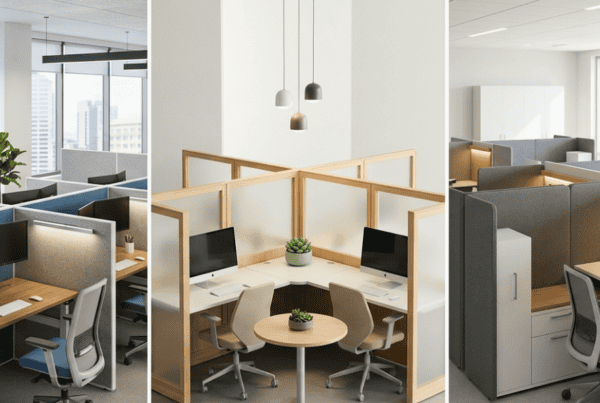
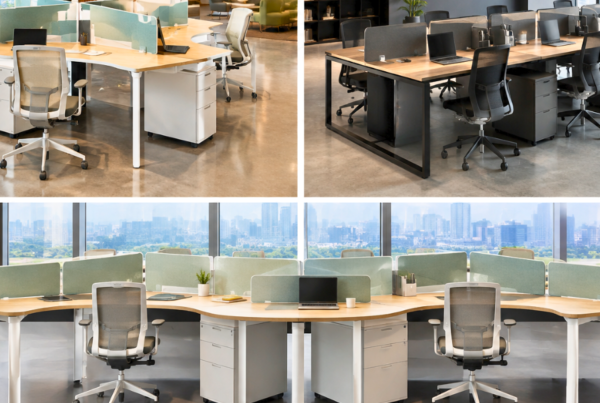
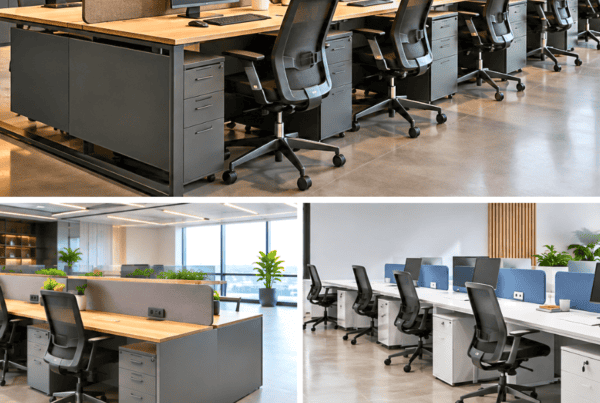
This is particularly relevant in offices built around modular office furniture systems, where workstations, storage units, and seating are designed to be reconfigured as teams grow or restructure. An executive chair chosen without reference to desk height ranges, cabin dimensions, or the movement patterns between individual and collaborative zones can end up mismatched, too tall for a standard desk, too wide for a compact cabin, or simply out of sync with the rest of the room’s design language.
A more effective approach treats seating as one component of a coordinated system: office workspace chairs at open-plan desks, executive chairs in cabins and leadership offices, and consistent material or color language across workstations, storage, and lounge areas. This is also where working with a single modular office furniture partner, rather than sourcing chairs, desks, and storage separately, tends to produce a more cohesive, easier-to-maintain office.
Common Mistakes to Avoid When Buying Office Workspace Chairs
Even well-intentioned buyers make a handful of recurring errors when evaluating office workspace chairs and executive seating. Watching for these can save both budget and long-term regret.
- Buying on price alone, the cheapest chair in a comparable category is often cheapest because it cuts corners on the gas lift, foam density, or frame material, all of which show up as squeaks, sagging, or failure within 12–18 months.
- Ignoring certifications, a chair without BIFMA or ISO backing may look identical to a certified one in a showroom, but there’s no independent verification of how it performs under sustained daily use.
- Wrong sizing for user height and weight, procuring a single chair specification for an entire office ignores the reality that a 5’2″ and 6’2″ employee have very different ergonomic needs; adjustability ranges matter more than a single “ideal” spec.
- Skipping trial or testing, wherever possible, sit in the chair (or a sample unit) for at least 15–20 minutes before committing to a bulk order; catalogue photos and spec sheets can’t reveal how a recline mechanism actually feels in motion.
Why Manufacturing Quality Matters: What to Look for in an Office Furniture Partner
The specifications on a checklist only matter if the manufacturer consistently delivers them, order after order. This is where certifications like LEED, BIFMA, and ISO 9001:2015 move from being a box-ticking exercise to a genuine risk-reduction tool for procurement teams.
LEED-compliant manufacturing signals that a facility follows sustainable sourcing and production practices, increasingly relevant as corporate offices face their own ESG reporting requirements. BIFMA certification, applied at the product level, confirms that chairs have been tested against recognized durability and safety benchmarks rather than the manufacturer’s own internal claims. ISO 9001:2015 certification speaks to the manufacturing process itself: consistent quality control across production runs, which matters enormously when an office is ordering dozens or hundreds of units and needs every one to match.
Scale and production capability are also a reasonable, if less glamorous, proxy for reliability. A manufacturer running a large, well-equipped facility with dedicated project management and after-sales support is generally better positioned to handle bulk office furniture orders on schedule, manage replacements or warranty issues efficiently, and support multi-city rollouts without inconsistent quality between batches. Vlite Furnitech, for instance, operates a 30,000 sq. ft. manufacturing facility in Patalganga, Navi Mumbai, with the capacity to produce roughly 14,000 workstations a month, backed by LEED-compliant, BIFMA, and ISO 9001:2015-certified processes, the kind of scale that supports consistent quality across large corporate rollouts, not just individual chair orders. For buyers evaluating any office furniture partner, asking about facility scale, certification status, and after-sales structure is a reasonable way to gauge long-term reliability before signing a purchase order.
Still comparing modular, bespoke, and traditional office furniture?
Let Vlite Furnitech LLP help you choose the smartest investment for better ROI.
Frequently Asked Questions
What is the difference between an executive chair and a regular office chair?
Executive chairs are generally larger, higher-backed, and finished with more premium materials than standard task chairs, and are typically positioned for leadership, cabin, or client-facing use. Both can be ergonomically engineered, but executive chairs usually include a broader range of adjustability (lumbar, armrests, recline) as standard, whereas basic task chairs may offer only limited adjustment.
How much should a good ergonomic executive chair cost in India?
Pricing varies widely by material, mechanism quality, and certification, but a genuinely ergonomic, BIFMA-tested executive chair from an established manufacturer typically falls in the mid-to-premium range rather than entry-level pricing, reflecting the cost of quality foam, gas lifts, and adjustable mechanisms. Buyers should treat unusually low pricing on “premium” executive chairs as a signal to check certifications and warranty terms closely.
How long should an executive chair typically last?
A well-built, certified executive chair used in a standard corporate environment should reasonably last 7–10 years with normal use and basic maintenance, assuming quality components in the gas lift, base, and frame. Chairs without certification or with lower-grade components often show wear, sagging foam, loose mechanisms, cracking upholstery, within 2–3 years.
Can ergonomic executive chairs be customized for modular office setups?
Yes, many manufacturers offer customization in upholstery material, color, and sometimes base finish to align with a broader modular office furniture scheme, so seating doesn’t feel disconnected from workstations, storage, and cabin design. It’s worth confirming customization lead times and minimum order quantities early in the procurement process, particularly for larger, multi-branch rollouts.
Choosing the Right Executive Chair for Your Workspace
Selecting the right executive chairs for a corporate office comes down to a manageable set of checks: adjustable lumbar support, proper seat and armrest adjustability, a reliable recline mechanism, breathable and durable materials, and, critically, independent certifications like BIFMA and ISO 9001:2015 that back up the manufacturer’s claims. Skipping any of these in favor of price or appearance alone tends to show up as discomfort, complaints, or replacement costs within a year or two.
Equally important is treating seating as part of a larger workspace decision rather than a standalone purchase, pairing office workspace chairs and executive seating with a coordinated modular office furniture plan tends to produce offices that are more functional, more visually cohesive, and easier to reconfigure as teams change. If you’re evaluating office furniture for a new setup or refit, it’s worth exploring Vlite Furnitech’s range of ergonomic executive chairs, modular workstations and desks, and BIFMA and ISO 9001:2015 certified manufacturing, or simply reaching out to schedule a workspace consultation to work through the specifics for your office.

Vishnu Sharma
I am the co-founder and CEO of Vlite Furnitech, creating modular office solutions since 2009. With a background in Chemistry and Marketing, and experience as Regional Head at Featherlite, I help design ergonomic, adaptable, and sustainable workspaces. Alongside a team of 120+, we serve corporates like JCB, Just Dial, KFC, and educational institutions. Let’s connect to reimagine innovative, eco-friendly office environments.