Office furniture decisions play a key role in shaping workplace functionality, employee comfort, and long-term operational costs. Beyond aesthetics, the right furniture impacts how efficiently teams work and how spaces adapt over time.
Businesses today often choose between modular, bespoke, and traditional office furniture based on budget, flexibility, and evolving workplace needs. However, the real evaluation goes beyond the initial purchase price. Concepts like Total Cost of Ownership (TCO) and Return on Investment (ROI) help organisations understand the true long-term value of their furniture investments.
This comparison explores how each furniture type performs across cost, flexibility, durability, and scalability to support more informed decision-making.
What Are the Differences Between Modular, Bespoke, and Traditional Office Furniture?
To understand which option suits a workplace best, it is important to first look at how each type is defined and used.
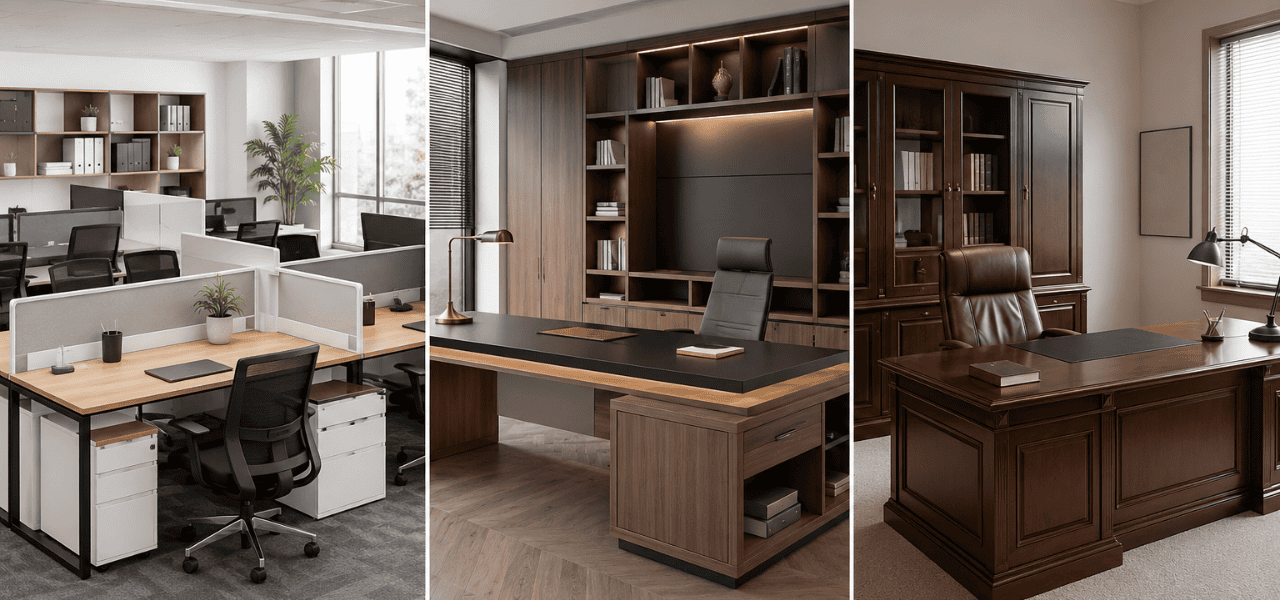
- Modular Office Furniture: Flexible systems designed for easy reconfiguration, expansion, and relocation. Ideal for dynamic and growing workplaces.
- Bespoke Office Furniture: Custom-designed furniture tailored to specific space requirements, aesthetics, or branding needs.
- Traditional Office Furniture: Standard, fixed designs that follow conventional layouts with limited flexibility or modification options.
- Key Differences: Modular systems prioritise adaptability, bespoke solutions focus on customisation, and traditional furniture offers simplicity and lower upfront complexity.
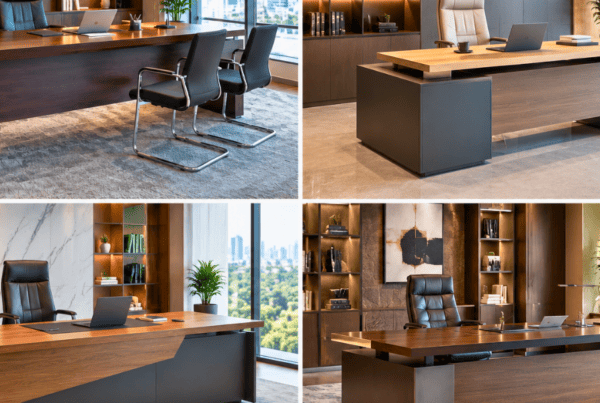
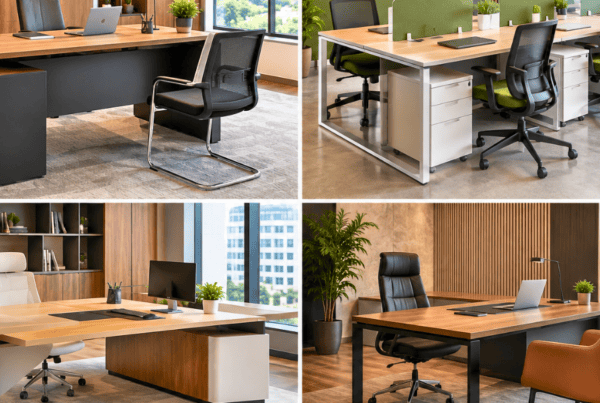
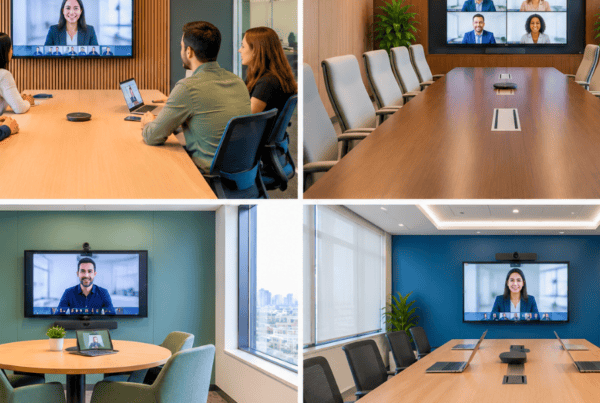
Each serves different workplace environments depending on operational priorities, from workstations and collaborative zones to conference and meeting room furniture setups designed for formal discussions and presentations. These setups are often supported by modern workstation desking systems used in flexible office layouts.
How Does Total Cost of Ownership (TCO) Compare Across the Three Options?
TCO refers to the complete cost of furniture over its lifecycle, including purchase, installation, maintenance, and replacements. Before comparing, here are the key cost factors:
- Initial Investment: Traditional furniture is generally the most affordable upfront, while bespoke solutions are the highest due to customisation.
- Maintenance Costs: Modular furniture typically requires lower maintenance due to standardised and replaceable components.
- Reconfiguration Costs: Modular systems allow cost-effective changes, unlike bespoke or traditional setups that often require partial or full replacement.
- Replacement Cycles: Traditional furniture tends to have a shorter lifecycle compared to modular and bespoke options.
- Lifecycle Value: Modular solutions often deliver stronger long-term cost efficiency due to reuse and adaptability.
Which Furniture Type Offers the Best ROI and Workplace Flexibility?
When comparing office furniture solutions, it is important to evaluate both long-term value and flexibility. Consider the following factors:
- Furniture Lifespan: Longer-lasting furniture reduces replacement frequency and improves overall return on investment over time.
- Adaptability: Modular furniture offers the highest flexibility, while bespoke and traditional solutions are generally less adaptable to changing requirements.
- Support for Growth: Modular systems can accommodate changing team sizes and workspace layouts more efficiently than fixed furniture setups.
- Reconfiguration and Relocation Costs: Modular furniture can often be reconfigured or relocated with lower costs, helping reduce future workplace modification expenses.
- Operational Efficiency: Flexible layouts support better space utilisation and minimise disruption during office changes.
- ROI Comparison: Modular furniture typically delivers the strongest long-term ROI, bespoke furniture offers value through customisation, and traditional furniture is often best suited for stable workspace environments.
A more detailed comparison of workspace setups can be explored in our blog on workstation desks vs. traditional desks for modern offices, which breaks down how different desk types impact modern workplace efficiency.
How Do Scalability, Sustainability, and Durability Influence Long-Term Value?
Long-term furniture value is not only about cost but also about how well it supports business growth and sustainability goals. Before evaluating, here are the key influencing factors:
- Scalability: Modular systems support easy expansion by allowing additional units or layouts to be added as teams grow. Traditional setups are more rigid and harder to modify.
- Sustainability: Modular furniture promotes sustainability by enabling reuse and reconfiguration of existing components. This reduces the need for frequent replacements and supports environmentally responsible workplace practices.
- Durability: High-quality materials enhance the lifespan of all furniture types. However, modular systems are specifically engineered for repeated assembly, disassembly, and long-term functional use.
- Waste Reduction: Reusable and reconfigurable components help reduce disposal requirements. This supports responsible resource use and minimises overall furniture-related waste generation over time.
- Future Readiness: Flexible furniture systems allow businesses to adapt quickly to evolving workplace trends, hybrid work models, and changing organisational structures without major reinvestment.
Still comparing modular, bespoke, and traditional office furniture?
Let Vlite Furnitech LLP help you choose the smartest investment for better ROI.
How Can Businesses Choose the Right Office Furniture Solution?
Choosing the right furniture depends on aligning workplace needs with long-term business goals. Before making a decision, businesses should consider:
- Business Growth Plans: Evaluate whether the organisation is expanding, restructuring, or maintaining a stable setup. Growth-oriented businesses may benefit more from flexible furniture systems that can scale easily over time.
- Workspace Requirements: Assess current layout needs, team size, and how different departments interact within the space. This helps ensure the furniture supports both collaboration and individual work effectively.
- Flexibility Needs: Determine how frequently office layouts are expected to change. Workplaces with dynamic teams or hybrid models often require adaptable furniture that can be reconfigured with minimal effort.
- Long-Term Costs: Compare total lifecycle costs rather than focusing only on upfront pricing. This includes maintenance, replacements, and reconfiguration expenses over time.
- Quality and Support: Review product durability, warranty coverage, and supplier reliability. Strong after-sales support ensures smoother maintenance and longer furniture lifespan.
Conclusion
Modular, bespoke, and traditional office furniture each serve different workplace needs. While traditional furniture offers simplicity and lower initial cost, bespoke solutions provide customisation, and modular systems deliver strong flexibility and long-term efficiency.
When evaluating office furniture, businesses should consider Total Cost of Ownership, ROI, scalability, durability, and adaptability together rather than focusing only on upfront pricing.
Ultimately, the right choice depends on organisational goals and future growth plans. Businesses seeking long-term value can explore workplace solutions from Vlite Furnitech, a trusted office furniture manufacturer offering reliable and thoughtfully designed furniture systems. For expert guidance on evaluating the right solution for your workspace, contact us today.
Want office furniture that reduces long-term costs without compromising quality?
Trust Vlite Furnitech LLP for cost-effective workspace solutions built to last.
FAQs
1. What’s the real difference in cost between modular and traditional furniture?
Modular furniture may have a higher upfront cost than traditional furniture, but its flexibility and reusability can help reduce long-term expenses related to reconfiguration, relocation, and replacement.
2. Can I really move modular furniture to a new office, or is it too risky?
Yes, most modular furniture systems are designed to be dismantled, transported, and reassembled, making office relocations more cost-effective and practical when handled properly.
3. Which furniture type lasts longest?
The lifespan depends largely on material quality and manufacturing standards, but well-designed modular and bespoke furniture often offers greater longevity than standard traditional furniture.
4. Is modular furniture as professional-looking as bespoke?
Modern modular furniture is available in a wide range of finishes and designs, allowing businesses to achieve a professional appearance while maintaining flexibility and functionality.
5. What if my company stops growing? Is modular furniture a waste?
Not necessarily. Even in stable organisations, modular furniture can provide value through easier space optimisation, reconfiguration, and long-term adaptability to changing workplace needs.

Vishnu Sharma
I am the co-founder and CEO of Vlite Furnitech, creating modular office solutions since 2009. With a background in Chemistry and Marketing, and experience as Regional Head at Featherlite, I help design ergonomic, adaptable, and sustainable workspaces. Alongside a team of 120+, we serve corporates like JCB, Just Dial, KFC, and educational institutions. Let’s connect to reimagine innovative, eco-friendly office environments.