Furniture investments affect workplace costs far beyond the initial purchase price. While many organisations focus primarily on procurement budgets, the long-term impact of furniture on maintenance, productivity, replacement cycles, and sustainability can significantly influence overall business expenditure.
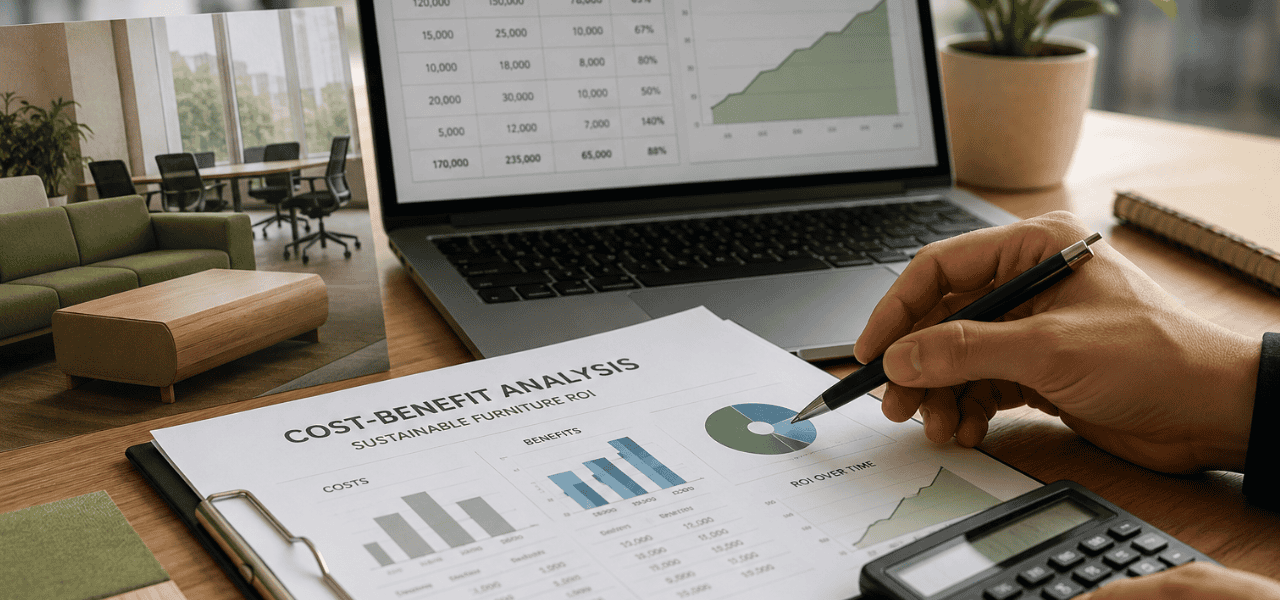
Sustainable furniture is increasingly viewed as a strategic investment rather than a short-term purchase. By considering factors such as durability, lifecycle costs, employee comfort, and environmental responsibility, businesses can make more informed decisions. Evaluating return on investment (ROI) helps organisations understand both the direct and indirect value generated over time. A comprehensive assessment ensures that furniture choices support operational efficiency, workplace performance, and long-term sustainability objectives.
What Are the Hidden Costs of Traditional Office Furniture?
Traditional office furniture may appear cost-effective initially, but several hidden expenses can increase overall ownership costs over time.
- Frequent Replacements: Lower-quality materials often wear out faster, resulting in repeated replacement purchases.
- Higher Maintenance Costs: Repairs, touch-ups, and component replacements can add ongoing expenses.
- Productivity Disruptions: Furniture failures or discomfort may interrupt daily operations and affect employee efficiency.
- Disposal Expenses: Replacing furniture often involves transportation, disposal, and waste-management costs.
- Sustainability Challenges: Shorter product lifecycles can increase waste generation and conflict with corporate sustainability goals.
When businesses focus only on upfront pricing, they may overlook these recurring costs. As a result, furniture that seems economical initially can become more expensive throughout its lifespan.
How Does Sustainable Furniture Deliver Long-Term ROI?
Sustainable furniture is designed to create long-term value through durability, quality materials, and responsible manufacturing practices. Although the initial investment may sometimes be higher than conventional alternatives, the long-term financial benefits often outweigh the upfront cost.
One of the biggest contributors to ROI is product longevity. Durable furniture typically lasts longer, reducing the need for frequent replacements and helping organisations manage procurement budgets more effectively. High-quality construction can also lower maintenance and repair requirements, resulting in reduced ongoing expenses.
This benefit becomes even more evident in modular office workstation partition systems, where flexible layouts allow businesses to reconfigure, expand, or optimise workspace design without replacing entire furniture setups. This adaptability directly reduces long-term refurbishment and restructuring costs.
A useful way to assess value is through the concept of Total Cost of Ownership (TCO). Rather than focusing only on the purchase price, TCO considers all costs associated with a product throughout its lifecycle, including maintenance, replacements, and disposal. This provides a more accurate picture of long-term expenditure.
Sustainable furniture also helps reduce waste generation and supports efficient resource use. By combining durability, lower lifecycle costs, and environmental responsibility, it offers businesses a practical approach to achieving measurable returns while supporting long-term operational and sustainability objectives.
What Financial and Operational Benefits Should Businesses Consider?
Beyond durability, sustainable furniture can contribute to several operational and financial advantages.
- Lower Lifecycle Costs: Reduced maintenance and replacement requirements help minimise long-term expenditure.
- Improved Space Utilisation: Flexible furniture solutions support changing workplace layouts and evolving business needs.
- Reduced Procurement Frequency: Longer-lasting products decrease the need for recurring purchases.
- Modular Adaptability: Reconfigurable systems allow businesses to modify workspaces without replacing entire furniture setups.
- Operational Consistency: Reliable furniture helps maintain uninterrupted workplace operations and planning.
Investing in quality furniture supports long-term business continuity by creating a workplace environment that remains functional, adaptable, and cost-efficient over many years. For instance, modular setups are especially beneficial for growing businesses, as explored in our blog on modular office furniture solutions for startups in India.
Are There Benefits Beyond Direct Cost Savings?
The value of sustainable furniture extends beyond measurable financial returns. It can also support broader organisational objectives that contribute to long-term business success.
Many businesses are strengthening their Environmental, Social, and Governance (ESG) commitments. Sustainable furniture aligns with these initiatives by encouraging responsible resource use and reducing environmental impact. This can help organisations demonstrate their commitment to sustainability to clients, stakeholders, and employees.
A well-designed workplace also enhances employee experience. Comfortable, durable, and thoughtfully selected furniture can contribute to a more positive work environment, supporting employee satisfaction and engagement.
In addition, sustainable furniture may align with green building initiatives and responsible procurement strategies. These factors can strengthen corporate reputation while supporting broader sustainability goals. Although these benefits may not always appear directly on financial statements, they often contribute meaningfully to overall business value and organisational resilience.
Is your office furniture delivering long-term value?
Let Vlite Furnitech LLP help you maximise ROI with sustainable workspace solutions.
How Can Corporate Offices Evaluate Furniture ROI Before Investing?
Businesses can make better purchasing decisions by evaluating furniture through a long-term value framework rather than focusing solely on price. Key considerations include:
- Expected Lifespan and Durability
- Total Cost of Ownership (TCO)
- Maintenance and Replacement Requirements
- Adaptability and Future Reconfiguration Needs
- Warranty Coverage and After-Sales Support
- Quality Certifications and Manufacturing Standards
- Sustainability Credentials and Material Transparency
By comparing these factors across available options, organisations can identify solutions that provide the best balance of cost efficiency, performance, and sustainability. A structured evaluation process helps maximise returns while supporting long-term workplace objectives.
Conclusion
Sustainable furniture should be assessed based on the value it delivers throughout its lifecycle rather than its upfront purchase price alone. Factors such as durability, maintenance requirements, adaptability, and sustainability can significantly influence overall return on investment.
When businesses evaluate both financial and operational outcomes, they gain a clearer understanding of long-term value. Quality manufacturing, responsible material selection, and extended product lifespan can contribute to lower ownership costs and improved workplace performance over time.
As organisations plan future workplace investments, taking a lifecycle-based approach can lead to more informed and sustainable decisions. To learn more about furniture options that align with these objectives, contact Vlite Furnitech, a leading office furniture manufacturer, today.
Looking to reduce costs while creating a greener office?
Choose Vlite Furnitech LLP for sustainable furniture that delivers lasting returns.
FAQs
1. How long does it take to recover the higher upfront cost of sustainable furniture?
The payback period varies based on product quality, usage, and maintenance costs, but businesses often recover the additional investment through reduced repairs, replacements, and longer product lifespans over time.
2. Can you quantify the productivity ROI from better office furniture?
Productivity gains can be difficult to measure precisely, but comfortable and functional furniture may help reduce workplace disruptions and support employee efficiency, contributing to overall business performance.
3. Is BIS certification worth the extra cost? Does it impact ROI?
BIS-certified furniture can support ROI by ensuring compliance with recognised quality and safety standards, which may contribute to better durability, reliability, and long-term value.
4. How does modular furniture save money compared to traditional layouts?
Modular furniture allows businesses to reconfigure existing setups as needs change, reducing the cost of purchasing entirely new furniture during office expansions, relocations, or redesigns.
5. Do sustainable office furniture ROI calculations include tax benefits or ESG credits?
ROI calculations may include applicable tax incentives, sustainability-related benefits, or ESG-related value where relevant, though availability depends on local regulations and organisational reporting frameworks.

Vishnu Sharma
I am the co-founder and CEO of Vlite Furnitech, creating modular office solutions since 2009. With a background in Chemistry and Marketing, and experience as Regional Head at Featherlite, I help design ergonomic, adaptable, and sustainable workspaces. Alongside a team of 120+, we serve corporates like JCB, Just Dial, KFC, and educational institutions. Let’s connect to reimagine innovative, eco-friendly office environments.