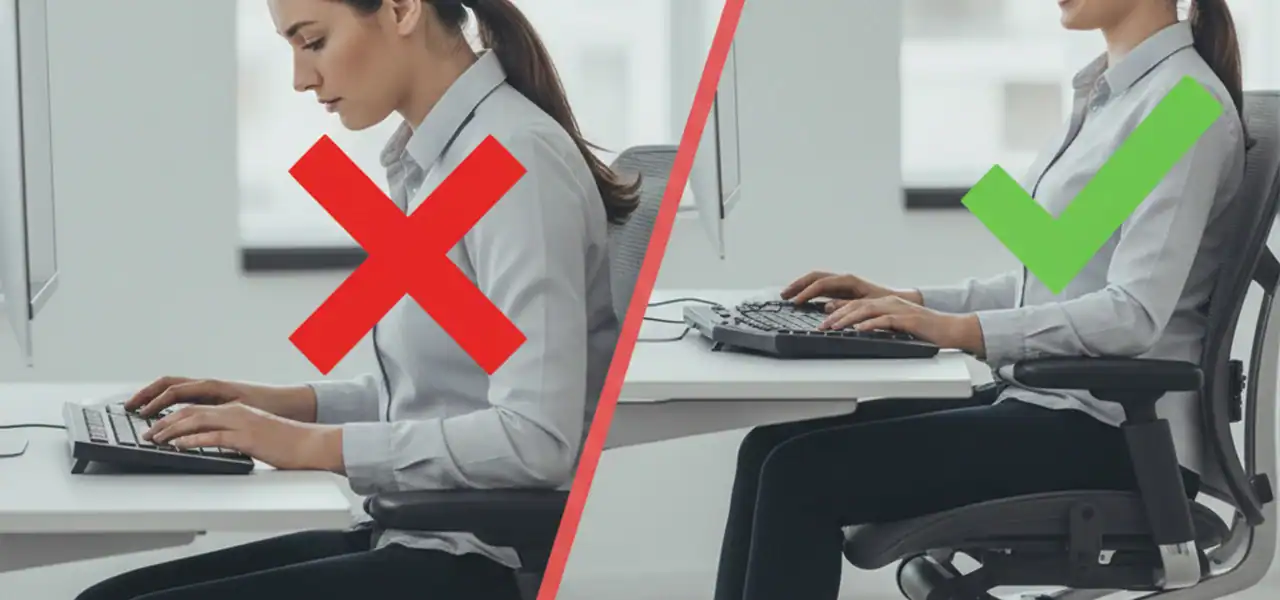
Desk-based and hybrid work have become the norm across many industries. People are now spending long hours sitting in front of screens, often without realising how small posture habits build up over time. Poor workplace ergonomics is closely linked to neck stiffness, shoulder tension, and back pain from sitting for extended periods. These issues rarely appear overnight. They grow quietly and affect comfort, focus, and long-term health.
The good news is that many of these problems are preventable. The right furniture choices play a practical role in reducing strain and supporting daily comfort. Thoughtful design is not a luxury. It is a simple way to protect your body at work.
Common Office Ergonomic Problems & Their Causes?
Before choosing the right furniture, it helps to understand the most common ergonomic problems people face at work and what causes them.
 Key Problems
 Key Problems
- Poor posture at the desk
Slouching, leaning forward, or hunching over screens puts constant strain on the neck and shoulders. Over time, this posture tightens muscles and affects natural spinal alignment. - Inadequate back and lumbar support
Chairs without proper support force the spine into unnatural positions. This increases pressure on the lower back and can lead to discomfort and stiffness. - Stiffness from prolonged sitting
Sitting for long periods reduces blood flow and joint movement. Muscles become tight, and small aches slowly build into persistent discomfort.
Main Causes
- Incorrect desk and screen height
When screens are too low or keyboards are too high, the body adapts in unhealthy ways. This generally leads to neck strain, raised shoulders, and wrist tension. - One-size-fits-all furniture
Fixed furniture ignores height, body shape, and working style differences. This mismatch forces users into awkward positions for hours. - Static workstation layouts
Workstations that do not support movement or posture changes increase fatigue and limit healthy circulation during the day.
Combined Effects
- Ongoing physical discomfort
Regular neck and shoulder tension becomes part of daily work life. - Reduced focus and energy
Physical strain distracts the mind and lowers concentration levels. - Long-term health impact
Repeated strain increases the risk of chronic pain and work-related musculoskeletal issues.
How Does an Ergonomic Office Chair Fix Postural Problems?
An ergonomic office chair supports natural spinal alignment rather than forcing the body into a fixed position. The long-term ergonomic chair benefits include reduced back strain, improved posture stability, and better comfort during extended screen time. A flexible backrest supports the spine while allowing small movements during the day. Armrests reduce shoulder load and help keep wrists relaxed, easing wrist pain and keyboard-related issues during long typing sessions. Movement-friendly chairs prevent the body from becoming rigid. This reduces fatigue and improves comfort during long desk-based hours.
Such chairs work best for professionals with extended screen time, desk-bound roles, and focused workdays. Over time, better seating reduces tension and supports consistent posture habits.
What Role Does a Lumbar Support Chair Play in Back Health?
The lower back naturally curves inward. Without support, this curve flattens during long sitting hours. A lumbar support chair helps maintain natural spinal posture and reduces pressure on the lower back. Basic chairs often provide flat backrests, which fail to support this curve. Lumbar-focused designs follow the body’s shape and promote upright seating. This reduces tension in the spine and surrounding muscles. Over time, proper lumbar support helps prevent chronic discomfort.
For professionals with a history of back strain or stiffness, this targeted support reduces daily stress on the spine and supports healthier sitting habits.
Upgrade comfort, improve posture, and enhance productivity with ergonomic office solutions.
Design your workspace with experts who understand functionality and style.
How Does an Adjustable Standing Desk Improve Workplace Ergonomics?
Prolonged sitting reduces circulation and increases stiffness. An adjustable standing desk allows easy switching between sitting and standing positions throughout the day. These sit-stand cycles improve movement and reduce physical fatigue. Screen and keyboard height can be aligned properly, supporting a comfortable ergonomic desk setup. Standing briefly during work supports circulation and reduces muscle tension. Over time, these changes improve energy levels and focus. The well-known standing desk benefits include improved posture awareness and reduced stiffness. Adjustable desks are especially useful in hybrid work environments where flexibility and movement are important for comfort.
What Ergonomic Furniture Features Should You Look For?
The right features make ergonomic furniture effective and comfortable for daily use.
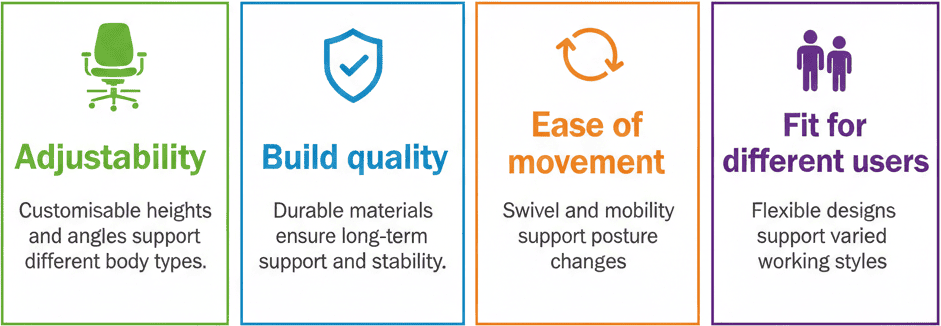
- Adjustability
Customisable heights and angles support different body types. - Build quality
Durable materials ensure long-term support and stability. - Ease of movement
Swivel and mobility support posture changes. - Fit for different users
Flexible designs support varied working styles.
Choosing products from a trusted office furniture manufacturer helps ensure these features are built to last and suited for long-term use.
Can the Right Furniture Improve Productivity and Comfort?
Comfort and focus are closely connected. When the body feels supported, the mind works better. Ergonomic office furniture reduces fatigue and physical distractions. Over time, improved comfort leads to better concentration and fewer breaks due to discomfort. Investing in supportive furniture also improves office ergonomics across teams. While the upfront cost may seem higher, the long-term return shows in reduced discomfort, better focus, and healthier routines. When selecting seating, options like executive office chairs with adjustable features and strong lumbar support offer long-term comfort for extended desk work.
Conclusion
Workplace discomfort often starts with small habits and poorly designed furniture. Over time, these issues grow into lasting physical strain. The right furniture choices offer simple, preventive solutions. Supportive chairs, adjustable desks, and flexible layouts improve comfort and posture. They also reduce fatigue and long-term health risks. Proactive workplace design protects physical well-being and supports consistent performance. Investing in better furniture today helps build healthier work routines for the future. To explore tailored solutions for your workspace, contact us today and take the first step toward healthier work routines.
Build a healthier and more productive office with ergonomic modular furniture.
Build a healthier and more productive office with ergonomic modular furniture.
FAQs
1. What are the most frequent ergonomic issues in offices?
Poor posture, neck strain, wrist discomfort, and lower back pain are the most common issues caused by long sitting and poorly set-up workstations.
2. How does an ergonomic chair fix back pain?
An ergonomic chair supports natural spinal alignment and reduces pressure on the lower back, which helps ease strain over long working hours.
3. Why invest in a standing desk?
A standing desk encourages posture changes during the day, improves circulation, and reduces stiffness from prolonged sitting.
4. Can ergonomic furniture prevent carpal tunnel syndrome?
Properly designed furniture helps keep wrists and arms aligned, which can reduce strain and support carpal tunnel prevention over time.
5. How to set up an ergonomic workstation affordably?
Simple changes like adjusting chair height, screen level, and keyboard position can create a more ergonomic workstation setup without major cost.

Vishnu Sharma
I am the co-founder and CEO of Vlite Furnitech, creating modular office solutions since 2009. With a background in Chemistry and Marketing, and experience as Regional Head at Featherlite, I help design ergonomic, adaptable, and sustainable workspaces. Alongside a team of 120+, we serve corporates like JCB, Just Dial, KFC, and educational institutions. Let’s connect to reimagine innovative, eco-friendly office environments.