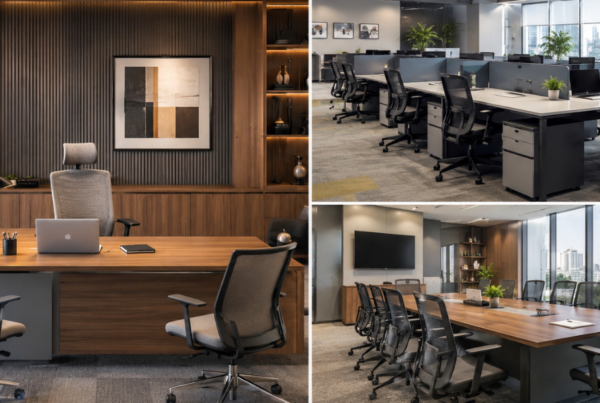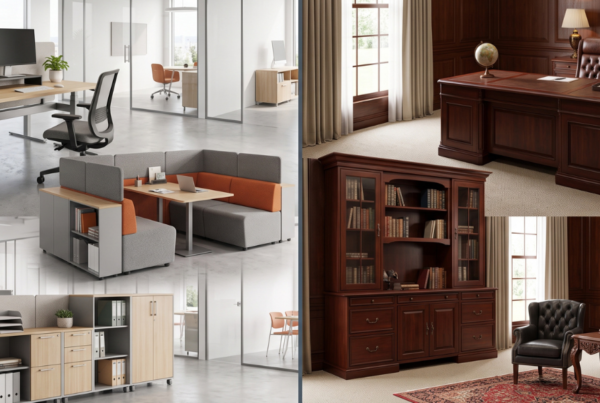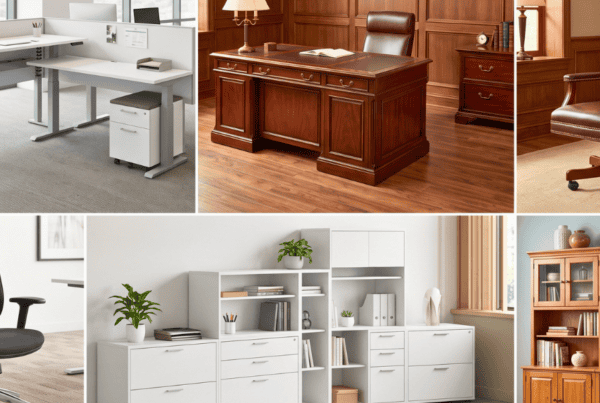
Office design is no longer limited to rigid cubicles and fixed layouts; it has now become a more dynamic and collaborative space, which represents evolving work cultures. With businesses seeking flexibility and employee well-being, modular workstations have emerged as a preferred alternative to traditional office desks. The qualities required in today’s hybrid work environments, such as adaptability, efficient space utilisation, and design versatility, are offered by modular furniture, unlike traditional setups.
In this blog, we will explore traditional and workstation desks, their key differences, why modular desks are gaining popularity, and more to help you decide which type would be more suitable for your office.
What Are Traditional Office Desks?
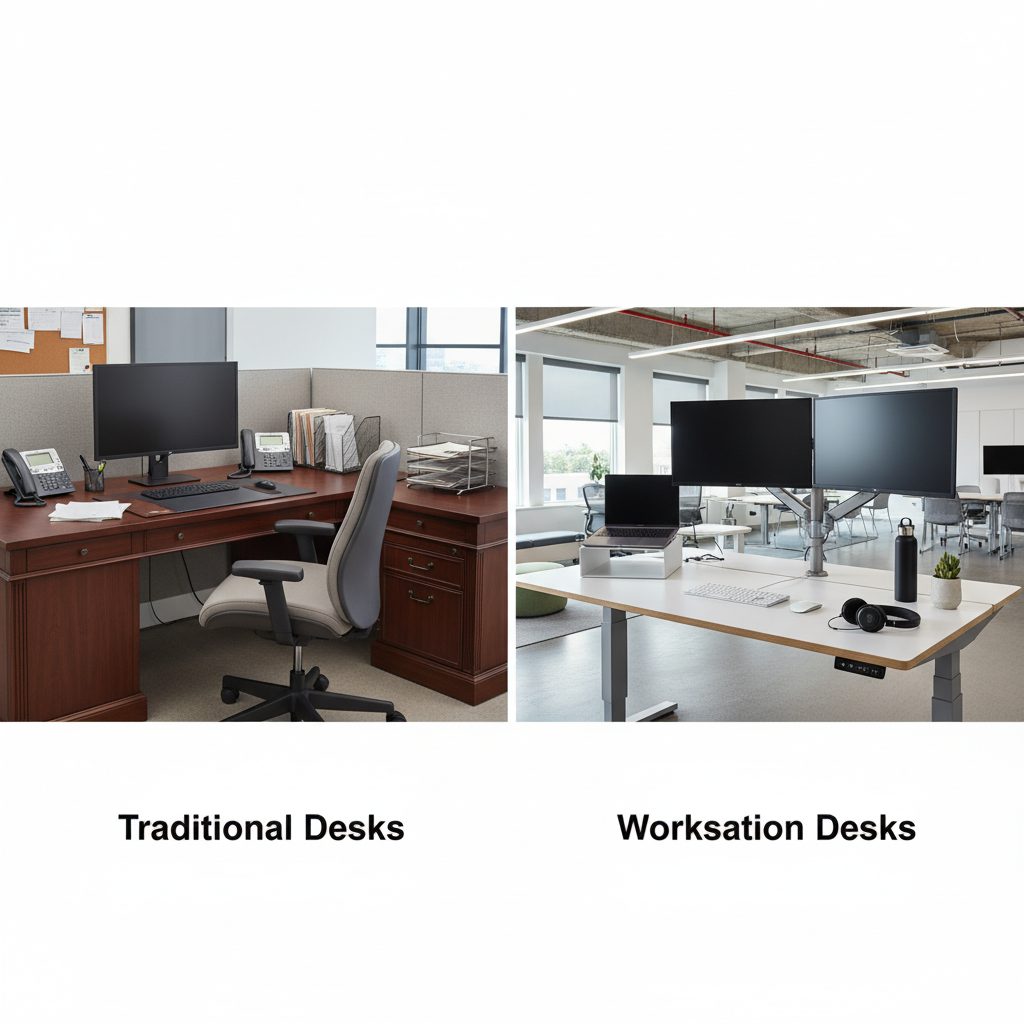
Traditional office desks are solid, standalone setups designed for individual use, commonly seen in conventional or older workplaces.
Sturdy materials such as wood or metal are usually used and feature classic designs with drawers, cabinets, and fixed layouts.
These desks convey a professional appearance and are valued for their durability and long-lasting build. To help employees focus better on individual tasks, they also offer a sense of personal space and privacy.
However, traditional desks do come with certain drawbacks. Their fixed design limits flexibility, making it difficult to reconfigure office layouts as needs change. In modern collaborative or hybrid work styles, which prioritise openness and adaptability, these desks may not be the ideal choice, as they often occupy more floor space.
What Are Workstation Desks?
Workstation desks for office environments are a crucial part of modern furniture design, built to improve productivity, collaboration, and effective space utilisation.
Unlike traditional desks, these come in modular layouts that can be configured to match office sizes, team structures, or individual work needs. When teams grow or layouts change, their adaptable design allows easy reconfiguration.
Workstation desks often combine cable management systems, storage units, and privacy panels for a clean, organised workspace. Many models prioritise ergonomics, which supports comfortable posture and reduces fatigue for long hours of work. With sleek materials and contemporary finishes, they also improve the overall aesthetics of modern offices.
These desks create a cohesive environment by combining flexibility, functionality, and style, which aligns with evolving workplace dynamics.
Learn more about the advantages of such seating in our blog, Top Ergonomic Chair Benefits for Better Comfort and Health.
How Do Modular Workstations Differ from Traditional Desks?
Several key aspects of modular workstations differ from traditional desks, making them ideal for modern, evolving workspaces.
- Design and Layout: Modular setups feature customisable, interlocking units which can be rearranged to suit various office zones and team sizes, while traditional desks are fixed and designed for individual use.
- Flexibility and Scalability: With the change in business needs, modular systems are easy to expand or reconfigure, unlike traditional desks that offer little adaptability.
- Employee Comfort and Collaboration: Modular workstations encourage teamwork as well as interaction through open layouts and ergonomic features, whereas traditional desks prioritise privacy and individual focus.
- Space Management: Modular furniture optimises floor space by integrating shared storage and utilities, while traditional desks generally occupy more room due to separate setups.
- Cost and Maintenance: While the initial investment may be higher, modular systems are comparatively cost-efficient long-term, as components can be reused or replaced.
Are you considering upgrading to a modern office desk solution?
Transform your workspace with Vlite Furnitech.
Why Are Modular Desk Systems Gaining Popularity in Modern Offices?
In modern offices, modular desk systems are rapidly gaining popularity due to the rise of hybrid work models and flexible seating arrangements. As businesses adapt to employees alternating between home and office, modular systems offer the adaptability required for easy reconfiguration of layouts. They fit seamlessly into open-plan designs, which support interaction, transparency, and collaboration among teams.
Incorporating smart office concepts, modular desks can integrate charging stations, power outlets, and cable management systems to support technology-driven work environments. Their flexibility allows companies to use space effectively, accommodate growth, and adapt to changing team structures without costly renovations. A trusted commercial office furniture company can help integrate these systems seamlessly into modern workplaces.
From a business perspective, modular workstations improve productivity by strengthening collaboration and creating a comfortable, ergonomic workspace. They also contribute to a modern, cohesive brand image, representing innovation and employee-centric design. For this reason, modular desk systems have become an important element of efficient, forward-thinking, and visually appealing workplaces.
Which Desk Type Should You Choose for Your Office?
Choosing the right desk type for your office depends on your workspace needs, culture, and long-term goals. With modular workstations, startups, creative agencies, and tech companies often thrive, as they support flexibility, collaboration, and space efficiency. These setups allow teams to easily reconfigure layouts for projects or growth, aligning well with dynamic and hybrid work cultures.
On the other hand, consultancies, law firms, and traditional corporate offices may prefer classic office desks that provide privacy, structure, and a formal appearance suited to client-facing environments.
When deciding, consider your available space, budget, and future scalability. Modular systems may have a higher upfront cost but are more adaptable over time, while traditional desks are sturdy and cost-effective for static setups.
A balanced approach often works best, combining modular workstations in collaborative zones with traditional desks in private areas, which guarantees both flexibility and focus and creates a versatile and productive office environment.
Conclusion
Both traditional desks and modular workstations bring unique advantages to the workplace. While traditional desks offer the structure, durability, and privacy required for formal office environments, modular workstations stand out for their adaptability, space efficiency, and collaborative design, making them ideal for today’s dynamic, hybrid offices.
As businesses are continuously evolving, selecting the right furniture can greatly influence productivity, employee satisfaction, and overall workspace aesthetics. For modern offices aiming to combine flexibility with functionality, modular workstation desks are the smarter investment.
To explore the best office workstation furniture solutions customised to your workspace needs, contact us today and create an office environment that supports efficiency, comfort, and growth.
Curious which desk fits your unique office needs?
Let Vlite Furnitech guide your decision for a productive environment.
FAQs
1. Are workstation desks better for modern offices?
Yes, workstation desks are ideal for modern offices, as they support open-plan layouts, collaboration, and ergonomic flexibility.
2. When should a business choose traditional desks over workstation desks?
Traditional desks work better for private offices or roles requiring focused, individual work with minimal distractions.
3. Can workstation desks be customised to suit office needs?
Absolutely, many Indian manufacturers offer custom sizes, configurations, and finishes to match specific workspace requirements.
4. Do workstation desks take up less office space?
Yes, they are designed to maximise space efficiency, allowing more employees to work comfortably in the same area.
5. Where can I buy high-quality workstation desks in India?
You can buy them from trusted Indian office furniture manufacturers offering ergonomic, durable, and cost-effective options.

Vishnu Sharma
I am the co-founder and CEO of Vlite Furnitech, creating modular office solutions since 2009. With a background in Chemistry and Marketing, and experience as Regional Head at Featherlite, I help design ergonomic, adaptable, and sustainable workspaces. Alongside a team of 120+, we serve corporates like JCB, Just Dial, KFC, and educational institutions. Let’s connect to reimagine innovative, eco-friendly office environments.